Putting the Historical in Historical Fantasy
We love a good fantasy story, and sometimes the best fantasies are the ones rooted in fact. Jo Walton’s new novel Lent is a fantastical reimagining of the life of Girolamo Savonarola, a Dominican friar and political leader of late 15th century Florence. Jo joins us below to talk about the advantages and drawbacks of writing fiction based on historical characters.
By Jo Walton
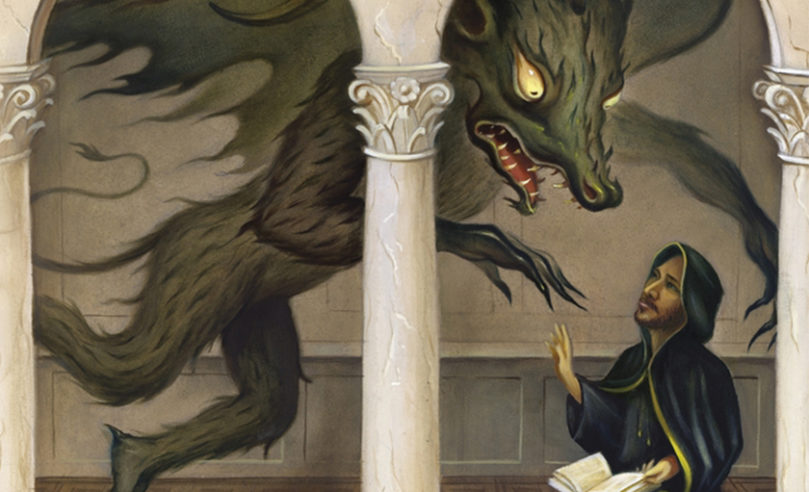
My new novel Lent is about Savonarola, it’s set in Florence and Hell during the Renaissance, in fact very specifically between the years 1492 and 1498. It was immense fun to write, and part of that was doing all the research and making it historically accurate in a way a fantasy novel can be and a historical novel can’t. When a diary written in the 1490s says that Savonarola was casting out demons in a nunnery, a fantasy novel can have real demons showing up.
There’s an advantage and a disadvantage to using real history in fiction and they’re both the same thing: the history is real. That’s great, because you can research it and lean on it. The real world is fractally weird, and you can get things from it you’d never be able to make up. Who could imagine that Renaissance Florence was ruled by eight men chosen by lot and then locked at the top of a tower for three months?
When you make things up, they have to make rational sense, but reality doesn’t have those restrictions. There were sumptuary laws controlling how much jewelry people could wear, and even how many buttons their clothes could have. That’s very weird, but weirder was that they didn’t apply to women about to be married or in the first year of their marriage. There’s no end to wonderful real-world details you can work into your story.
If you want to know how people did something, you don’t have to make it consistent with everything else – you can just look it up. But you have to get it right. And, of course, you have to make sure not to overwhelm the reader with details and explanations of nifty historical curiosities (the “I’ve suffered for my research and now so will you” syndrome).
There’s also what I call the Tiffany Problem — your readers are modern people and know what they know, which is fine except when what they know isn’t actually right. For instance, the name Tiffany sounds extremely modern to us. It feels jarring when we read it as a character name in a historical setting, where we’d be quite happy with names like Anna and Jane. But our instinct is wrong, because Tiffany is a form of Theophania, and it was fairly common in medieval England and France. It went out of fashion later, and it’s because we don’t have seventeenth to nineteenth century examples that it feels modern. But you still can’t use it in a fantasy novel set in the exact time and place when the name would have been historically accurate, because it will jerk the reader out of their reading trance. They know it’s wrong and you can’t tell them that what they know is wrong.
There’s also another problem with things being real. When you’re writing about real historical characters, there’s an obligation to be true to them. In writing about the Italian Renaissance, I had a lot of letters and diaries and portraits that helped me get inside the heads of people of the period. But I also had to change things to make them work for the modern reader, and there comes a point when you’re in danger of changing so much that you’re betraying the character — who was a real person, just like we are, and deserves the respect due to a real person, even though they’re dead. I do think this is important.
There’s a weird Renaissance belief that surfaces in Ariosto’s epic poem Orlando Furioso and in a painting in the Pitti Palace in Florence which goes: when somebody dies, a swan carries a medal bearing their name to a pool of forgetfulness, and when people on Earth stop repeating the name, the swan opens their beak and drops it in, to sink to oblivion. Most people get dropped by the swan quite rapidly, but others have their swan still hovering hundreds and even thousands of years in the future. When I use real historical people in fiction, even if I’m at risk of misrepresenting them, I can comfort myself that as long as we keep repeating their names, their swans will keep circling.