Close
post-featured-image

Step Aside, Shadowfax—6 Books Featuring Fantasy Steeds That Aren’t Horses

Sure, horses are majestic and noble beasts, but why limit yourself to four legs and hooves in fantasy when you could be riding anything from gigantic sandworms to man-eating hippos? Here are six titles that feature alternative steeds for riding into battle on, or just riding to work on.

By Yvonne Ye


Place holder  of - 5Empire’s Ruin by Brian Staveley

The Annurian Empire—the setting for Staveley’s popular series The Chronicle of the Unhewn Throne—is back, and it’s disintegrating rapidly. After a disastrous mission gone terribly awry, Gwenna Sharpe must embark on a voyage beyond the edges of any maps in search for the ancient nesting grounds of the giant war hawks—massive, proud birds that can carry an entire Wing of highly skilled soldiers—the empire needs to survive.

Image Placeholder of - 8American Hippo by Sarah Gailey

 In the early 20th century, the U.S. Congress seriously entertained the proposition of importing hippos into the southern marshlands to be nurtured as an alternative meat source. Sarah Gailey follows that proposition to its logical conclusion: a hair-raising heist on hippo-back. Brutal, brilliant, bold, and brash, American Hippo follows Winslow Houndstooth and his crew of outlaws, con artists, assassins, and their hippo counterparts as they wreak absolute mayhem in the bayous of Louisiana—and take bloody revenge.

Poster Placeholder of - 47The Red Threads of Fortune by Neon Yang

After the explosive ending of The Black Tides of Heaven, Sanao Mokoya—ex-prophet, trained Tensor, rebel, and daughter of the supreme Protector—now spends her days hunting sky-obscuring naga: great, lizard-like beasts that soar through the heavens on clawed wings of leather, whose jaws could slice a man in half. When she meets the mysterious yet enchanting Rider, who can take to the skies on the back of a naga, Mokoya must confront conspiracy and betrayal, buried secrets and deadly magic while navigating her own trauma and grief.

Image Place holder  of - 66Star Eater by Kerstin Hall

Come for the incisive deconstruction of power in a bloody sisterhood of matriarchal nuns; stay for the haqules, the giant, swift-footed, fork-tailed feline steeds that the high-ranking members of the sisterhood ride. Elfreda Raughn wants out of the Sisterhood of Aytrium, which offers her great power at a gruesome cost. Sometimes, that means riding giant cats while making one’s dramatic escape. Sometimes, that also means evading giant cats whilst making one’s dramatic escape, but such are the dangers of infiltrating and rebelling against a cannibalistic priestesshood.

Placeholder of  -89The Dinosaur Lords by Victor Milán

If you’ve ever looked at 14th century Europe and thought to yourself that it would be improved by the addition of dinosaurs, look no further. Mercenary and Dinosaur Lord Karyl Bogomirsky has been betrayed and left for dead, but he won’t let his story end there. Milán crafts a world full of dinosaurs as wildlife, as husbandry, as pets, and of course—as steeds of war.

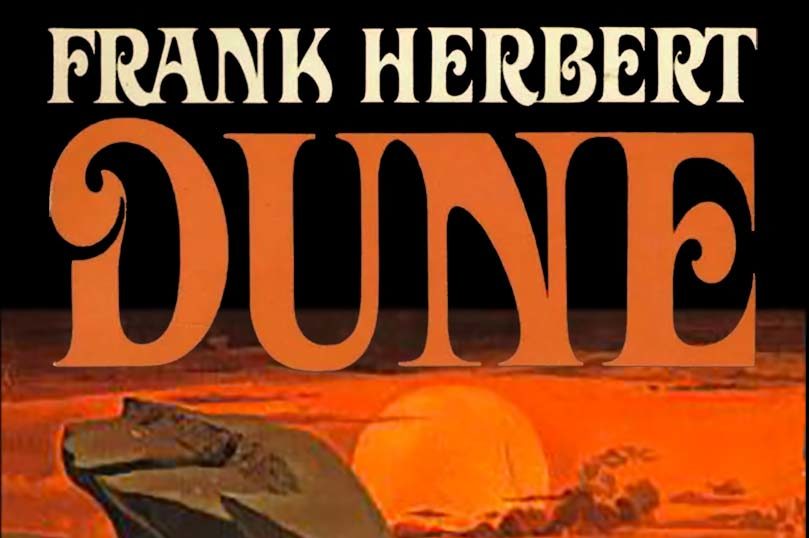
Dune by Frank Herbert

When the House of Atreides accepts stewardship over the planet of Arrakis, young Paul Atreides is flung into a storm of interstellar intrigue and deadly competition. Arrakis is inhospitable, desolate, and covered primarily in harsh deserts; it is also the only source of melange, a rare and exclusive spice that can both extend life and heighten mental abilities. The catch? The spice is guarded by the giant sandworms of Arrakis, who are made of little more than teeth and territorial instinct. With an upcoming film this fall featuring a powerhouse cast of Oscar Isaac, Timothée Chalamet, and Zendaya, we’re looking forward to at least one scene where a character rides the famed sandworms.

post-featured-image

Excerpt: Dune: The Lady of Caladan

amazons bns booksamillions ibooks2 81 indiebounds

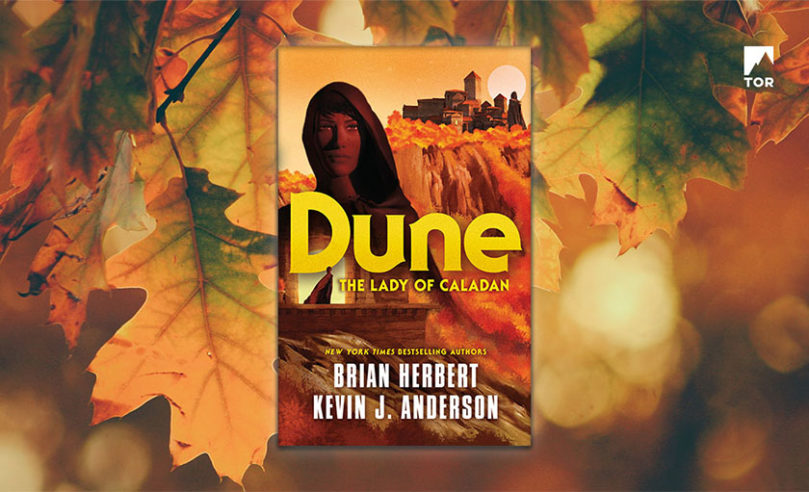
Image Placeholder of - 19From Brian Herbert and Kevin J. Anderson, Dune: The Lady of Caladan is a brand new novel in the internationally bestselling Dune series.

Lady Jessica, mother of Paul, and consort to Leto Atreides. The choices she made shaped an empire, but first the Lady of Caladan must reckon with her own betrayal of the Bene Gesserit. She has already betrayed her ancient order, but now she must decide if her loyalty to the Sisterhood is more important than the love of her own family.

Meanwhile, events in the greater empire are accelerating beyond the control of even the Reverend Mother, and Lady Jessica’s family is on a collision course with destiny.

Please enjoy this free excerpt of Dune: The Lady of Caladan, on sale 09/21/2021.


Chapter 1

The Kwisatz Haderach breeding program was designed to benefit humanity, but at what cost? At what human cost?

LADY JESSICA, private journals

In her mind and heart, Jessica found herself at the bottom of an abyss. Each moment took her farther from Caladan, Duke Leto, and Paul.

After receiving the Bene Gesserit ultimatum, and the threat against her family, Jessica had crossed star systems in a Spacing Guild Heighliner, brought back to Wallach IX like a recalcitrant child. She felt no warm homecoming as she rode a shuttle down from the huge orbiting ship to the Sisterhood’s dreary, cold homeworld.

Would she ever see Caladan again? Or Leto or Paul? She shifted her position on the hard seat of the shuttle. Maybe the answer to that question depended on what Mother Superior Harishka wanted from her.

Exceptionally strong side winds buffeted the vessel, which made the pilot change his descent and swoop around, rising higher until the turbulence abated. Other passengers muttered a drone of unease, but Jessica remained silent. She had her own turbulence to deal with.

As she looked out the diamond-shaped windowport, the roiling clouds mirrored her troubled mind. She resented the iron control that the Sisterhood exerted over her. She had been separate from them many years, imagining herself independent on Caladan, but they had cracked the whip. The Bene Gesserit summons had left no room for discussion. Reverend Mother Mohiam had threatened to destroy the Duke and the future of House Atreides if she didn’t obey, and the Sisterhood certainly had the means to do so.

They wanted Jessica for their own purposes, had withdrawn her—permanently?—from Caladan. Never in her life had she felt so dismal, separated from everyone and everything she loved. But she did not intend to meekly comply.

The shuttle rocked again in the unsettled air and began to descend again after circumventing the storm, and Jessica saw they were approaching the Mother School complex below. Through a veil of tangled clouds, she made out the ancient buildings and new annexes, the angles of red-tiled roofs, the low underbrush that covered the grounds. The foliage had turned a bright scarlet and orange with autumn colors. The structures were connected, like the countless women in the Sisterhood, all part of an intricate and powerful political machine.

Jessica had been here since infancy, parentless, and the Sisterhood had raised her, indoctrinated her, and enfolded her life from birth until her inevitable death. The Bene Gesserit owned her.

Using some of the very methods taught to her at the Mother School, Jessica concentrated on a breathing exercise that brought clarity and calm. She felt her muscles relax. She had to be at her best and sharpest to face whatever came next.

As she centered herself, the turbulence around the shuttle smoothed, and the remaining clouds parted over the landing zone on the perimeter of the complex. Still wearing garments from Caladan, Jessica felt out of place, but soon they would make her change into the school’s traditional dark garb, to remind her that she was still one of them, always one of them.

Wallach IX, with its weak sun and chill climate, had long been a place where young women of the order either rose to the challenges, or failed. Jessica felt an odd nostalgia for the ancient training center, torn by her loyalties to the Sisterhood and her family. She had spent so many years here, soft clay for them to shape as they chose, finally assigning her as the bound concubine of a young Duke with great potential.

And now she was back. She felt a deep sense of foreboding.


Mother Superior Harishka greeted her in person on the tarmac. The Mother Superior had piercing eyes and a severe, uncompromising demeanor. Despite her age, the old woman’s skin was remarkably tight and smooth, possibly from the geriatric effects of the melange she consumed regularly. She had filled the same role for decades, after a lifetime of service to the order. “Come with me. You are needed immediately.” She didn’t explain about the urgent matter that had turned Jessica’s life upside down.

Despite her advanced years, Harishka set a brisk pace, moving like a military commander leading a charge against enemy lines. They entered a large new administration building that had been built with a generous donation from old Viscount Alfred Tull, whose name was on a plaque by the entrance. “I want you to see this first, before you attempt to settle in. We may not have much time,” Harishka said. “You need to know the reason you are here, and why it is so important.”

Yes, she thought. I need to know that.

As Jessica followed them up wide stairs and down long corridors, she absorbed peripheral details, but did not ask questions, though a desperate curiosity clamored inside. In an isolated section of the third floor, Harishka led her to a viewing window that looked into a large medical chamber with a closed door. Two other Sisters remained there, outside the plaz like guardians, but Jessica stepped up to the window, determined to see.

Harishka explained, “The room is sealed and barricaded, but do not underestimate the danger. This is clear armored plaz, and she can see us now if she is alert enough, but for our protection we can always set it to one-way plaz if necessary.”

With all the precautions taken, Jessica expected to see some kind of caged monster inside. Instead, she saw an ancient woman stretched on a bed, tossing restlessly in her sleep. She wore only a medical gown, with tubes and monitors connected to her. Her face was drawn back in a grimace, and she cried out, but the thick plaz blocked all sound. Despite the wrinkles on her age-spotted neck, arms, and hands, her face was not nearly as shriveled as her body.

Jessica didn’t understand. “She . . . is the danger? What does this have to do with me?”

The Mother Superior gave an oblique answer. “This is Lethea, a former Kwisatz Mother. Now she serves in a different capacity for as long as she remains alive . . . and for as long as she withholds what we need.”

Kwisatz Mother. Jessica remembered Shaddam Corrino’s first wife, Anirul, who had been present during Paul’s birth, who had been greatly interested in the boy child. Anirul had been a Bene Gesserit of “hidden rank,” but quietly held the same title. She had died very shortly after Paul was born.

“And what does a Kwisatz Mother do?” Jessica asked. And why did she have the power to summon me?

“Like a Guild Navigator foreseeing safe pathways throughout the stars, so a Kwisatz Mother can see each thread in the immense tapestry of our breeding plans. Lethea was relieved of duty due to mental instability. She is still useful—even if she is dangerous.”

Jessica couldn’t tear her gaze from the crone writhing on the medical bed, locked away alone. Lethea seemed barely able to move. “Dangerous?”

Harishka stared ahead, as if her gaze could bore through the barrier. “She has already murdered several of us. Hence the need for all the security.”

The Mother Superior nodded to one of the two women stationed there to watch Lethea. She was in her thirties with black hair and an olive complexion. “Sister Jiara has watched Lethea closely, but I’m afraid she has few answers.”

Jiara looked through the plaz. “Her mind is crumbling, but it is still incredibly powerful.” She paused just a beat. “Enough to kill several Sisters through her sheer force of will.”

As if sensing their presence, Lethea’s eyes opened to narrow slits, and she stared directly at Jessica from the other side of the armored room. Jessica shuddered. “Why do you need her? What is so important?”

“Lethea has a special prescience the Sisterhood needs, a predictive ability about the future of our order. It has proven to be accurate, and valuable to us, enabling us to make calculated decisions. That is why we keep her alive, despite the danger. But her mental gift comes and goes, and Lethea is losing control of it.”

“She is out of her mind,” Jiara added, sounding bitter. “But she insisted that we bring you here.”

Jessica had so many questions that she could no longer contain them. “What does this have to do with me? I’ve never met this Kwisatz Mother.”

Harishka turned toward Jessica and said, “You are here because Lethea said, ‘Take her away. Our future depends on it.’ Then she insisted that you be separated from your son. She says you could bring about the end of the Sisterhood.”

Jessica felt as if she had fallen off a ledge. “Separate me from Paul?” This made absolutely no sense at all. “Why? For what purpose?”

Harishka’s expression fell. ”We need you to discover the answer. She predicted horror, bloodshed, disaster. That’s why we called you here so urgently.”

Behind the plaz wall, Lethea’s gaze held on Jessica, then shifted to glare at Mother Superior Harishka, Jiara, and at the other Sister. Finally, the old woman closed her eyes and sagged like a rag onto the medical bed.

“She’s a crafty one,” Jiara whispered. “Look at her. She wants to kill more of us, if given the chance.”

“Is she really asleep at last?” the other Sister asked.

Harishka touched a button on the wall, and with a quiet hiss, the door to the medical room opened. She called for three Medical Sisters, who rushed down the hall. “Attend to her now, quickly, while you can.” The trio hurried in, rolling a machine and hooked it to the old woman, adding tubes and lines, but trying not to disturb her. Two of the Sisters took readings, while the third remained alert, as if ready for an attack.

“Intravenous feeder,” Harishka explained to Jessica. “Lethea refuses to eat on her own. We keep her alive, no matter how much she objects. And we expect you to pry answers from her.”

The two women worked quickly, but as they were unhooking the feeding tube, the patient stirred. Alarmed, the Medical Sisters abandoned the feeding machine and bolted for the door.

Lethea snapped fully awake and called out in a strange way, “Stop!”

Jessica recognized the irresistible power of Voice. Was this how she killed?

Two Sisters had made it through the door, but the third, the one who had been guarding them, jerked to a sudden stop. Terrified, she struggled, but could not move, as if snagged by a lasso. Her companions turned and grabbed her, dragging her out into the corridor, then slammed the door behind them.

Thrashing on her medical bed, Lethea glowered at the window.

“We have to send in teams of three,” Harishka said. “She only seems able to control the mind of one Sister at a time, and this way, the other two can stop a victim from killing herself.”

“It’s a game to her,” said Jiara, “seeing if she can catch one of us alone.”

Lethea shot a hostile, terrifying gaze through the window at Jessica, but Jessica refused to turn away, meeting the stare with her own. “Is that why Lethea demanded to see me? Because she wants to kill me?”

“It is possible,” the Mother Superior said. “Very possible.”

Chapter 2

House Atreides has always measured its worth in terms of our honor, not the extent of our holdings. In what matters to us, we are far richer than any other House in the Landsraad.

LETO ATREIDES, upon assuming the title of Duke of Caladan

All primary Guild routes eventually made their way to Kaitain, the glittering Imperial capital.

Traveling aboard a Heighliner from distant Caladan, Duke Leto Atreides rode in his family’s lavishly appointed frigate. His staff of retainers, far larger than he needed, wore green and black, each tunic or jacket sporting the prominent Atreides hawk. This show of ostentation was not at all what the Landsraad had come to expect from the Duke of Caladan.

After the recent Otorio terrorist attack, the rules of the Imperium had changed. And after the trouble involving Jessica . . . He felt a wave of emotion. After Jessica, Leto himself had changed. He was a different man with a new purpose and priorities. He had embraced long-ignored ambitions for his House and his son, and he clung to that new determination. It was all he had left.

The Atreides protocol minister, a thin and unconfident man named Eli Conyer, filled out forms during the transit, and when the Guild ship dispatched the mob of frigates, shuttles, and passenger craft into Kaitain orbit, Conyer broadcast an announcement of the Duke’s arrival. He insisted on the proper welcoming formalities, transmitting notices to the Landsraad secretary and the Imperial Palace as well as to news and informational outlets.

On the passenger deck of the Atreides frigate, Conyer could not hide his smile. “Everything as befits your station, my Lord. The capital will know that the Duke of Caladan has come!” He said it as if some messiah had arrived.

Not long ago, when he had attended the inauguration of the garish Corrino museum on Otorio, Leto had rolled his eyes at the popinjay nobles who flaunted themselves in hopes of being noticed by Shaddam Corrino IV. Now he was in danger of acting just like them.

Leto was not comfortable with so much attention, but this was, after all, what he had instructed the minister to do. This was his first foray into building more prominence for House Atreides. “Doesn’t every Landsraad noble do the same thing?”

Conyer huffed. “It is common practice, Sire, but you have not previously done so. Therefore, this visit is noteworthy.”

All his life, Leto had been content to be a good leader of his own people, choosing the course of honor and raising his son in a similar fashion. Because of that, though, much wealth and power—and therefore security for House Atreides—had slipped through his fingers. He had missed many opportunities. What if he had diminished his legacy for Paul? Leto wondered if other nobles secretly considered him inept in the realm of political games.

The terrorist attack by Jaxson Aru had left numerous vacancies in the Landsraad, and nobles vied for them like pigs at a feeding trough. Leto refused to be like that, but he realized he didn’t have to be weak either. He had come to Kaitain to claim some of what House Atreides deserved. It was long overdue.

Conyer studied a screen and smiled. “I arranged for a reception guard and an escort to meet us at the Imperial Spaceport, Sire.” He looked away, seemingly embarrassed. “It was a contract service, but well within our budget.”

“You did well,” Leto said as the ornate ship settled down in its designated zone. “Have adequate guest quarters been arranged for me and my retinue?”

Conyer looked offended. “Of course, my Lord! In the Promenade Wing of the palace, a fine suite with adjacent rooms for your retainers and security staff. You will be seen and noticed whenever you go about your daily business.”

The capital city was a showcase of governmental buildings, monuments, museums, towers, statuary, fountains, prisms, obelisks, archways, and sundials under clear climate-controlled skies. The cacophony and visual overload made Leto pause as he emerged from his own flashy frigate. He missed the sound of the outgoing tide on Caladan, the waves curling around the docks in the harbor town. He remembered walking with Jessica among the tide pools, pointing out sea anemones, scuttling crabs, and spiny starfish. He recalled a storm far out at sea, flashes of lightning in the clouds. . . .

Now, he steeled himself as he looked across the vast city and remembered his purpose here. Once he became a more powerful lord with expanded holdings, he could enjoy the ocean-side splendor of his ancestral planet again.

But it wouldn’t be with Jessica, not anymore. That relationship was broken irreparably, and the Bene Gesserit had formally recalled her to Wallach IX. He wondered if he would ever see her or speak with her again.

A squad of rigid troops marched toward the Atreides frigate looking like palace guards, but these were just the contract escorts that Conyer had arranged, so that Leto could make a big impression. A pair of bannermen held up a scarlet-and-gold flag with the Corrino lion alongside a green-and-black flag with the Atreides hawk. One guard bellowed out in a resonant voice, “Kaitain welcomes the Duke of Caladan!”

Twelve uniformed escorts bowed in unison, displaying well-practiced respect. On nearby landing zones, Leto noted additional passenger shuttles and private noble frigates, all landed from the same Heighliner. Similar contract reception committees greeted those visiting noblemen.

As his retainers followed him out of the frigate, Leto swept back his dark hair and raised his chin. With his aquiline nose and strong jaw, he cut a striking profile. He spoke a hard command to the hired escort guards, “Take me to the Imperial Palace, where Emperor Shaddam will see me.” He had no idea if that was true, and the haughty tone felt unnatural to him, but the uniformed attendants snapped to attention and whisked him off. Leto’s personal staff would transport his belongings to his new quarters.

He thought of his fourteen-year-old son, Paul—his heir, even though Paul was the child of a concubine rather than the issue of a legitimate marriage. Leto had refused to play those marriage games. His one attempt at such a political play had ended in bloodshed and tragedy at the wedding ceremony, and Leto had vowed never to put his family through that again. His family.

So much had changed.

Instead, Leto had turned his attention to reviewing possible marriage candidates for young Paul, but he had discovered to his surprise that some other nobles did not consider House Atreides important enough for a marriage alliance. A flash of anger heated Leto’s face at the memory of when Duke Fausto Verdun had sneered at the very idea that his daughter might marry Paul Atreides.

If he succeeded in his goal on Kaitain, though, that attitude would change.

As he entered the spectacular Imperial Palace, Leto was only one of hundreds of equally important visitors. The escort guards ushered him into the cavernous main foyer, but there they left him, their commission discharged. He suddenly felt like one petal of one flower in a broad mountain meadow. He drew little attention in the bustle of the Emperor’s court.

A surprisingly close voice startled him. “Ahhh, hmmm, my dear Duke Leto, I hoped I would intercept you here!” He turned to see a lean, dark-haired man with narrow features, large eyes, and a weak chin. The man’s black-and-purple garments had all the accessories expected of an important man at court. “Allow me to welcome you. I will assist you, as I can.”

Recognizing him, Leto gave a brief bow. “Count Fenring, I appreciate the gesture.” He paused, realized this was an unexpected opportunity. “You may be able to help with my business here on Kaitain.”

Hasimir Fenring was one of Emperor Shaddam’s closest friends and advisers. His formal title was Spice Minister on Arrakis, but he also spent much time scheming at court. He could certainly be a powerful ally for Leto, but he was not a man to be controlled, except by Shaddam. Why had he made a point of Leto?

The Count made a quick bow again. “Neither the Padishah Emperor nor I will ever forget how you saved us from that madman on Otorio. We escaped only because of your warning, and I am certain Shaddam will grant any favor you request.”

“Thank you. I came to Kaitain to try a different approach to earn a little more respect for House Atreides.” Leto drew a breath, pushed back his annoyance.

“More respect?” Fenring raised his eyebrows in question.

Even amid the colorful noise of the huge reception foyer, Leto spotted a dark-robed Bene Gesserit and froze—Reverend Mother Mohiam, the Emperor’s Truthsayer, gliding in close enough to eavesdrop. The wound of what the Sisters had done to Jessica, and to him, remained deep and raw. Leto pointedly shifted his position so that she looked only at his back.

“I apologize for my abrupt tone, Count Fenring. My family recently received a personal insult from another noble house, and I am quite upset.” He squared his shoulders, straightened his green-and-black cape.

Fenring didn’t seem to notice the old Reverend Mother. “An insult to your family? Ahhh, so it is kanly, then?”

The idea startled Leto. Duke Verdun may have disparaged him and his son, but Leto did not intend to escalate the bloody feud. “No, that is not my purpose here. Apparently, House Verdun considers my son unworthy as a suitor, and Duke Fausto does not deem House Atreides important enough in the Landsraad. I am here to see about expanding my wealth and influence so I can rectify that impression.”

“Ahhh, hmm . . .” Fenring’s lips curved in a smile. “Noblemen usually work around the edges and behind the scenes to gain influence, but you are so direct! I like that. Perhaps I can help you, Duke Leto. I have certain influence of my own and, of course, I have the Emperor’s ear.” He chuckled, revealing a secret. “But I would not worry about Duke Verdun!”

Out of the corner of his eye, Leto noticed the Truthsayer gliding closer. He asked, “Why is that?”

Fenring raised his eyebrows. “Ahhh, because House Verdun has been annihilated. Duke Fausto was a rebel and a traitor, working with the Noble Commonwealth rebellion. Emperor Shaddam punished him, and his entire family is dead.”

Leto caught his breath. He had not expected this.


Later that afternoon, inside Shaddam’s private contemplation quarters—where the Emperor did very little contemplating—Fenring revealed what Leto Atreides had told him about his purpose in coming to Kaitain.

With her raven hair, large eyes, and full lips, Empress Aricatha had Shaddam wrapped around her little finger. She remained by the doorway, intending to listen, but Fenring gave her an impatient look. He still hadn’t decided whether she was an ally or an enemy.

Shaddam lounged in a casual uniform that had far too much brocade to be comfortable. He made a dismissive gesture. “Let us have our discussions, my love. I will tell you anything you need to know afterward.”

Because he was watching so closely, Fenring saw the quick flash in Aricatha’s eyes before she gave a quick nod and slipped out the door.

When she was gone, Shaddam said, “So, my cousin Leto is finally interested in the power he could have had long ago. Shall we throw him a reward now for what he did on Otorio?” He ran a finger along his lower lip. “It would look good to the rest of the Landsraad.”

“Seeking power seems out of character for him,” Fenring said. “Is he setting himself up for some other purpose? Could he quietly be involved with the Noble Commonwealth himself? Leto Atreides is exactly the sort of noble the rebels would want to recruit.”

Shaddam scoffed. “Leto Atreides? A rebel and a traitor?”

Reverend Mother Mohiam also sat primly in a chair, waiting. Now she spoke up. “I was observing, and I can attest to his genuine shock upon hearing the fate of Duke Verdun. I studied his expressions, the tension in his muscles, his tone of voice. His antipathy was not feigned. If Fausto Verdun was a member of the rebellion, Leto Atreides did not see him as an ally.”

“I did not have a high opinion of Verdun either,” Shaddam said. “He was a hard man to like.” Then he laughed. “But the good and noble Duke Leto? I’ve often wished the man would display a bit more ambition and show a darker side to his personality. Then I would truly understand him.”

“That would make him more human,” Mohiam agreed. “Now that his concubine is gone, he will have time to consider other priorities.”

Fenring scratched the bridge of his nose. “Perhaps he is good at concealing his true nature, hmmm?”

Mohiam considered for a moment, then shook her head. “No, he is direct and authentic.”

Chapter 3

The danger posed by an enemy is directly proportional to the fear he instills.

Sardaukar battle training manual

Imperial gunships marked with Corrino scarlet and gold swarmed down on the planet Elegy. This was not a diplomatic entourage, but a terrible show of force. The Emperor’s Sardaukar troops would ensure the planetary governor’s cooperation and flush out the violent rebel leader Jaxson Aru.

Colonel Bashar Jopati Kolona was not even convinced that the terrorist was on Elegy, but Shaddam pursued every rumor swiftly and without mercy. Ten troop carriers holding hundreds of warriors under Kolona’s command landed like an avalanche on the Elegy spaceport. They filed no flight plans and requested no permission from the planetary control towers. The Sardaukar simply forced commercial traffic to get out of the way. Kolona did not so much issue orders as watch his wishes unfold with a deadly inevitability.

On the way down from the battle frigates in orbit, the colonel bashar had calmly transmitted his demand for Viscount Giandro Tull to meet the ships at his spaceport. Tull would find a way to be there, and to cooperate fully, or else face the consequences.

As soon as the ten gunships landed and opened their hatches, troops rushed across the landing zone, moving in a natural lockstep drawn from years of precision training. The gunships kept their weapon ports ready, and gunners monitored the targeting controls, ready to obliterate the entire spaceport should their commander give the order.

As he emerged from his flagship carrier, Kolona’s eyes adjusted to hazy sunlight. He drew in a deep breath of the oddly perfumed air from the ubiquitous lichen forests for which the planet was famous, then stepped forward, getting down to business.

As expected, Viscount Tull came to greet him. The nobleman had even managed to erect a staging area and a ribbon-bedecked reception platform at the edge of the landing field. He acted as if the Sardaukar crackdown was some kind of parade.

As a Sardaukar who had endured ruthless survival training on Salusa Secundus, Kolona was hyperaware of his surroundings, alert for any threat. His focus was like a lasgun targeting cross, centered on the Viscount.

Giandro Tull stood on the raised platform dressed in shimmering fabrics derived from the distinctive Elegy lichens that grew in prominent rock formations. The nobleman’s auburn hair was shoulder length, his features lean and handsome. His smile was artful, but artificial. He stood stock-still while Kolona approached in a dress uniform that was the epitome of military finery, the creases so crisp and sharp they could have been used as weapons.

Kolona and his honor guard of thirty soldiers wore personal shields and carried an array of long blades and short daggers, curved execution hooks, and throwing knives. Giandro Tull had brought only uneasy advisers dressed in lichen-scale finery; they stood uneasy, clearly hoping not to escalate the situation. Good, exactly as Jopati Kolona preferred.

The Viscount’s calm smile did not falter, and Kolona was impressed with his controlled demeanor. “To what do we owe this unexpected honor, Colonel Bashar?”

He answered with equal formality. “The Padishah Emperor sent us to investigate troubling reports that the criminal Jaxson Aru has been seen on Elegy. I am here to discover whether or not the rebel movement has contaminated your planet.”

Tull did not look shaken at all. “Wherever did you hear such nonsense?”

“I’m not at liberty to reveal the sources of our intelligence, my Lord.” Kolona did not actually know where the report had come from, but Shaddam had begun to see conspirators everywhere. Suspicion was reason enough to scrutinize, and the officer followed orders.

“I’d be happy to discuss this further.” Tull gave a brisk bow. “Let me invite you back to my manor house. I will provide a fine dinner, and you can share any evidence you may have against me. I am a loyal subject of the Imperium.”

The invitation took Kolona aback. “I am not here on a social visit, sir. That much should be apparent.”

The handsome Viscount’s voice hardened. “I am neither blind nor foolish, Colonel Bashar. I know that your Sardaukar already obliterated House Verdun on Dross, and the same thing could happen to my holdings.” His false smile widened. “Unless you feel there is a need to make this unpleasant, I prefer to have a cooperative conversation. You and your Sardaukar will have any reassurances you may need to dispense with this nonsense, so you can be on your way as soon as possible.”

Kolona gestured to his honor guard. “My troops will disperse throughout the city and travel to smaller villages where Jaxson Aru or his rebels may be hiding. The Sardaukar will commence observations and conduct any necessary interrogations.”

Viscount Tull swallowed visibly. “Please reassure me that your soldiers will follow strict protocol and cause no unnecessary damage.”

Kolona gave the only possible answer. “They are Sardaukar.”

His soldiers swept out like flechettes from a scattershot weapon and descended upon the Elegy capital, chasing down whispers and gossip. Viscount Tull was very careful in his actions, and Kolona appreciated that. The colonel bashar hated to inflict needless violence, death, and destruction as had happened to House Verdun.

He also remembered how, years ago, a similar swift and unexpected operation led by Duke Paulus Atreides had obliterated the Kolona family and their holdings. . . .


Inside the manor house, the lavish banquet did not impress Jopati Kolona. A life spent subsisting on nutrient-dense rations had erased his appreciation for gourmet tastes, but the officer played his role as if he were enduring a military function. Knowing it would not be in Tull’s interest to poison him, Kolona took an adequate number of bites so as not to be considered rude, and he was not interested in light conversation.

The two men sat alone in a private banquet room decorated with ornamental mist-fountains and sawtooth bouquets of lichen. Without speaking, servants delivered plate after plate of food, setting the courses down and then departing.

“I could take you to my stables to show you my fine horses, the rarest of breeds from bloodlines traced all the way back to Old Earth.” Tull smiled. “A military man such as yourself should appreciate the fine quality of these mounts.”

“Sardaukar do not often ride beasts,” Kolona said. “And this is not a social visit.” His Sardaukar would find out any truth to the rumors.

Still waiting for explanations, Tull finally said, “So, will you reveal why I’ve come under the Emperor’s suspicions?”

“Many reasons. Primarily because you were conveniently absent from the Otorio gala during Jaxson Aru’s terrorist attack. Many Landsraad nobles attended to show their support for the Emperor, yet you were noticeably absent—and therefore survived. Did you perhaps know ahead of time about the imminent attack?”

Now Tull lost his composure. “My father had just died, sir! All of Elegy was in shock, and I had to secure political control. You think I somehow concocted his death as an excuse?” His voice broke with anger.

Kolona did not let his expression change. “It is a possible scenario. Knowing about the attack, you could have seized the opportunity to overthrow your father and take control of House Tull.”

Tull looked convincingly sick. “I find that suggestion offensive from a Sardaukar officer, and simply from a human being.”

Kolona picked at his food before continuing. “Also, the Emperor’s Truthsayer voiced certain suspicions regarding your new tenure at House Tull. She claims to see hints in your mannerisms, things that only she could detect. The Emperor listens to her.”

Now the Viscount scoffed. “Reverend Mother Mohiam’s comments are tainted. She is a Bene Gesserit, and the Sisterhood has an open dispute with me. The motives of the Bene Gesserit are childishly transparent, and I would place little stock in them.”

He sniffed, then continued, “The witches had my father in their thrall all of his life, and he gave them large sums, which they used for construction at their Mother School. A waste of our family fortune, if you ask me! When my father died, I cut off their funding and expelled his concubine. The witch tried to seduce me before my father’s bed was even cold.” Tull appeared nauseated, and his voice seemed harsher. “If you do not already know these things about me, Colonel Bashar, I am not impressed with your abilities as an investigator.”

Kolona gave a nod of respect. Of course he had known those details.

Viscount Tull waited, then pressed with an edge in his voice, “Anything else?”

“The Emperor is concerned about your close business ties with House Verdun. According to CHOAM public records, your commercial activities are intertwined.”

“Naturally they are. Despite the beauty of our capital world and the profits we make from cultivating our rare lichens, we focus on extraplanetary industries. We extract base metals in our asteroid belt and send the ores to Dross for processing.” Tull’s expression darkened. “Your strike on House Verdun was a severe commercial blow to my people, and I have filed a formal complaint with the Landsraad Council.”

“How do we know your supposed commercial activities are not a way to fund the Noble Commonwealth movement?” Kolona asked.

Tull retorted, “How do we know that Fausto Verdun was a traitor at all? I have yet to see any proof shared with the Landsraad after the summary execution of the Duke and his entire family.” His anger was barely contained.

Kolona maintained a neutral expression. He, too, was highly skeptical of Tull’s guilt, but a Sardaukar could not express any reservations about what the Emperor commanded him to do. “The evidence was sufficient in my view.”

Tull looked openly angry. “All those people slaughtered, no trial, no evidence presented, no chance for appeal, and I am just supposed to take your word for it?”

“Take Emperor Shaddam’s word for it,” Kolona said, and that effectively ended the conversation.

They ate and drank in silence. In a subdued, bitter voice Tull said, “Investigate here all you wish, Colonel Bashar, but you’ll find no evidence of rebellion.” He pushed aside his plate, signaling that the meal was over. “Unless you fabricate it.”

Kolona again gave the implacable answer. “We are Sardaukar.” It was not an outright denial, but he meant it as such.

The officer took his leave of the extravagant manor house and returned to the personnel carrier at the spaceport, where he set up a field command post.

His troops remained for four more days, thorough in their inquiries, but they found no damning evidence. Jopati Kolona was secretly relieved.

Copyright © Brian Herbert and Kevin J. Anderson 2021

Pre-order The Exiled Fleet Here:

Image Placeholder of amazon- 99 Image Placeholder of bn- 24 Poster Placeholder of booksamillion- 56 ibooks2 55 indiebound

post-featured-image

9 of Our Favorite Rebellions in Sci-Fi and Fantasy

Happy 4th of July! This week in the US we’re celebrating the Revolutionary War. There will be food, fireworks, and of course, books—because there’s no such thing as a holiday without reading, at least not for us! Since we’re celebrating a revolution, we thought we’d share with your our list of some of our favorite revolutions and rebellions in science fiction and fantasy. What are we missing?

Mistborn by Brandon Sanderson

Image Placeholder of - 84 In Brandon Sanderson’s Mistborn trilogy, it’s a revolution wrapped in a heist. When Vin, a young Mistborn, joins a crew of Misting thieves, she thinks their only goal is to steal the Lord Ruler’s atium stash—an incredibly rare, and therefore valuable, metal that allows Mistborn to see the future. Of course, things get much more complicated very quickly as Vin, and the reader, find that crew leader Kelsier has much more dangerous goals: to overthrow the city of Luthadel and destroy the Lord Ruler himself.

The Grace of Kings by Ken Liu

Place holder  of - 8 Ken Liu’s debut novel The Grace of Kings tells the story of two very different rebel leaders: Kuni Garu and Mata Zyndu. The conflict in this one isn’t just about the fight against tyranny, but in the relationship between the wily, charming bandit Kuni and stern aristocrat Mata. Their goals may start out in alignment, but what happens once the fighting is done? Once the rebellion has ended, the true problems have just begun!

Tigana by Guy Gavriel Kay

Poster Placeholder of - 44 What happens when a small, divided peninsula is invaded on two sides? When the conquerors use magic, as well as might? Those are only a few of the questions posed in Guy Gavriel Kay’s Tigana. In this standalone fantasy novel, a small band of rebels from a province forcibly forgotten by magic use guile and trickery to try to free their home from the massive armies of the two rival sorcerers who have conquered it. When you can’t compete on the battlefield, sometimes trickery can win the day!

The Word for World is Forest by Ursula K. Le Guin

Image Place holder  of - 51 When humanity moves into the stars, will we go as peaceful partners, or conquerors? Le Guin’s classic novel posits that we may not always be benevolent. In The Word for World is Forest, Terrans have enslaved the peaceful people of Athshe, and use them to harvest the forests that cover their world, since lumber has become scarce on Earth. If you visit enough atrocities upon them, however, even a peaceful people will eventually rise up against you—as the Athsheans eventually do, introducing mass violence to their previously pacifistic culture. The Word for World is Forest is short, but hard-hitting; Le Guin doesn’t pull any metaphorical punches.

Throne of the Crescent Moon by Saladin Ahmed

Placeholder of  -85 Should you defend a rightful ruler if he’s also pretty awful? That’s one of the big questions for the characters in Saladin Ahmed’s debut novel. The aging ghul hunter Doctor Adoulla Makhslood, his assistant Raseed bas Raseed, and the magic shape-shifter Zamia Badawi thought they were on the trail of a killer. Instead, they discover a fomenting rebellion against the rightful Khalif—who’s also a terrible person. All Adoulla wants is to retire and drink tea in peace, but it doesn’t look like that’s going to happen anytime soon if the Falcon Prince, the iron-fisted Khalif, and a brewing power struggle have anything to do with it.

The Black Tides of Heaven by JY Yang

It’s brother against sister in J.Y. Yang’s novella The Black Tides of Heaven. Mokoya and Akeha are the twin children of the Protector, who sold them to the Grand Monastery as children. There, they developed their gifts—and began, despite their efforts, to drift apart. Akeha, seeing the rot at the heart of his mother’s rule, chooses to fall in with The Machinists, rebels who want to end the state. Can the siblings maintain their bond as they end up on different sides of a growing conflict?

Little Brother by Cory Doctorow

After a terrorist attack in his hometown of San Francisco, 17 year-old Marcus is swept up by Homeland Security for being in the wrong place at the wrong time. After days of being detained and mercilessly interrogated, Marcus is finally let go, and discovers that his world has changed. The US has become a police state, with everyone treated as a potential hostile. Privacy has gone the way of the dodo. Marcus isn’t about to take that lying down, though. It’s time to organize a cyber revolution.

Dune by Frank Herbert

In Frank Herbert’s classic science fiction novel, political instability is a fact of life for Paul Atreides. His father, Duke Leto, takes control of the planet Arrakis at the command of the Emperor, even knowing it’s likely a trap from House Harkonnen. Once the trap is sprung, Paul and his mother Jessica survive, fleeing to join the Fremen, the Arrakis natives who live in the desert. Using the Fremen as his fighting force, Paul embarks on a quest to take back Arrakis—and the galaxy—by overthrowing the Emperor and destroying House Harkonnen.

The Star Wars Extended Universe

Star Wars: A New Hope introduced the world to the Rebel Alliance, an organized band of misfits opposing the colossal, evil Empire. After the original trilogy, the Star Wars universe expanded out into a universe of books, with stories from a wide variety of authors, following different characters and locations across the galaxy. In Rebel Rising, we see the rise of the evil Empire as well as the formative years of a soon-to-be hero of the Rebellion: Jyn Erso. How are heroes formed? This is how.

post-featured-image

5 Science Fiction Tales of Revenge

Revenge is a dish best served cold—as cold as space, in fact. Maybe that’s one of the reasons revenge pairs so well with science fiction. Are you looking for a tale of vengeance in the cold, hard vacuum of space? We have some suggestions for you:

Medusa Uploaded by Emily Devenport

Placeholder of  -64 Generation ships often seem to breed discontent and violence—take a large population, force them into a limited space, include the class barriers humanity just can’t seem to let go, and you have the perfect recipe for depraved acts—and the revenge that inevitably follows. In Emily Devenport’s sci-fi novel Medusa Uploaded, Oichi is one of the downtrodden, who is tossed out an airlock on suspicion of insurgency. Luckily, she’s rescued by a secret presence on the ship. And now that she’s officially dead, it’s time to fix the imbalance of power—one assassination at a time.

The Stars My Destination by Alfred Bester

Image Place holder  of - 53 This classic 1950s novel has been called a science fiction retelling of one of the greatest revenge tales of all time: The Count of Monte Cristo by Alexandre Dumas. A poor, uneducated man is abandoned by the company that employs him, left stranded as the only survivor of an attack in deep space. Improbably, the man, Gully Foyle, survives, amasses a fortune, and educates himself all in order to pursue his singular goal: revenge against the company that wronged him, Presteign. Of course, nothing is that simple, and Gully’s journey includes many twists and turns. Is he the hero, or the villain? No one, especially Gully himself, can be entirely certain.

Ancillary Justice by Ann Leckie

Image Placeholder of - 57 In Ann Leckie’s Hugo and Nebula Award-winning novel, great spaceships of the Radch Empire use artificial intelligence to control ancillaries, human bodies that can move and interact with people while containing the knowledge of the ship that controls them. When her ship, the Justice of Toren, is destroyed, Breq is the sole surviving ancillary. In her fragile body, Breq goes on a quest across the Empire, seeking vengeance for her own destruction.

Killing Gravity by Corey J. White

Poster Placeholder of - 69 Mariam Xi is a dangerous woman—a deadly voidwitch, a genetically-manipulated psychic super-soldier with a high body count. She escaped MEPHISTO, the group that experimented on her and made her into the weapon she is today, but soon enough, her past is going to catch up with her. When that finally happens, MEPHISTO better watch out. There are very, very few things in the universe more dangerous than an angry voidwitch.
 
 
Dune by Frank Herbert

Place holder  of - 62 There are many, many, many themes in Frank Herbert’s Dune—among them ecology, empires, gender dynamics, and more. And, of course, revenge. When the Emperor and the Harkonnens kill Paul’s father, Duke Leto, Paul and his surviving family must flee and join the Fremen in the desert. Later, when Paul Muad’Dib has the chance to remove the emperor and take his place, he does it not just to become one of the most powerful people in the universe, but also to take revenge for his father’s death.

post-featured-image

Where to Start with the Dune Universe

Poster Placeholder of - 59By Brian Herbert and Kevin J. Anderson

Dune is not only a classic novel, but a vast universe created by Frank Herbert. And with six novels written by Frank himself as well as 13 novels and nine short stories written by us—covering approximately 15,000 years of history in the Dune canon—it can be difficult to figure out where to start.

We strongly recommend reading Frank Herbert’s original novel Dune first. This is one of the seminal works in all of literature, and everyone should read it. After that, we suggest Dune Messiah and Children of Dune, to finish Frank Herbert’s original trilogy.

At that point, you have several options. You can keep reading through Frank’s other three Dune novels which span about 5000 years of history, and follow that chronologically by reading our Hunters of Dune and Sandworms of Dune, which were based upon Frank Herbert’s notes…followed by our other prequels and sequels.

As alternatives, we recommend two other entry points:

Dune: House Atreides begins a prequel trilogy that goes back to the generation just before Dune, in which we tell the story of young Duke Leto, his love story with Lady Jessica, their first battles with Baron Harkonnen, and how Crown Prince Shaddam took the Imperial throne.

Or you can go back 10,000 years before Frank Herbert’s Dune, with the trilogy that starts with Dune: The Butlerian Jihad, and another trilogy beginning with Navigators of Dune…in all, six novels that establish the origins of the Fremen, the discovery of spice, the legendary war against the thinking machines, and the beginning of the feud between House Atreides and House Harkonnen.

Yet another option would be to read all of the novels and short stories in chronological order, starting with “Hunting Harkonnens.” Below is a chronological list of novels and short stories, from beginning to end. All the short stories are collected in Tales of Dune, except for the just-released “The Waters of Kanly,” which appeared in Infinite Stars, edited by Bryan Thomas Schmidt.

Two other books of interest are The Road to Dune, with a collection of background material, some of the short stories, and the short novel “Spice Planet,” a very different version of Dune, as originally outlined by Frank Herbert and written by us.

And if you want to learn more about the genius of Frank Herbert, who created this grand universe, you will enjoy Dreamer of Dune, Brian’s Hugo-nominated biography of his father.

The Dune Universe in Chronological Order:

“Hunting Harkonnens” (story, Tales of Dune)
Dune: The Butlerian Jihad
“Whipping Mek” (story, Tales of Dune)
Dune: The Machine Crusade
“The Faces of a Martyr” (story, Tales of Dune)
Dune: The Battle of Corrin
Sisterhood of Dune
Mentats of Dune
“Red Plague” (story, Tales of Dune)
Navigators of Dune
Dune: House Atreides
Dune: House Harkonnen
Dune: House Corrino
“Wedding Silk” (story, Tales of Dune)
Dune
“A Whisper of Caladan Seas” (story, Tales of Dune)
“The Waters of Kanly” (story, Infinite Stars)
Paul of Dune
Dune Messiah
Winds of Dune
Children of Dune
God Emperor of Dune
Heretics of Dune
Chapterhouse Dune
“Sea Child” (story, Tales of Dune)
“Treasure in the Sand” (story, Tales of Dune)
Hunters of Dune
Sandworms of Dune
Tales of Dune
The Road to Dune
Dreamer of Dune [biography of Frank Herbert]

post-featured-image

New eBook Bundles: 7/3/17

Here’s the new ebook bundles that went on sale today!

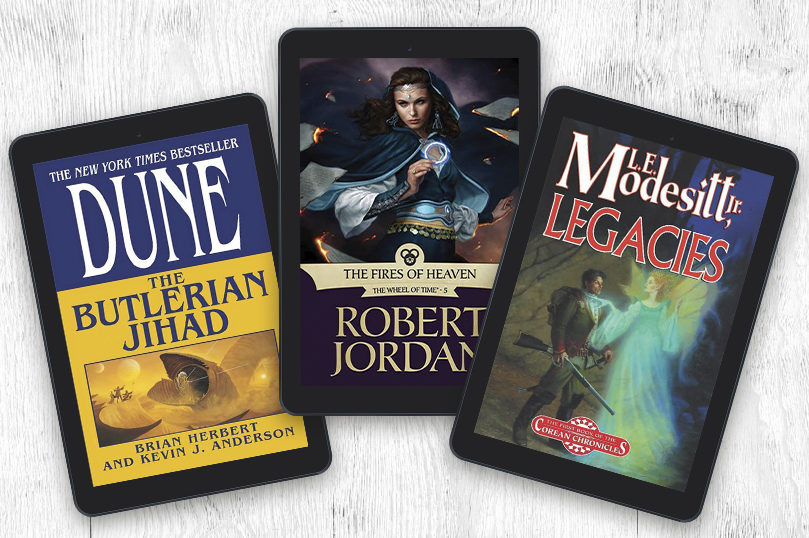
The Corean Chronicles: Volume One by L.E. Modesitt, Jr.

Placeholder of  -25

Millennia ago, a magical disaster caused the fall of a great worldwide civilization, the end of a golden age. New civilizations have fought their way up from the ancient destruction and chaos, knowing little of the lost world that preceded them or the details of its fall. Corus today is a world of contending countries, of humans, but also of strange animals and supernatural creatures. It is a place of magical powers, and of a few people who are talented enough to use them. This discounted ebundle includes: Legacies, Darknesses, and Scepters. 

Dune: Legends, Heroes, Schools by Brian Herbert and Kevin J. Anderson

Image Place holder  of - 7Frank Herbert’s Dune series is one of the great creations of imaginative literature, science fiction’s answer to The Lord of the Rings. Working from Frank Herbert’s own notes, the acclaimed authors continue to explore the Dune universe. This discounted ebundle includes: Legends of Dune: The Butlerian Jihad, The Machine Crusade, The Battle of Corrin; Heroes of Dune: Paul of Dune, The Winds of Dune; Schools of Dune: Sisterhood of Dune, Mentats of Dune, and Navigators of Dune.

The Wheel of Time: Books 5-9 by Robert Jordan

Poster Placeholder of - 43

Enter the world of The Wheel of Time, the genre-defining epic fantasy series by New York Times bestselling author Robert Jordan. The Wheel of Time turns and Ages come and go, leaving memories that become legend. Legend fades to myth, and even myth is long forgotten when the Age that gave it birth returns again. In the Third Age, an Age of Prophecy, the World and Time themselves hang in the balance. What was, what will be, and what is, may yet fall under the Shadow. This discounted ebundle includes: The Fires of Heaven, Lord of Chaos, A Crown of Swords, The Path of Daggers, and Winter’s Heart.

post-featured-image

24 Audiobooks to Match Your Travel Time

Fourth of July weekend is almost here and that has us thinking about SUMMER VACATION! We’ve planned our trip and packed our bags. The car is gassed up and ready to go. But here’s the hardest part: what audiobook are we going to listen to on the drive?

If we’re having this problem, we’re assuming you are too. So we decided to put together a list of recommended audiobooks of varying lengths. Whether it’s a short train ride or a long flight with transfers, here are 24 audiobooks that will help make the journey memorable!

(more…)

post-featured-image

Paperback Spotlight: Mentats of Dune

Mentats of Dune by Brian Herbert and Kevin J. AndersonOnce a month, we’re spotlighting a Tor book that’s about to become available in paperback. Today, we’re featuring Mentats of Dune, by Brian Herbert and Kevin J. Anderson, which will be published on February 3rd!

In Mentats of Dune, the thinking machines have been defeated but the struggle for humanity’s future continues. We hope you enjoy this excerpt:

What do all our accomplishments matter, if they do not last beyond our lifetimes?
HEADMASTER GILBERTUS ALBANS, Mentat School Archives

The great Mentat School was his—from the initial concept seven decades ago, to choosing this location in the remote marshes on Lampadas, to the many graduates he had trained over the years. With quiet efficiency and determination, Gilbertus Albans was changing the course of human civilization.

And he would not let Emperor Salvador Corrino or the fanatical antitechnology Butlerians take it away from him.

In the nearly two centuries of his artificially extended life, Gilbertus had learned how to survive. Realizing that controversial and charismatic figures tended not to remain alive for long, he played his public role with great care—remaining quiet and unobtrusive, even consenting to distasteful alliances that, according to his projections, helped the overall goals of his Mentat School.

Mentats: humans with minds so organized they could function as computers in a reactionary society that reviled any hint of thinking machines. Not even his own trainees knew that Gilbertus secretly drew upon the unique background, wisdom, and experiences of his mentor, the notorious robot Erasmus. He feared that even his most supportive students would balk at that. Nevertheless, after years of consistently reliable performance, his Mentat graduates were becoming indispensable to the noble houses of the Imperium.

In such dangerous times, though, any question or mere suspicion could bring down the school. He knew what had happened to the Sisterhood on Rossak. If he made the slightest mistake and revealed his true identity …

(more…)

post-featured-image

Frank Herbert, His Fiction, and Me

The Collected Stories of Frank Herbert by Frank HerbertBy David G. Hartwell

For five years in the 1970s I was Frank Herbert’s editor, and we maintained contact for the rest of his life. I liked him a lot.

By the time I got a job as science fiction editor at Berkeley Books (then a division of G.P. Putnams, and along with Coward-McCann, sharing the same offices), I had been reading Frank’s work for more than twenty years, having admired it since high school. One of my early favorite SF novels is The Dragon in the Sea, a prescient story about international oil theft from undersea wells in an oil-starved future. But I read all his books and many of his stories, and liked them all. Destination: Void, an early artificial intelligence novel, in another favorite. Then, of course, came Dune, his monumental classic.

To be in science fiction in those days was to be in the same social circles as everyone else in the field (well, I never met the pseudonymous Cordwainer Smith, but I knew someone who had, and I did get to visit Alice Sheldon—James Tiptree, Jr.), to go to the same parties as Arthur C. Clarke and Judith Merril and Isaac Asimov and Anne McCaffrey and, well, just about everyone. The field was just not that big and SF people were often isolated and yearned for the company of other SF people, and traveled hundreds or thousands of miles to hang out for a weekend at one of the few conventions held each year, fans and pros alike. So by the time I got a job that included being his editor, Frank and I had mutual friends, and I already knew his agent. The contract I inherited was for the third Dune book, Children of Dune, and that was the first one I worked on with him. I went to his house in Port Townsend, Washington a couple of times, and we got to know one another better.

Frank was in those days kind of a big blond-bearded Santa Claus figure who had immense enthusiasms, often about new technologies, but always about ideas, and about stories. He was clever and inventive. I could tell stories about publishing Children of Dune, and more about publishing his book on using home computers, and how no one really believed that they would sell well. But some of my favorite moments were visiting Seattle in the 1970s and 1980s when Frank was in town and having dinner at sunset on the water, sometimes also with my friend Vonda McIntyre, long friendly evenings of gossip and ideas. By that time Frank was a public figure, a bestselling writer, and there was a film adaptation of Dune coming out.

One of the things I always wanted to do, and could not because of the publishing situation in the 1980s and 1990s, was to edit and publish a collection of Frank’s short stories. And it began to become possible; my fine assistant at Berkeley from the Herbert days, John Silbersack, had grown into one of the major literary agents in New York, and now represented the Herbert estate. We could talk.

And so began a nearly five year process of finding a way to do the book, for the record but also for the entertainment of the vast Frank Herbert audience, which was still being cultivated by his son, Brian Herbert, and Kevin J. Anderson in the Dune world continuations. It’s here at last, The Collected Stories of Frank Herbert, and I feel as if another piece of my own life is happily completed too.

…………………………

From the Tor/Forge December newsletter. Sign up to receive our newsletter via email.

…………………………

More from the December Tor/Forge newsletter:

Kevin J. Anderson at Denver Comic Con

Kevin J. Anderson

Kevin J. Anderson, co-author of Mentats of Dune, will be at this year’s Denver Comic Con this weekend, June 13-15.

Check out his schedule of panels:

Friday, June 13th

  • 5:15 PM – 6:00 PM Panel: Tor and WordFire: Bestselling Author Kevin J. Anderson talks about being a Tor Books author and also the publisher of WordFire Press, Room 207

Saturday, June 14th

  • 11:45 AM – 12:35 PM Panel: Star Wars: Exploring the Expanded Universe, Kevin J. Anderson, including Tor author David Farland,  Room 103/105
  • 1:00 PM – 1:50 PM: Star Wars vs. Dune-Kevin Anderson Film, with Kevin J. Anderson, Room 403/404
  • 3:00 PM: Kevin J. Anderson Signing at BOOM! Studios Booth 500
  • 4:45 PM – 5:35 PM: The Writing Process: Focus on Sci-Fi with Kevin J. Anderson, Room 106

Sunday, June 15th

  • 11:45 AM – 12:35 PM Panel: Building My First Lightsaber with Kevin J. Anderson, Room 106

In addition to Denver Comic Con, Kevin will also be stopping at conventions across the country. Here’s where he’ll be in the upcoming months:

  • Tuesday-Friday, August 29-September 1
    Dragoncon
    Atlanta, GA

The owner of this website has made a commitment to accessibility and inclusion, please report any problems that you encounter using the contact form on this website. This site uses the WP ADA Compliance Check plugin to enhance accessibility.