Close
post-featured-image

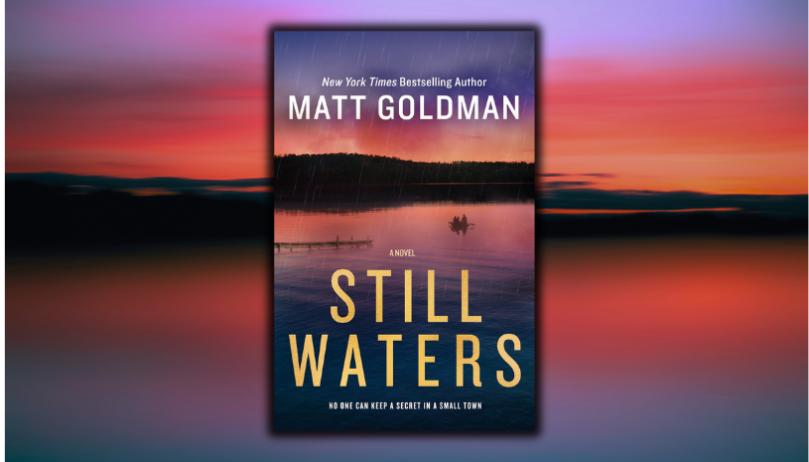
Excerpt Reveal: Still Waters by Matt Goldman

Still WatersIf you’re reading this email, I am dead. I know this will sound strange, but someone has been trying to kill me.

Liv and Gabe Ahlstrom are estranged siblings who haven’t seen each other in years, but that’s about to change when they receive a rare call from their older brother’s wife. “Mack is dead,” she says. “He died of a seizure.” Five minutes after they hang up, Liv and Gabe each receive a scheduled email from their dead brother, claiming that he was murdered.

The siblings return to their family run resort in the Northwoods of Minnesota to investigate Mack’s claims, but Leech Lake has more in store for them than either could imagine. Drawn into a tangled web of lies and betrayal that spans decades, they put their lives on the line to unravel the truth about their brother, their parents, themselves, and the small town in which they grew up. After all, no one can keep a secret in a small town, but someone in Leech Lake is willing to kill for the truth to stay buried.

New York Times bestselling and Emmy award-winning author Matt Goldman returns with a gripping, emotional thrill ride in this compelling story on grief and uncovering the past before it’s too late.

Still Waters will be available on May 21st, 2024. Please enjoy the following excerpt!


CHAPTER ONE

The Ahlstrom twins were not really twins. They were Irish twins, though they weren’t Irish either. But they were siblings and estranged ones at that. Odd because they seemed to get along with everyone else. Friends and coworkers had accused each sibling of being Minnesota Nice. So nice they might as well have been Canadian.

Liv and Gabe Ahlstrom had not spoken to each other in over a year when Liv picked up her phone and called her brother, who was not even a favorite in her contacts. Her florist was. The wine store down the street was. Even her dentist was. If your dentist is a favorite but your brother isn’t, well, that’s saying something. Months had passed since Liv had last thought of Gabe. Years had passed since she’d last seen him. For Liv, growing up with Gabe in northern Minnesota felt like something that had happened in a previous life, a life Liv had no desire to revisit.

“Hello?” said Gabe.

“Hi,” said Liv. “Listen, I have some bad news. Mack is dead.” She said the words out loud for the first time. They left her mouth in a rapid-fire, matter-of-fact tone. Liv felt empty and expected grief to fill the void, but grief did not come. She had hardly known her older brother. She did, however, know her slightly younger brother, Gabe, all too well.

“What?” said Gabe. “What do you mean Mack is dead? What are you talking about?”

Liv stood in the bay window of her townhouse looking down on Bedford Street. Spring splashed color on the West Village. Tulips
bloomed in sidewalk planters. Green buds tipped tree branches. The dark overcoats and boots of winter had been closeted in favor of pastel jackets, athletic wear, and sneakers. Liv kept her eyes on the street. She needed a distraction when talking to Gabe: her laptop, the TV, gazing down on passersby in lower Manhattan. Something. Anything. Talking to Gabe made her anxious, and a diversion softened the edge.

“I just got off the phone with Diana,” said Liv. “Mack had a seizure at the office yesterday. They rushed him to the hospital but he never regained consciousness. They took him off life support and he died this morning.” Liv caught her reflection in the window. She was thirty-eight years old and finally looked like the grown-up she’d always pretended to be. Organized. Driven. Focused. Responsible. There was a girl in there somewhere who Liv didn’t allow to have any fun. The pressure she put on herself had crinkled the corners around her eyes and lined her forehead.

“My God,” said Gabe. “Mack was only fifty. Damnit. A seizure? How did that happen? He’d never had a seizure before, had he?” The sad truth was that neither Liv nor Gabe knew whether or not their older brother had ever had a seizure. They were as distant from him as they were from each other.

Liv listened for emotion in Gabe’s voice but heard none. At least they had that in common. Maybe they were both in shock. Maybe
they both had hearts as cold as a northern Minnesota winter. Or maybe they were both healthy, well-adjusted, compassionate human beings except when it came to family. No shame in that. It’s why we have self-help books and moving boxes. Liv turned away from the window and sat on the couch next to her laptop. She scrolled through Facebook and said, “Diana told me Mack had been acting strange lately.”

“What does that mean?” said Gabe. “Strange how?”

“She said Mack seemed anxious. Nervous. Couldn’t sleep. Weird, right? And that he talked about us a lot.”

“That is strange,” said Gabe. “Mack wanted nothing to do with us. How did Diana sound?”

“Destroyed,” said Liv. “Totally destroyed. Her husband died.”

So much distance lay between Liv and Gabe: three thousand miles, three time zones, and three decades of disharmony. They had never liked one another, at least that’s how Liv remembered it. But that couldn’t have been completely true. Their brother Mack was half a generation older and rarely around. Their parents were busy running the family resort, leaving Liv and Gabe to fend for themselves—Liv and Gabe must have found a way to get along at least some of the time. And yet, after graduating high school in consecutive years, they each moved away from northern Minnesota. Liv went east. Gabe went west. They’d seen each other only a handful of times since. A handful of times in the past twenty years.

Gabe said, “When’s the funeral?”

“Thursday,” said Liv.

A short pause, then, “I wonder why Diana called you.”

Here we go, thought Liv. Gabe just learned his brother died and a minute later he’s wondering why Gabe’s widow had called Liv
first and not him. This was where Liv had to be careful. She’d never put Gabe down for not going to college. She’d never poohpoohed his dream of being a rock star. She’d never denigrated his parade of odd jobs while he chased that dream. Liv had never boasted about her accomplishments. And yet Gabe had a hair-trigger inferiority complex. “I don’t know,” Liv said. “She had to call one of us first.”

“I should give Diana a ring,” said Gabe.

“Yeah,” said Liv. “You should. She’d appreciate it.”

“Are you going to the funeral?”

“Of course,” said Liv. “I mean, we have to, right? Doesn’t matter if we hardly ever saw Mack. He’s our brother. We’re the closest
blood relatives he has.”

Gabe hesitated then said, “Do airlines still have discounts for a death in the family?”

Money. Another topic where Liv had to be careful. Liv and Gabe weren’t friends in real life but they were on Facebook, which allowed her to peek into his world, if only voyeuristically. In the photos he’d posted, he never wore anything nicer than jeans and a T-shirt. His apartment appeared small and modest. His travels seemed limited to day trips in Southern California—Mount Baldy, Malibu, San Diego. Liv was obviously doing a lot better than Gabe when it came to finances.

“Gabe, don’t sweat it,” said Liv. “I have tons of miles. They’re going to expire soon. I can get your ticket.”

“Really?”

No, not really. Last year Liv cashed in 300,000 miles to fly Cooper and herself to Paris first class. “Yeah,” lied Liv. “Use ’em or lose ’em. I can get your hotel, too.”

“Thanks,” said Gabe. “Appreciate it.”

“Yeah-yeah, of course.” Liv heard her husband’s footsteps on the narrow wooden staircase leading up to the third floor. Their townhouse was thirty feet deep and twenty feet wide and two hundred years old and, Liv often thought, the foundation of their relationship. They’d lucked into Bedford Street in their mid-twenties. They’d pooled every resource they had and then some to buy it. Liv couldn’t imagine living anywhere else.

She was about to call out to her husband when her laptop dinged. She looked at her screen and saw the notification. It was an email from Mack Ahlstrom. Mack Ahlstrom, her and Gabe’s older brother. Their older brother who had died hours ago. Liv’s throat went dry. She manipulated the pointer on her screen to hover over the email. Her fingers trembled. She took a deep breath . . . and clicked on it.


Click below to pre-order your copy of Still Waters, coming May 21st 2024!

opens in a new windowPoster Placeholder of amazon- 83 opens in a new windowImage Place holder  of bn- 65 opens in a new windowPoster Placeholder of booksamillion- 17 opens in a new windowibooks2 81 opens in a new windowImage Placeholder of bookshop- 42
post-featured-image

Excerpt Reveal: Such a Lovely Family by Aggie Blum Thompson

Such a Lovely FamilyThe cherry blossoms are in full bloom in Washington, D.C., and the Calhouns are in the midst of hosting their annual party to celebrate the best of the spring season. With a house full of friends, neighbors, and their beloved three adult children, the Calhouns are expecting another picture-perfect event. But a brutal murder in the middle of the celebration transforms the yearly gathering into a homicide scene, and all the guests into suspects.

Behind their façade of perfection, the Calhoun family has been keeping some very dark secrets. Parents who use money and emotional manipulation to control their children. Two sons, one the black sheep who is desperate to outrun mistakes he’s made, and the other a new father, willing to risk everything to protect his child. And a daughter: an Instagram influencer who refuses to face the truth about the man she married.

As the investigation heats up, family tensions build, and alliances shift. Long-buried resentments surface, forcing the Calhouns to face their darkest secrets before it’s too late.

Such a Lovely Family will be available on March 12th, 2024. Please enjoy the following excerpt!


CHAPTER ONE

Trying to be this perfect hurts.

The silk dress compresses Danit’s ribs, the three-inch espadrilles squeeze her toes, and the incessant smiling for the photographer makes her face sore. But pain is a small price to pay to belong. To finally be, at twenty-six years old, part of a family.

And not just any family—the Calhouns.

Ellie Grace slips her arm around Danit’s waist as the photographer calls out, “Fromage!” The pressure of her future sisterin-law’s arm against Danit’s ribs unleashes a warm feeling, the same sensation she used to get as a child when her mother would play with her curls. An almost primordial sense of belonging. I will finally have a sister, Danit thinks.

Danit fell hard and fast for Nate last year. That first month or two, it was hard to imagine wanting or needing anything more than him. But then she met his little boy, Malcolm, and saw pictures of his parents and brother and sister and realized that he came with this incredible family. And that by marrying him, she would instantly belong to his family as well. It was more than she had ever dreamed of.

Although this morning did get off to a rocky start with Ellie Grace, Danit attributes that to the stress of organizing the annual Calhoun cherry blossom party. When she and Nate and Malcolm arrived late last night to Nate’s childhood home, Ginny and Thom were already in bed. So her first introduction to the Calhoun family was this morning, when she came down for breakfast and found Ellie Grace fuming about missing flowers. When she turned on Danit, she was abrupt, bordering on rude.

“You’re not wearing blue-and-white gingham.” It wasn’t a question but a statement. Ellie Grace was wearing a sleeveless shirtdress in the checkered pattern.

“I . . . didn’t know I was supposed to,” Danit stammered, ashamed to have stepped in it so soon with Nate’s sister. When Danit was back in California packing for the trip, she had asked Nate if there was something special she should bring for the party. It was the first time she would be meeting her future in-laws, and she wanted to make a good impression. She knew they were wealthy, and she was nervous that what she had would not be good enough. But Nate had said nothing about blue-and-white gingham.

Thank goodness Ellie Grace had shown up with a collection of shirts, dresses, skirts, and wraps—all in gingham. Ellie Grace hustled Danit into the wood-paneled study off the living room to change. “I knew someone would forget. I’m sure I’ve got something in here that will fit you. Coastal Cues, that’s one of the brands we collaborate with, sent me a whole bunch of these. Here we go, this is cute!” She held up a sheath dress—navy blue on top and gingham from the waist down. You’re what, a size eight?”

“Ten, actually.”

Really, Danit is a twelve. Sometimes a fourteen. But it was nothing that a little Spanx and holding her breath wouldn’t take care of. And she wanted to please Ellie Grace.

“Give me that Calhoun smile!” the photographer orders with the verve of a cheerleading captain.

The Calhouns shift ever so slightly for the photographer, their stately white house in the background. From the corner of her eye, Danit glances at Nate’s parents—Thom, with his athletic build and perpetual tan, and Ginny, whose smooth, unlined face belies her sixty-two years. She hasn’t had a chance to really talk to them yet, not with the chaos of the party, and she has no idea what she will say to them when the opportunity arises.

Danit worries she might pass out from the warmth of everyone’s bodies and the constriction of the dress. The late-spring sun isn’t helping. It was much cooler in Mendocino when they left yesterday. Next to her, Malcolm fusses in Nate’s arms, and she takes the baby happily. He plays with the diamond on her ring finger

“Since you’re not yet technically a Calhoun . . .” Ginny winks at Danit, letting her finish the thought for herself.

“Oh, of course!” She steps away from the group and out of the photo.

“That’s ridiculous,” Nate says, but Danit shakes her head at him and smiles to let him know she understands. Which she doesn’t, of course. She’s never been in a family portrait—there was just her and her mom growing up. But she can kind of see where Ginny is coming from.

After all, Nate has already been divorced once.

This photo will go out this Christmas and feature the whole clan, all of them wearing some iteration of blue-and-white gingham. The men in button-downs, their sleeves rolled up, a little bow tie for baby Malcolm, a headband for Ginny, and so on. Even matching collars for the two French bulldogs, Asti and Spumante.

Ginny might be worried that the marriage will not go through and they will be stuck with photographic evidence of a failed relationship.

But it will. Danit is sure of it.

Out of the corner of her eye, Danit can see the first guests arriving. And just like that, the photographs are over and the party has begun. Light jazz begins to play from hidden speakers, and it seems to Danit that the pink and white tulips planted along the front border stand up and salute as if on cue. The Calhouns scatter and, almost like magic, waiters appear, circulating the lawn with shrimp puffs and mini quiches and trays of fizzy pink drinks.

Suddenly finding herself alone, Danit grabs a drink off a tray and takes a big sip. She doesn’t want to get drunk, of course. She wants just enough to take the edge off. Meeting all your future in-laws at once is tough to tackle sober.


Click below to pre-order your copy of Such a Lovely Family, coming March 12th 2024!

opens in a new windowPoster Placeholder of amazon- 81 opens in a new windowImage Place holder  of bn- 23 opens in a new windowImage Placeholder of booksamillion- 32 opens in a new windowibooks2 99 opens in a new windowImage Placeholder of bookshop- 20

post-featured-image

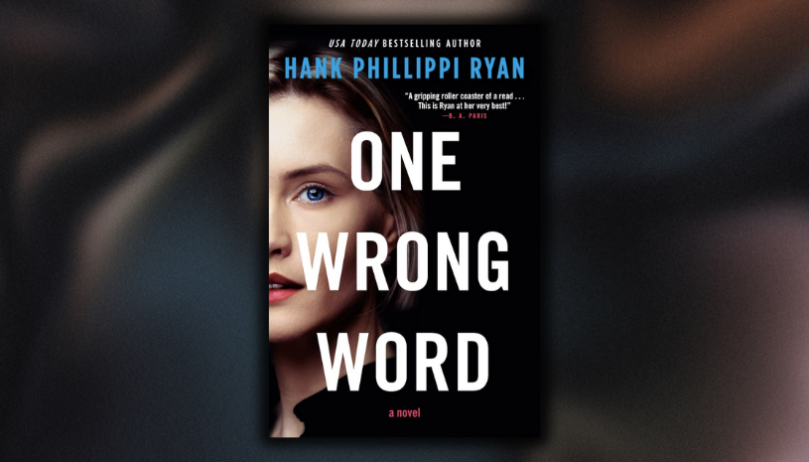
Excerpt: One Wrong Word by Hank Phillippi Ryan

One Wrong WordA heart-racing new psychological thriller from USA Today bestselling and multiple award-winning author, Hank Phillippi Ryan. Coming February 6th, 2024!

One Wrong Word stars crisis management expert Arden Ward. And here, in her beloved office, she is about to get a surprise from her boss, Warren Carmichael. This scene picks up in the middle of the chapter.


Warren actually gulped. She’d never seen his face so ashen.

“Listen, Arden. I don’t like this any more than you will. But understand.

The Swansons are major clients. Lucrative clients. Company-supporting clients.”

“Well, I know. I brought them to you. When we met at my Saving Calico childhood leukemia fundraiser. Remember?”

“Oh. Right.” Warren picked up his glass, rattled the ice. “I didn’t think anything could make this more difficult.”

“Make what?”

“So Patience Swanson thinks you and her husband have a . . . thing. That he gave you the Joy.”

“The perfume?” Arden clapped a palm to her chest. “She’s insane.”

“Possibly. Probably. But that doesn’t change anything. She demands that we let you go.”

“She? Demands? You let me go?” Every nerve cell in Arden’s brain burst into flames.

“I have no choice.”

“Choice? Of course you do.” Arden took a step toward him, arms spread in exasperation and disbelief. “Who does she think put her husband where he is today?”

“I’m sorry, Arden. It’s a situation. I don’t know what to say.”

“You don’t? Well, I do.” She jabbed toward him with a forefinger. “You can say ‘she’s lost her freaking mind.’ You can tell that woman I’m a valuable employee who brings in big bucks, and new clients, and will continue to do so. And who, it goes without saying, is not having some sort of sordid affair with her vile entitled husband who clearly she has problems with. But the ‘problems’ are not me. A situation? It’s my life!”

“I’m sorry, Arden. Unless you can prove he didn’t give you perfume. Unless you can prove he didn’t—”

She rolled her eyes to the heavens, then harnessed her outrage. “I’m not going to prove one thing on this planet. Ask him, right? First of all, I can’t prove something that didn’t happen, that’s through the looking glass, and I cannot believe you’re even asking me that. Is that what you think of me? Let me ask you that. That this is true?”

“No, of course not, no.” Warren lurched to his feet, turned away, not looking at her, looking at every place else but her. “He’ll deny it. So I can’t force him to—”

“Ah. I see. Warren. Look at me. So you believe her, not me? Is that what you’re saying? Because if that is what you’re saying, Warren, I could file so many lawsuits it’d make your head spin. Hey. You’re a pro.Imagine the headlines. Blame the victim? Or wait, would you paint me the vixen, the temptress? Oh, yeah, do it. Please do that. I’d love that. Bring it.”

Warren had to know this was bull. “Are you hearing me?” she persisted.

“Are you ignoring me? Look at me. I know the rules. I know the deal. You cannot do this. I’ll go to HR so fast it’ll—”

“Be careful, Arden.” Warren interrupted her. “Take a beat. If you sue me, well, that’s not gonna help you, is it? Suddenly you’re . . . a problem employee. A liability. On the defensive. It’s not a good look. You know that.”

“What I know—and what you know—is that it’s not true.”

“What I know is that if the Swansons leave us, if they take their billings, I’d have to fire three other people to make up for it. Do you want to be responsible for that?”

“Oh, no. No. That’s not fair.” Arden wiped away the space in front of her, erasing Warren’s words. “Do not make me feel guilty about people losing their jobs over a lie.”

“We won’t let this get out,” Warren said. “It’ll stay between us.”

“Right. Between us.” She choked down a bitter laugh, focusing her anger. “And Patience Swanson. And Arthur Swanson. And whatever gossip mongers and sycophant confidantes and social media jackals—I cannot believe I’m saying this. A secret. As if anyone could keep a secret.”

She drew in a breath, her judgment obliterated by expanding rage. Narrowed her eyes. “Unless they’re dead.”


Click below to pre-order your copy of One Wrong Word, available February 6th, 2024!

opens in a new windowPlaceholder of amazon -33

opens in a new windowPlaceholder of bn -98

opens in a new windowPlace holder  of booksamillion- 64

opens in a new windowibooks2 70

opens in a new windowImage Place holder  of bookshop- 41

post-featured-image

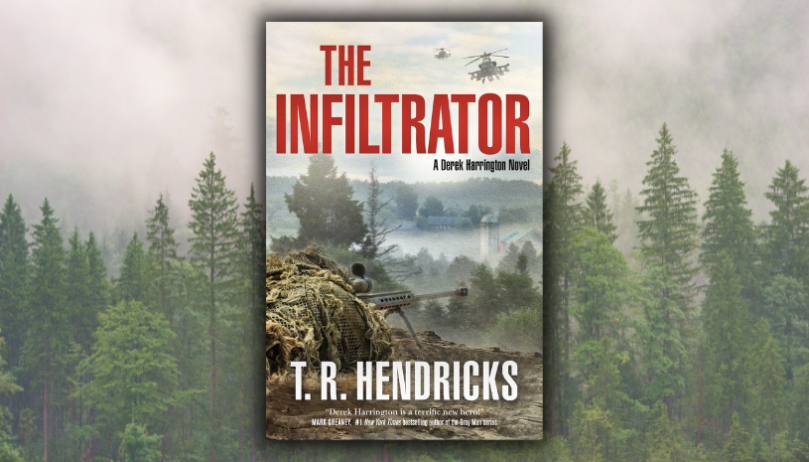
Excerpt Reveal: The Infiltrator by T. R. Hendricks

The InfiltratorT. R. Hendricks’s Derek Harrington returns in The Infiltrator, an adventure of man vs wild—and the domestic terrorists hidden there.

One year after the clash with his former students in upstate New York, retired Marine Warrant Officer and SERE instructor Derek Harrington is the tip of the FBI’s spear in their mission to eradicate the domestic terrorist group known as Autumn’s Tithe. After several successful operations, intelligence points to one final camp in the remote Kentucky wilderness, and Derek prepares to take down Autumn’s Tithe for good.

At the same time ex-FBI Special Agent Hannah Kittle, or Sarah as she is known to the group, devises a plan to meet Derek and her one-time Bureau colleagues head on. Yet her benefactor’s faith in Sarah’s ability to lead Autumn’s Tithe is waning, and other plans are being enacted. Knowing full well what it means for her should those plans succeed where she has failed, Sarah will stop at nothing to see that she is the victor.

As the competing agendas unravel, events place Derek and Sarah on a collision course, setting the stage for a confrontation that will bring Autumn’s Tithe right to Derek’s doorstep.

 The Infiltrator will be available on April 23rd, 2024. Please enjoy the following excerpt!


CHAPTER ONE

The time had come to hit the hammer against the anvil, instead of just letting them feel the fire of the forge.

It’s simple. They’re not getting the picture. Not his words but they roll around inside his head all the same. Passed down from higher-ups, the sentiment preceded the new shift in strategy. A harder approach. Time for a pounding.

Easy to say when you’re in a conference room back in D.C.

Derek Harrington, retired Marine Force Recon and wilderness survival expert, now press-ganged into service with the FBI, doesn’t have that luxury. As point man in the effort against the domestic terrorist group Autumn’s Tithe, not only does he have to watch the hammer fall, but he has to be the one to swing it.

Raising his binoculars, he scans the hilltop directly west of his position. He’s in a good spot. Slightly lower than the hill across from him but the difference in elevation is negligible. Derek can still observe everything. The West Virginia trees and foliage provide ample cover as he lies in the prone position, glassing the enemy’s camp.

A long, low saddle runs between the hills. Off to his left a twotrack dirt road winds its way from west to east through the forest floor. Just enough of a break in the canopy allows him to see along its length. For his part, Derek only has to turn his head slightly and he can observe the entirety of the path as it weaves past his hill and continues on. The perfect vantage point for viewing comings and goings as well as the compound.

Across the way he can see their silhouettes moving through the trees. The larger shadows of cabins and workshops fill in the spaces between the pines and oaks. It’s a clear morning and although the sun shines down, a mountain chill hangs in the air. Perhaps it’s the air, or perhaps it’s just him. Maybe he’s getting soft in his old age. These people are trying to commit mass murder, after all, but still. Some of those shadows across the way are no bigger than his boy back home.

The thought intrudes despite Derek’s operational disposition. Michael. His boy. His poor boy. A pang of heartache ripples through him. Will his son ever be the same after what happened? Michael seems to be a normal, happy kid so long as he can stay in his bed and play video games most of the time. Venturing out of his room, much less the house, could be a crapshoot with how he would respond. Getting him to school was difficult on the best of days and downright impossible on the worst. The only things that Michael regularly enjoys are playing baseball and fishing, no doubt reverting back to those activities for the comfort they brought to him before his kidnapping. Derek would need to keep easing him out there. Helping Michael to adjust to life outside the walls of the home.

They’re not getting the picture. Send them a message.

The directive pulls Derek back to the mission at hand. The intel developed from the logging camp in upstate New York had given the FBI enough of a lead to put him into the field eight weeks later, this time in northwestern Pennsylvania near the Allegheny National Forest. It didn’t take long for Derek to track down the second compound and call in the cavalry. The group there had received a lot of support staff from the first camp and had barely begun preparations for any sort of attack before HRT rolled them up without a shot being fired.

The subsequent interviews and plea deals divulged even more intel, which when processed and war-gamed by enough people in suits standing in rooms making themselves feel important, gave Derek his next foray. That time it was into a little no-man’s-land where the southwestern tip of Pennsylvania meets the West Virginia border.

Word from the mastermind still at large had reached this cell ahead of him, despite what the Feds would discover later as an attempt to alter their tradecraft and forgo the use of electronic communications. The people there were well on the way to staging their attack, but in their haste they overlooked other logistics. When Derek called it in and the FBI arrived, the entire camp threw themselves at the feet of their apprehenders, begging for food, clothes, and an escape from the brutality of winter.

Still, the correlation was apparent. Not only was Autumn’s Tithe growing more sophisticated, they were accelerating their operational timeline. Whereas that crazy old bastard, Marshal, had wanted each cell to carry out an attack every fall until he brought the United States government to its knees, it seemed Sarah—Hanna—was pushing the individual groups to launch against their targets as soon as possible. Maybe it was because of his interdiction that she felt the need to act quickly. Or maybe it’s because she’s a ruthless maniac bent on murder. Either way it didn’t really matter. After the third camp was neutralized, the Feds had her and the group on the ropes.

Or at least so they thought. Derek had felt the same way until he came upon this compound, nestled in southwestern West Virginia. If he hadn’t found it when he did it might have been too late. When word was sent back to higher-ups about the preparations being nearly complete, the reactions were furious. Hence the need.

Send them a message.

His radio earpiece crackles. “Hey, Slingshot.” Derek cringes every time he hears the call sign. It had been given to him by Jason and Rob as some good-natured ribbing, but all things considered, Derek would rather have something a bit less obnoxious. “Can we get a SITREP?”

Derek takes one hand off his binoculars and keys the button attached to the front of his tactical vest. “Grizzly 6, nothing new. Developing the situation further. Will advise. Over,” he whispers just loud enough to be heard on the other end.

“Roger that, Slingshot,” Jason replies. “Hopefully we get some movement soon. The aviation boys are getting antsy. Said they don’t think they can hold much longer.”

Derek lowers his binos altogether and slips the cuff of his Marine woodland pattern camouflage blouse back enough to expose his watch. He keys up again, not bothering to hide the confusion in his voice. “Grizzly 6, Slingshot 6. My count has Reaper time on station for at least another seven hours. You mean the Apaches, over?”

“Bingo, Slingshot,” Jason chimes back. “Flyboys getting nervous as usual.” His own voice is laced with a modicum of exacerbation. Not surprising given his Airborne Ranger pedigree. The swagger of line troops almost always led to no small amount of eye rolling when it came to the concerns of other branches. This was especially true amongst the straight-leg infantry types of the world.

Marine Force Recon wasn’t any different from the Army in that regard. Derek depresses his push-to-talk button. “If they’re so nervous, get me Marines in Cobras instead of these National Guard wannabees next time. Devil Dogs will fly those things on spit and harsh language if they have to.”

A few moments go by before the radio crackles again. Derek can make out the last vestiges of laughter dying out on the other end as Jason’s voice comes through. “Wilco, Slingshot. Oorah!” the former Army noncom adds mockingly.

Derek smiles as he scoops up his binos and resumes surveillance of the opposite hill. Despite their less than auspicious start together, a mutual respect and admiration had grown between the three former members of the military’s elite. Derek found Jason and Rob to be seasoned professionals capable of proficient operational planning and execution the more time they worked together. Likewise, the duo had expressed to him on more than a few occasions their disbelief at Derek’s survival skills, field acumen, and technical and tactical expertise.

The shared “mission first, people always” mindset set the stage for their successes. With each camp neutralized it was another notch on his handlers’ belts, so much so that Derek was helping make their careers for them. Jason was now the leadership element’s point man in the field, while Rob had been elevated to Assistant Special Agent in Charge of the entire task force. In return, they watched out for Derek, insulating him from the inevitable reach of FBI politics and logistical nonsense, while ensuring that he had every piece of state-of-the-art equipment, weaponry, and supplies at his disposal to make his time in the wilderness as smooth as possible.

Derek had to give it to the Feds on that front. His next-gen gear capabilities bordered on near-future science fiction at times. Not prototypes, mind you. Field-tested and certified equipment just waiting on budget appropriations for widespread distribution to the military. Billions will be spent fielding the gear en masse, but for a single individual the cost was negligible.

The concept for his loadout was all about combining multiple pieces of equipment into singular units to keep Derek light and mobile. His AN/PRC-177 multi-band encrypted radio with satellite uplink gives him the ability to reach the forward command center, the helicopters holding so far out that their rotor blades can’t be heard, and the drone pilot sitting in a trailer somewhere in the Arizona desert.

A specialized wrist-top computer, essentially a glorified, encrypted iPhone on steroids, sits in a camouflaged sleeve, reminiscent of what a quarterback wears to reference plays, on his left forearm. With it Derek can send and receive text messages with his command element, upload and download content like photographs or map overlays, mark his GPS position for satellite tracking, and passively transmit his vital signs. The computer even has a flora and fauna identification scanner, complete with a database of every known species indigenous to the United States.

A woodland camo boonie hat with a harness sewn into the interior lining supports an Enhanced Night Vision Goggle Monocular borrowed from the Army. Derek carries an M38 Designated Marksmanship Rifle, an upgraded version of the Marine Corps M27 Infantry Automatic Rifle, which has greater range, accuracy, and cycle rate of rounds than the standard M4 carbines that he was familiar with during his time in. A cutting-edge Leupold illuminated reticle scope combined IR beam, laser rangefinding, target designation, and live streaming capabilities into a singular optic. The enhanced rifle gives Derek the ability to see farther and shoot faster.

He only carries four magazines on the front of his vest in addition to the one already seated in the well of his rifle. The relatively low amount isn’t ideal, but Derek accepts the trade-off for the alleviation in weight. He knows that if he ever gets into a major firefight his greatest weapon will be the radio on his back, not the rifle in his hands. Strapped in the drop-down holster attached to his right leg platform is a Sig Sauer M18 pistol should shit really hit the fan.

The remainder of Derek’s tactical vest is outfitted with pouches containing the absolute essentials he needs should he become separated from his assault pack. A compass and maps. A trauma kit complete with hemostatic bandages and a combat tourniquet. A LifeStraw personal water filtration unit. One pocket contains tinder, lighters, and waterproof matches.

His assault pack, just a little bigger than a standard backpack, holds other items considered necessary but not essential. An insulated bivy sack to sleep in that can act as a VS-17 signaling panel if turned inside out. A larger field medical kit. A Katadyn water filtration pump to fill the integrated CamelBak reservoir. A solar recharging panel and spare batteries for his electronics. Four grenades: incendiary, smoke, fragmentation, and a flashbang. A suppressor attachment for the M38 rifle. Wire for setting snares. Tackle for fishing. Extra socks. Derek has a few emergency rations just in case, but he never starves while he is out, even in the dead of winter.

Rounding it all out is Derek’s trusted StatGear Surviv-All survival knife strapped to his left leg platform. Matched with his survival skill set, the consolidated equipment further enhances his ability to travel quickly and quietly, allowing him to infiltrate and observe the enemy with lightning speed.

The loadout was proving itself so effective that the Marine Corps procurement guys were already getting hard-ons about fielding it to larger numbers, mainly Force Recon, Raiders, and snipers.

Trucks turning over heightens his attention. Derek forgets about the equipment and focuses his binoculars. Through the trees he can see the shadows of large vehicles moving. Derek punches the button to his radio. “Grizzly 6, we’ve got movement. Going to open channel.”

He doesn’t wait for a response. Rotating the housing ring around his push-to-talk button, Derek switches his radio to the frequency dedicated to coordinating the involved parties. “All task force elements, this is Slingshot 6. Report readiness condition, over.”

“Slingshot 6, Saber 1. Redcon one.”

“Cherokee 6, redcon one.” The whir of the helicopters’ rotors can be heard in the background of the pilot’s transmission.

Jason’s voice comes over again. “Grizzly 6. Redcon one.”

“Roger,” Derek replies, “all elements redcon one. We have vehicle movement inside camp. Stand by. Saber 1, you’re on deck.”

The pilot in Arizona keys back. “Roger over. Standing by.”

Through the binoculars he can see the vehicles heading away from camp toward the west. Derek watches until the shadows and the decline of the hill swallow them from his sight but the sound of their engines never fades completely. He listens for the straining, sudden exertion of gears not meant for this mountainous terrain or navigating the steep twists and turns.

After a few moments the sounds of the engines begin to increase. Derek shifts his gaze to the base of the hill, where the dirt tracks disappear into the tree line. Sure enough, three vehicles appear. A Chevy pickup in the lead, a U-Haul box truck in the middle, and a white panel van bringing up the rear. All three amble along, rocking back and forth as they move slowly over the uneven ground.

He keys his radio. “Sabre 1, Slingshot 6. Type-three control, bomb on target. Advise when ready for 9 line.”

The drone pilot crackles back. “Go ahead, Slingshot.”

“Lines one through three, NA, break. Two eight niner eight feet. Civilian vehicles moving west to east. Grid mike lima eight four two, three niner seven, break. Slingshot laser, code one six eight eight. Northeast eight five zero meters. Acknowledge and advise when ready for remarks.”

The vehicles continue toward him as the reply comes over his earpiece. “Roger, Slingshot, ready.”

“Laser target line two three six. Final attack heading three three zero to zero three zero. Read back lines four, six, and restrictions.”

“Slingshot 6, good copy. Two eight niner eight feet. Mike lima eight four two, three niner seven.”

“Saber 1, good readback. Call in with heading.”

“Copy Slingshot. Saber 1 in, heading three three zero,” the drone pilot replies.

Derek lowers his binoculars and pulls his rifle over. Before looking through the scope he notices movement out of his peripherals. A quick glance shows the patrons of the camp coming out of the wood line to stand on the hill’s edge. They wave to the vehicles as they bounce along the road, now a little less than halfway between the two hills. “Fuck,” he mutters before acquiring the U-Haul in his scope.

“Slingshot 6, overhead. Ready for spot.”

“Proceed south. Run in three thirty to one fifty. Laser target line two three six.”

“Roger. Three thirty to one fifty for laser handoff. Ten seconds.”

“Saber 1, roger. Ten seconds.” Derek takes a deep breath.

“Slingshot 6, laser on.”

Derek steadies his aim, keeping the red dot produced by his riflemounted laser on the side panel of the U-Haul. He tracks the truck as it moves from right to left in his field of vision. “Lazing.”

After a few moments the pilot comes back. “Spot. Cease laser.”

Derek switches off the laser but keeps his scope on the vehicles so that those in the forward command unit can watch the live feed. “Saber 1, do you have contact?”

“Slingshot 6, affirmative. Contact. Three vehicles moving west to east. Box truck is center mass.”

His heart starts to thump in his chest. Despite the cool air, beads of sweat break out on his brow, and Derek can feel dampness in his armpits. “Correct, Saber, that’s your target.”

“Tally target,” the drone pilot says, further acknowledging the acquisition.

Derek has the pilot call in the attack heading again. Upon receiving the appropriate response, he pauses momentarily. Derek swallows. “Cleared hot.”

“Slingshot 6, Saber 1. Commencing engagement. Time on target, thirty seconds.”

Derek squeezes his eyes shut. He waits a few moments, letting his years and experience dictate the length of his tactical pause. A couple of counts go by before he keys up again. “All Cherokee elements, proceed to incursion points, over.”

The whir comes back through the radio. “Slingshot, Cherokee 6. Roger, inbound time now.”

Derek’s stomach gurgles. He spares a quick glance for the people watching on the hilltop. There is a steep and sudden whoosh, and then a flash. The concussive wave comes next followed by the erupting sound of an explosion.

The Hellfire missile detonates on impact when it hits the U-Haul. The contents inside, stacks of fertilizer laden with ball bearings and other forms of shrapnel, ignite immediately in a massive secondary explosion. The shrapnel and fireball produced burst through the windshield of the van trailing the box truck, engulfing it and the fully armed team riding in the back. The blast lifts the Chevy and throws it through the air like a Matchbox car, the vehicle crashing through the upper heights of the surrounding trees, severing limbs all the way back down to the ground.

Dirt and dust flies up in an all-encompassing cloud. Derek drops his head, one hand holding his boonie hat in place, the other pulling his rifle under his chest as the hot air rushes over him. A shower of shattered trees and rocks immediately follows the echo of the blast. Derek waits for the rain of debris to cease before conducting his battledamage assessment.

“Saber 1, Slingshot 6. Mission successful. Three vehicles destroyed.” He clears his throat, his mouth suddenly dry. “Estimate twelve casualties. Out.”

Derek looks over to the camp. The entire landscape is awash in gray dust save for the flaming wreckage down below. For a few moments there is absolute silence. Then the screams come.

He can’t see the families of those that were in the vehicles, but he hears their laments of shock and loss. It’s a blessing that the hum of the rotor blades from the choppers comes a few seconds later and drowns them out.

The gray dust curls away as two Apache attack helicopters race in from the west and east. They flare up to halt their speed, the pilots briefly showing the underbelly of their aircraft before leveling out. As the aircraft dip back down, rockets, missiles, and 30mm cannons are menacingly brought to bear. A moment behind them, two UH-60 Black Hawks enter the airspace and form an outer perimeter. Ropes are dropped from both sides on each chopper and members of the FBI’s elite Hostage Rescue Team begin fast-roping down to the deck.

They wear uniforms close to that of the Army. Fatigues in the operational camouflage pattern with olive drab plate carriers fastened over their chests and backs. Assault rifles and submachine guns dangle from their slings as the men zip down the lines. Once on the ground the individual teams get into wedge formations and race up the hilltop.

Derek glasses over the camp one more time. The group is in total disarray. Shock from the explosion. Staggered with their losses. Frozen by the sudden appearance of helicopters swarming all around them like a hornet’s nest that’s been kicked. As the members of HRT breach their perimeter the camp members fold, collapsing to the ground only to be put in the prone position, zip-tied, and searched. Already he can hear the sirens of the state police and fire departments making their way up the mountain road. Derek sighs.

Message sent.


Click below to pre-order your copy of The Infiltrator, available April 23rd, 2024!

opens in a new windowImage Placeholder of amazon- 31

opens in a new windowPoster Placeholder of bn- 26

opens in a new windowImage Placeholder of booksamillion- 90

opens in a new windowibooks2 81

opens in a new windowPoster Placeholder of bookshop- 61

post-featured-image

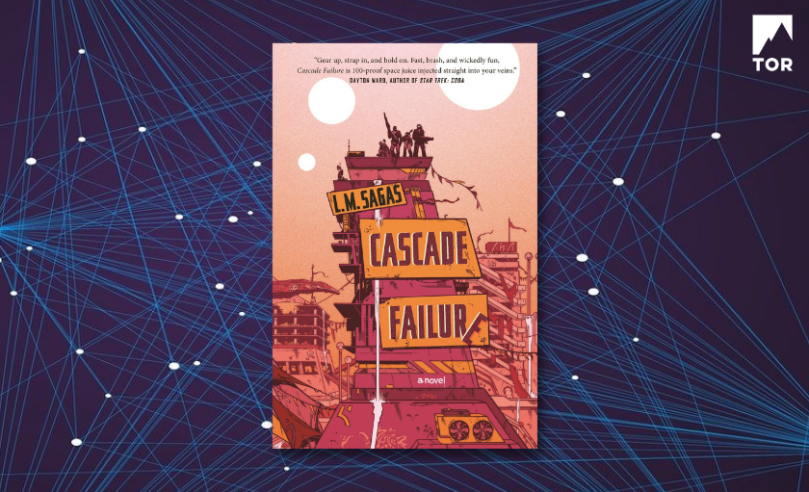
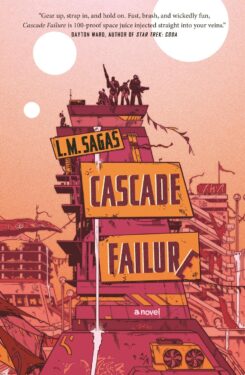
Excerpt Reveal: Cascade Failure by L. M. Sagas

opens in a new windowPlaceholder of amazon -92 opens in a new windowPoster Placeholder of bn- 39 opens in a new windowImage Place holder  of booksamillion- 14 opens in a new windowibooks2 25 opens in a new windowPlace holder  of bookshop- 46

opens in a new windowcascade failure by l m sagas

L. M. Sagas’ debut, Cascade Failure, is a high-octane, sci-fi adventure blending J. S. Dewes’ Divide series with Firefly. It features a fierce, messy, chaotic space family, vibrant worlds, and an exploration of the many ways to be—and not to be—human.

There are only three real powers in the Spiral: the corporate power of the Trust versus the Union’s labor’s leverage. Between them the Guild tries to keep everyone’s hands above the table. It ain’t easy.

Branded a Guild deserter, Jal “accidentally” lands a ride on a Guild ship. Helmed by an AI, with a ship’s engineer/medic who doesn’t see much of a difference between the two jobs, and a “don’t make me shoot you” XO, the Guild crew of the Ambit is a little . . . different.

They’re also in over their heads. Responding to a distress call from an abandoned planet, they find a mass grave, and a live programmer who knows how it happened. The Trust has plans. This isn’t the first dead planet, and it’s not going to be the last.

Unless the crew of the Ambit can stop it.

Please enjoy this free excerpt of opens in a new windowCascade Failure by L. M. Sagas, on sale 3/19/24


Chapter 1

Jal

Somewhere in Jal’s file was a note from an old crewmate that read, Jalsen Red will either be the reason you die, or the reason you live. Good fucking luck.

With a love letter like that on his record, he should’ve figured pretty quick that his Guild career was on the fast track to nowhere. Would’ve saved a lot of folks a lot of grief, but Jal just wasn’t made to be a thinker. Wasn’t in his DNA.

They’d seen to that.

Just as well. If he thought too much about what he was doing, he’d just as likely turn back the way he came; hop that rickety old shuttle back to the ass-end of the O-Cyg spiral, away from the hustle and bustle of the outpost. That was what a thinking sort of man would’ve done.

Jal ducked his head and kept walking, glancing around the hangar through a dirt-brown mess of shaggy hair that had gone too many days without a washing. Must’ve been a dozen ships there—rows of shiny hulls and top-of-the-line gear, idling on docks suspended fifty-some-odd decs above an airlock. He paused by the rail to look down as one of the doors lurched apart with the groan of well-used metal, coughing up another shuttle with the Trust’s big, embellished T stamped on each side, up top, and just about everywhere else they could stick it. Shit, probably would’ve stamped it inside the plumbing, if they thought anybody’d ever see it. It was all about the brand. The Trust was the centuries-old answer to what always seemed to Jal to be a pretty stupid question: What would happen if we let a bunch of big-money business types go out and settle space? No governments, no oversight, just carte-goddamn-blanche to claim and build and grow as they pleased. A handful of corporations spreading like fungus in the black, swallowing each other and anything smaller than them, until everything was smaller than them. As long as Jal’d been alive, they’d been the only game in town.

Newcomers, he thought. Only ships coming out of the center of the spiral ever looked that nice. The ones headed outward, deeper into the frontier circles, had taken a few more knocks in their time, carting prospectors and workers out to make their fortune in the next cluster of newly terraformed planets. He tipped his head in a half-assed salute and pushed off the rail. Best of luck to you. God willing, they’d find better luck out there than he had.

Back into the crowd. He’d have to get used to that again— all the people. Merchants and mechanics hawking their wares, pushing their carts down gangways barely wider than Jal’s arm span. Crews out stretching their legs before their next trip. It didn’t matter how much he tucked his shoulders and hugged the rails; he still got bumped into and jostled and mean-mugged for his trouble. Halogen lights burned above like hundreds of white dwarfs, stinging his eyes through the shaded lenses of his specs. So bright, and so busy, and so blaring, and if he let himself focus on all of it, get drawn into the sights and sounds and scents of being surrounded by so many strangers in a strange new place, he’d forget how to breathe.

But.

He’d come this far, gotten this close. Closer to the center of the spiral, closer to civilization, closer to home. He could keep going a little while longer, to hell with the rest. Head down, keep moving—he was good at that.

Down the gangway a few rows, he spotted a ship with its cargo bay door down, engines running. Contestant number one. Running engines meant they’d just gotten in, or they were just leaving, and judging by the couple of guys slow-walking their way back up the ramp, he leaned toward the latter. “You got need of an extra hand?” he said under his breath. He’d practiced it so many times on the shuttle ride in that he’d lost count, but hadn’t yet had occasion for an audience. Shuttle rides to the outpost were cheap—handful of caps would cover the fare, though a meal and legroom would cost you extra— but heading any farther inward was a pocket-emptying sort of enterprise, and Jal’s pockets had nothing but lint. Leave rich or stay poor: those were the options, out in the frontier. The last one just never seemed to make it into the ads.

His gut was in a weaver’s knot as he came up on the ship, mouth gone dry and sour. “You got need of an extra hand?” he croaked out again, voice breaking in the middle. Yeah, fine, he was rusty. Hadn’t said much to another person in years that wasn’t yessir and no sir and fuck you, sir. Although ’scuse me was making its way back into his vocabulary with gusto. “You got need—”

A flash of gray paint above the wing of the ship stopped him in his tracks. Too abruptly, it turned out, because a slip of a woman in coveralls bounced off his back with a curse so colorful he might’ve laughed under different circumstances. Instead, he barely managed to rasp out one of those “’scuse me”s as she strode on past, light glinting off the fine polymer filaments woven into her dark braids. An augmented? You didn’t see a lot of Biomech out this far. He couldn’t have stopped and asked her anyway. She was too far down the gangway, for one; and for two, that weaver’s knot seemed to have lodged itself in his throat.

A flag. Just a stupid painted flag, gray against the hull’s sleek silver and emblazoned with a spiral of white stars, but Jal’s heart still stumbled over the next few beats. It was the banner for the Guild—two parts paramilitary, one part gig economy. Thousands of different crews in thousands of different ships taking thousands of different jobs from the Guild-sanctioned postings, all bound up together with a simple guiding principle: the neutral preservation of life. Felt like a lifetime since he’d worn that flag on his shoulder. He’d have happily gone another lifetime without seeing it again.

Shit. He cut left, angling away from the Guild ship and down the gangway. Had they seen him? He didn’t risk a glance back, cutting his way through the crowd as quick as he could without drawing attention.

“Refurbed cables!” barked a merchant from a cart piled high with coils of wire. Which, Jal had learned, was just a fancy way of saying stolen. Lifted from ships when nobody was looking, identifiers buffed off and cleaned up so nobody’d know them from the rest of the pile. “Half the price, just as nice!”

The woman he’d bumped into, the augmented in the coveralls, picked over the stacks of cables with a disinterested eye. Not really shopping, just killing time—waiting for somebody, maybe, and she didn’t even look at Jal as he slipped past.

Not you, either, he thought, passing a shiny-hulled shipping vessel with its cargo door dropped. No Guild flag in sight, but she was loaded to the gills, and a pair of merchants squabbled on the dock over who saw her first, so they must’ve seen some serious scratch from whoever that ship belonged to. Only folks out there with capital like that were with the Trust, and he’d just as soon avoid them, too.

He passed a few more like that, ducking between carts and crews with his hands in his pockets and his duffel on his shoulder, trying not to squint at the sting of the lights. His specs, like the rest of him, had seen better days: scratched lenses, thinning tint, and a strap hanging on by about four threads and a prayer. Not a lot of opportunities to fix them up, where he’d been.

“You got need of an extra hand?” he repeated to himself. It’d turned into a mantra, of sorts. A meditation. Keep your eyes on the next foothold, his mama used to tell him. The rest is just noise.

There was just so much of it, though. The noise. He used to love crowds—the snatches of conversations, the new faces. Windows into the lives of total strangers that made the universe feel big and small at the same time.

Now, though, the busyness of the hangar chafed at him. Made his head ache and his teeth grind, and as he passed the next shipping rig in the line, there was that fucking flag again. Half the crew stood outside it, staring straight at the walkway. No way they miss me. But if he stopped, doubled back, he could draw their attention, and he’d just be headed straight back to the other Guild ship. Do something. He was running out of time. Another dozen steps, and he’d be in front of them. Do something.

And then, out of the corner of his eye, he saw it. There. The noise faded, and for a blissful half second, all he heard was the soft pneumatic hiss of a dropping cargo bay door.

A smile kissed the corner of his chapped, chewed-raw lips. In a hangar full of sparkling newness, the old gyreskimmer perched in the next slip was like a glimpse back through time. They’d been decommissioned back when Jal was still picking up rocks on his home moon, but somehow, this one had dodged the scrap fields and made her way clear out to the pioneer rings. Bet you’ve got some stories to tell. And best of all, he reckoned none of them involved the Guild.

GS 31–770 Ambit was the only designation on the hull, painted and repainted above one wing. No flag, no shine, no slick-tongued merchants with the gleam of caps in their eyes. Not the prettiest thing to look at—the kind of classic that was only three rusted bolts away from scrap, with mismatched parts and a half-dozen layers of paint showing through nicks and scratches—but somebody’d taken care of her where it mattered. Sleek-cut lines like a phosphomoth midflight and engine thrumming so steady and smooth it could’ve been a lullaby. Old or not, that ship was likely as fit to glide through the black as any craft in that hangar.

Which did fuck-all to loosen his shoulders as he peeked through the open cargo door. No movement inside, at least none that he could make out, and eyes like his didn’t miss much. We really doing this? The duffel on his shoulder said yes, but the weight on his chest said on second thought, twenty-eight’s awful old for leaps of faith. He’d never been too keen on ship living, as a matter of principle and proportion—they didn’t tend to build deckheads with heights like his in mind—but he couldn’t even look inside of one lately without his intestines twisting themselves up like bootlaces.

Just didn’t seem like he had another choice.

Least this coffin’s got character, he thought, and with a sigh in his throat and a shudder threatening the top of his spine, Jal started up the ramp.

Tall son of a bitch that he was, squeezing into the close quarters of a ship had never been easy, but this one felt tighter than most. Low-slung wires dragged across the top of his head as he ducked into a cargo bay so short he could nearly flatten his palms against the ceiling, and barely wide enough for a rover and a couple weeks’ worth of supply crates. Not a long trip, then. Good. He hoped they were headed the right direction.

“’Scuse me,” he called as he moved deeper into the bay, fingers skimming along the top of the rover, but he didn’t get an answer. Didn’t seem likely the whole crew would disembark without locking their ship up nice and tight, especially in the frontier, but there had to be some reason the door had dropped. He didn’t hear anyone moving around inside, so he cleared his throat and tried again. “Excuse me?”

A sudden, familiar hiss sounded behind him, and he turned in time to watch the hatch rise. Moved too quick for him to beat it, but just slow enough for Jal to think, Well, that can’t be good, before the last sliver of light from the hangar shrank from view.

There was a certain kind of finality in the click of the locks and the ear-popping pressure of a new atmo system kicking on, as if to say, You’re stuck now, boy.

“Out-fucking-standing.” He kicked the door, once, steel-toed boots against a metal much, much harder. She was built solid, that old ship, and for want of a code for that door panel, he figured he wasn’t getting out the way he came in.

The rest is just noise. His pulse pattered on the back of his tongue, sweat gathering under the layered collars of his ratty button-up and refurbed blue coat. He straightened his back and turned away from the hatch, eyes on an open doorway on the other side of the cargo bay. Either he’d find a way out, or he’d find whoever crewed the ship—whichever way, it’d serve him better than standing there, beating on a three-dec-deep hunk of metal and screaming himself blue.

Nice folks, nice folks, nice folks. A new mantra, fingers crossed at his sides because you never regretted the luck you didn’t need. Please be nice folks. They kept a homy ship, at least—much homier on the inside than the outside. He passed the makeshift gym tucked into the corner of the cargo bay, with a punching bag and weights all packed up nice and tight in case the gravity got shifty. A toolbox sat against the wall, wrenches nestled side by side with bags of dried fruits and wafers in case whoever was working got peckish, and Jal’s stomach gave an impatient snarl to remind him it’d been nearly a day since anything’d passed his lips but water. Colorful little hand-knit creatures watched him from the top of the box with seed bead eyes as he ducked through the doorway and into a narrow hall.

Somebody’d painted the walls. Not the plain old white or beige or gray the manufacturers usually slapped on the walls to hide the metal underneath—this was some kind of soft blue, or maybe lavender? He was shit with colors, and his specs didn’t help. Everything looked a little greener through the tint.

“Hello?” He peeked into an open door to his right. Sick bay was his guess, less from the bed and sparse setup of equipment, and more from the sharp stink of antiseptic. An alcove sat opposite the sick bay, with an open porthole and a ladder plunging down into the belly of the ship, but he didn’t hear anything coming from below, so he walked past. Between hanging planters and covered bulbs, loose string tapestries hung on the walls. He’d never seen anything quite like them, some woven together in patterns too abstract to guess and some streaked with phosphorous strands that glowed against the rest. The glowing ones reminded him of the augmented’s hair, pops of bright against the dark. He fought the urge to touch them, to wind them around his fingers, but nothing ever felt as soft as it looked.

Ahead, the hallway forked around one more room, and Jal knew before he even looked inside that it was the galley—a spartan kitchen setup on the near left wall, shelves stacked along the others. He probably could’ve spat from one doorway, cleared the four-top in the middle of the room, and hit the door on the other side. Small but lived-in; ship had a theme, and—fuck, were those apples on the shelf? He couldn’t remember the last time he’d had fruit that didn’t come out of a sealed foil pack.

His mouth watered, and the low-grade headache he’d been ignoring gave a quick spike behind his eyes. Fasting was right up there with thinking on the list of things he wasn’t designed for, and it took every ounce of his self-control not to swipe himself some breakfast. Dinner? Hard to keep track of time with all the traveling. Hard to keep track of much of anything.

He was halfway through the galley when something darted out from the shelves. Dark and small—barely shin height—and so quick he couldn’t make out what it was as it streaked past his legs. Some kind of animal, maybe? Startled the shit out of him, whatever it was. He stumbled back and nearly knocked a potted plant off the middle of the table, peering off in the direction the blur had darted. Toward the bridge, he thought, if he hadn’t gotten turned around, but a dividing wall blocked the view from the galley. On his side of the wall, somebody’d put up a glass board, and what looked like years’ worth of paint pen marks had been scribbled, erased, and scribbled over again. Little notes like add nori to req list and fed bodie this morning, the asshole is lying, and in a different hand, NO SPARE PARTS IN THE GALLEY. He paused over the last line, angling his head. The straight, heavy lines looked vaguely familiar; he nearly read them in a different voice. Gruffer, to-the-point, like—

“Something I can help you with?”

Jal jumped again, like a flea on a hot plate. Twice in as many minutes. The fuck is up with this ship? People didn’t sneak up on Jal. People were noisy, even when they tried to be quiet— sometimes especially when they tried to be quiet. They also smelled. Good or bad, they always smelled, and he’d never in his life been in the room with another human being and not known it.

And yet.

A whole-ass person stood in the doorway of the galley, so close he could’ve reached out and touched them if he hadn’t been too busy backing into the glass panel. First time for everything. Wry was better than panicky, but his muscles had already tensed to bolt.

The stranger smiled pleasantly enough, standing in the doorway like they’d been there the whole time. Close-cropped hair and proud shoulders, round features shaped in a patient smile. Their clothes flowed like water over their skin, silken robes in fluorite shades of blues and greens and purples that somehow looked vibrant even through Jal’s specs. For a beat, all he could think about was the way their skin caught the lights, like a clear night’s sky dusted with stars, but even that wasn’t right. Didn’t do them justice. Theirs was the kind of beautiful that words didn’t quite grasp—not the kinds of words Jal knew, at least. His world hadn’t had much use for poetry. Or for pretty things.

For lack of anything better to say, he swallowed hard and asked, “You got need of an extra hand?” Do better. He’d practiced this. “I’m a good worker.” That part was true. “Don’t bring any trouble with me.” That part wasn’t. “All I need’s a meal a day and passage to your next stop, wherever it is.” Long as it was closer to the interior, it didn’t much matter to him.

The stranger arched an eyebrow, still smiling that inscrutable smile. “Who couldn’t use a bit more help every now and again?” Their voice, a clear middle tone as pleasant as their smile, somehow seemed to be coming from everywhere. Above him. Behind him. “But I think we could do better than a meal a day, Mister . . .” they trailed off, expectantly.

“Tegan,” he said. He’d practiced that, too. My name’s Tegan. Call me Tegan. Tegan, Tegan, Tegan.

The stranger’s nose gave the faintest wrinkle, but it disappeared so quickly Jal thought he might’ve imagined it. “Welcome aboard,” they said. “I’m Captain Eoan.” Oh-ahn, deliberately, like they didn’t expect people to get it right.

I know that name. He couldn’t remember where he’d heard it, but he swore he knew it. Why do I know that name? Something felt strange about that ship. Something was wrong.

Eoan extended a hand from the trim of their flowing robes, and Jal, too flustered to do anything else, reached out to shake it. Or try to, at least. His fingers passed straight through. Static pricked his palm, charged particles suspended where skin and bone should’ve been. No heat, no cold, just a current that stood the hairs on his arm on end.

Eoan’s dark eyes laughed. “Figure it out?” they asked, and once again, it sounded like they’d had this conversation a time or two.

It was another first for Jal, but though he never claimed to be the sharpest pick in the mine, he liked to think he wasn’t the dullest, either. “You’re AI.”

“Less of the A, if you don’t mind,” Eoan replied, still smiling. “You of all people ought to know that being engineered and being authentic aren’t mutually exclusive.”

A chill washed down the back of his neck, sinking between the blades of his shoulders like a cold rain. “Me of all people,” he echoed past the tightness in his throat. “All due respect, Captain, you don’t know me.”

“I suppose that’s true,” they said, thoughtfully, and damned if Jal couldn’t hear the but coming before their lips ever shaped the word. “But I know your name isn’t Tegan. And I know that you look very different from your enlistment photo. Gone a bit long in the hair, haven’t we, Ranger Jalsen?”

They held out their hand, and his face—his enlistment photo— appeared above their palm. It was like looking at a stranger, or maybe at a ghost. At the base of the photo, around his shoulders, scrolled a bright orange banner.

deserted

Jal’s mouth went dry, fingertips tingling as his blood started pumping to more useful places. Heart. Lungs. Legs. You’re wrong, he wanted to say. You’ve got me confused with somebody else. But he couldn’t find the words, or the air to speak them. They know. It was a trap. They saw me, and they opened the door, and they fucking know. Except knowing was only half the problem; it was how they could’ve known. Scanned his face or ran his prints, that part wasn’t too tricky. But to match them to his enlistment record? The only folks who had access to Guild records were—

No.

“Captain Eoan.” It sounded like someone else speaking, someone far away and muffled by the roar of blood in his ears. He had recognized that name, though it felt like a lifetime ago that he’d seen it on his transfer request form, right next to that damning red DENIED. “Guild Captain Eoan.”

“The one and only, as far as I’m aware.”

His lungs wouldn’t expand in his chest, heart beating against his ribs so hard it ached. Jal glanced down the hallway. Fewer doors meant fewer chances for Eoan to block him in; he could make a break for it. Run, he thought. Fucking run. Because the way he saw it, the only way out of the minefield he’d strolled into was his own two legs and a hell of a lot of distance. He’d deal with the door when he got there. Somehow.

“Please, don’t,” said Eoan, as if they knew.

Too late. He was already halfway down the hallway, banking off the corner where the hall curved around the mess. His boot treads were long gone, but the floor’s diamond texture kept his feet under him as he sped toward the cargo bay.

Eoan flickered into place a few decs down the hall from him. “Please, Ranger Jalsen. There’s really no reason—” That projection blinked out as Jal ran through it, and another one blinked into place by the sickroom door. “—to leave in such a rush. If we—” Past another one, and the next appeared in the doorway to the cargo bay, expression flat. “—could only take a moment to discuss, I’m sure we could get it all sorted—”

Jal had just hit the end of the hall when that telltale pneumatic hiss from the hatch echoed through the cargo bay. A blade of blue-white light appeared as the door opened, casting shapes across the crates. People-shaped blurs approached up the gangway, and Jal skidded to a halt by the rover with a sick lurch in his stomach.

“There you are,” Eoan said from all around him. He didn’t see their projection anymore, but he was too busy watching the door. The blurs became people again as his eyes adjusted to the brightness, and damned if it wasn’t the woman from the gangway again, with the grease-smudged coveralls and raven plaits. She wasn’t alone. Beside her stood a man, easily as tall as Jal but built much sturdier. Silver streaked his short hair and beard, though his forties were still a few years ahead of him, and his shoulders were the kind of wide that made you think they’d borne their share of burdens and then some.

Jal could tell the moment they saw him. The woman cocked her head with the most fuck you, fuck this, fuck’re you doing here look he’d ever seen, and the man—

CRACK!

The crate the man had been holding had dropped from his hands, old wood splintering on impact and contents scattering like confetti across the floor. Potatoes. Carrots. Every-color citrus, and produce Jal didn’t even recognize. A head of something leafy came rolling toward him, bouncing off the tip of his boot as the rest of the cargo bay stood still.

“You.” Jal knew that voice, hoarse as it was. Knew it like he’d known the handwriting on the wall, like he knew the green-brown eyes gone wide under furrowed brows, like he knew the calluses on the hands stretched out like they still had something to hold.

Huh, he thought, errantly, with a fist squeezing around his quick-beating heart. You got gray, old man.

Then he ran. Sprang forward, launching himself up the hood of the rover, vaulting across its roof, and sliding down off the back square between the two newcomers. It’s not him, whispered a desperate little voice from the depths of his head, struggling up from under a wave of run, run, run that threatened to drag it under. It can’t be him.

Out onto the too-bright gangway. Tears stung his eyes, white stars bursting across all those shiny hulls and strangers with someplace else to go.

“Stop!” That voice again. Damn that voice. It wasn’t supposed to be there. How the fuck could it be there? And on and on went those frantic little whispers in his head, not him, not him, not him. “Goddamn it, Jal!”

His name. Of all the stupid things that could’ve damned him, it was the sound of his own name in that grit-and-gunshot voice that did it. He stumbled on his next step—runners like him didn’t stumble, didn’t slow, didn’t stop, but he did. His outsoles caught on thin air a few decs down the gangway, that fist around his heart clamping down until he swore his pulse stopped dead. His name, punctuated by the crack of charged air, was Jal’s only warning.

The last thing Jal felt before the world dropped out from under him was a slug between his shoulders and the most terrible sense of déjà vu.

Copyright © 2024 from L. M. Sagas

Pre-order opens in a new windowCascade Failure Here

opens in a new windowPoster Placeholder of amazon- 62 opens in a new windowPlace holder  of bn- 61 opens in a new windowPlace holder  of booksamillion- 8 opens in a new windowibooks2 51 opens in a new windowImage Placeholder of bookshop- 94

post-featured-image

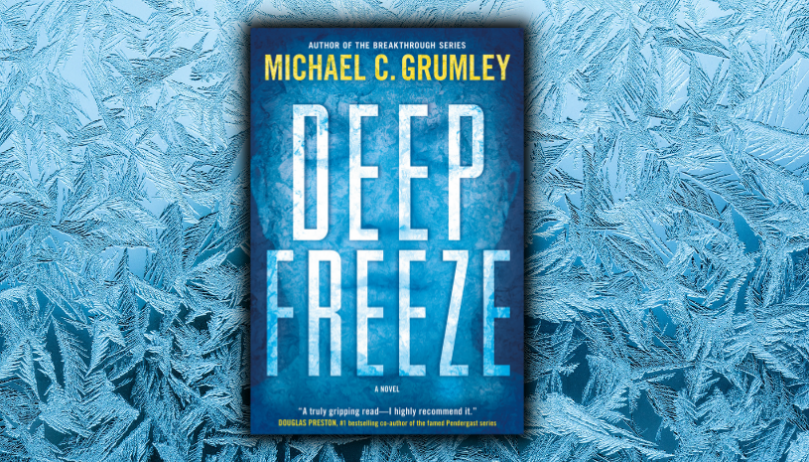
Excerpt Reveal: Deep Freeze by Michael C. Grumley

Deep FreezeFrom the bestselling author of the Breakthrough seriesIn his next near-future thriller, Michael C. Grumley explores humanity’s thirst for immortality—at any cost…

“A fast-paced juggernaut of a story, where revelations pile upon revelations, building to a stunning conclusion that will leave readers clamoring for more.” —James Rollins, #1 New York Times bestselling author of the Sigma Force series

The accident came quickly. With no warning. In the dead of night, a precipitous plunge into a freezing river trapped everyone inside the bus. It was then that Army veteran John Reiff’s life came to an end. Extinguished in the sudden rush of frigid water.

There was no expectation of survival. None. Let alone waking up beneath blinding hospital lights. Struggling to move, or see, or even breathe. But the doctors assure him that everything is normal. That things will improve. And yet, he has a strange feeling that there’s something they’re not telling him.

As Reiff’s mind and body gradually recover, he becomes certain that the doctors are lying to him. One-by-one, puzzle pieces are slowly falling into place, and he soon realizes that things are not at all what they seem. Critical information is being kept from him. Secrets. Supposedly for his own good. But who is doing this? Why? And the most important question: can he keep himself alive long enough to uncover the truth?

Deep Freeze will be available on January 9th, 2024. Please enjoy the following excerpt!


CHAPTER ONE

The slide of the gun was pulled and released in one quick motion, giving its distinctive metallic sound as it snapped back and automatically chambered the first bullet.

Outside the car, another snowfall was heavily dotting the car’s windshield and hood as well as the ground around them; a pothole-ridden parking lot, partially illuminated by the bright interior lights of a convenience store.

Scanning the area revealed an empty street, and on the far side, away from the road, a small one-story veterans’ hall—dark and empty, surrounded by an undisturbed snowy field. Behind them, a single streetlamp, two blocks away, provided a shower of light upon a tiny building, the town’s only bus stop.

“Let’s go!”

“Wait!” A nineteen-year-old sporting a dark ski mask stared through the back window toward the stop. A distant cloud of billowing heat rose from the tail end of the bus. Only the back half was visible on the other side of the small building. Between them, thousands of snowflakes drifted gently down from the darkened sky above, some passing through the glow from the distant streetlamp as they fell.

“What the hell are you waiting for?”

“The bus, man!”

“So what?”

“Wait till it leaves!”

“What? Hell no! Go now!”

“What if they see me?”

The driver, another teenager, glanced back and shook his head. “Ain’t no one gonna see you at this distance. Just go!”

The first teenager hesitated, contemplating, before his adrenaline finally won out.

“Fine! Turn the car and get ready.”


The warmth inside the store was welcoming. Beneath a ceiling of old fluorescent lights, most still working, the modest store packed a surprising amount of shelf space within its meager walls, despite some remaining empty.

Near the front, a television was affixed to the wall just below the ceiling, displaying the local news.

Behind the counter, the cashier smiled politely at the woman and small boy before him while bagging their items. Two bottles of water, a bag of potato chips, and a tiny box of painkillers.

The man, presumably the owner, repeated the amount displayed on the register and took the money without comment, briefly noting the second customer in line behind the woman, who was patiently watching the TV overhead, and carrying a small four-pack of beer.

The man in line looked quietly at the mayhem playing out across the large screen. Thousands had gathered in downtown Philadelphia to protest. Signs bobbed up and down while throngs of people chanted and marched forward in a surging wave of anger.

The picture moved, panning to another section of street, where perhaps a dozen had descended upon an empty police car, beating and smashing its side windows while others climbed on top to stomp and crush the vehicle’s red-and-blue lights. A Molotov cocktail was thrown against the side of a nearby building and exploded into flame, causing the mob to roar and cheer.

The customer in line was the only one watching, silent and staring. Neither the owner nor the woman and her son bothered to look up.

It was almost a daily occurrence. Citizens rising up in anger. Yelling, marching, and destroying. This one appeared to be a crowd of city workers furious over labor conditions. The night before was in downtown New York.

His thoughts were interrupted by a chime when the outside door was suddenly pushed open, followed by a brief blast of frigid air. And with it, a young man with wide brown eyes staring through two large holes in his ski mask.

Behind the counter, the owner glanced up momentarily and then froze when a gun appeared in the hand of the teenager, who briskly scanned the store for anyone else, but found only the three in front of him.

Noting the look on the owner’s face, the woman turned and gasped, clumsily stumbling backward in an effort to shield her son. The thug’s eyes narrowed and focused past her.

Mere seconds had passed when behind the thug a bottle was retrieved from its carton and smashed down over the hand gripping the gun, breaking the bone in an audible crack.

The masked teenager screamed and dropped the gun. In a panic, he scrambled backward and lost his balance, falling to the floor. The eyes behind the mask were wild and changed their focus from searching for the gun to searching for an exit. Whirling around to find the glass doors behind him, the teenager immediately pushed forward and lunged outside, on one good hand and both knees.

Over the icy concrete, he struggled to his feet and bolted clumsily for the waiting car. Flinging its door open, he jumped in, screaming.

Inside, the cashier retrieved a revolver from a shelf below the counter, then, after watching the car rocket from the parking lot, turned to his male customer with a stunned expression. The man was still holding the bottle in his hand, while the woman at the counter stood immobile, still clutching her son behind her.

Without a word, the man placed the beer bottle back into the cardboard holder and glanced at the gun on the floor. Bending over, he picked it up, then stepped past the trembling woman to place both items on the counter and retrieve his wallet.

He held out a bill to find the owner staring at him incredulously, before simply shaking his head and motioning for him to take the item.

The customer nodded in appreciation and picked the carton back up, leaving the gun on the counter. Without comment, he turned and pushed through the glass doors, back into the snowy night air.


The first bottle was empty by the time he reached the stop. With crunching snow beneath every step, he slid it back into the carton and opened another.

Upon reaching the idling bus, he gently tapped the base of his second bottle against the vehicle’s tall glass door, which was promptly opened from the inside.

The driver frowned from his seat. “No open containers.”

The man, sporting a heavy two-day shadow, stared at the driver and nodded. He scanned the area surrounding the tiny station and found a trash can. He approached it, finished the second beer, and discarded both empty bottles.

He returned and looked to the driver for approval, and the driver motioned him up the steps.

The last to reboard were the mother and son, the woman staring in silence as they retook their seats.

The man looked out his window, into the darkness at the shadowed outlines of their surroundings. One of the houses on the far side of the street was still illuminated by what looked to be a living room window. The rest of the buildings lay dark and appeared as muted shapes obscured beyond the increasingly dense snowfall.

He paid little attention. His thoughts were elsewhere. On his destination . . . when he was interrupted in his seat.

It was the woman. The mother. Of the boy, who was perhaps seven or eight and peering cautiously at them over his seat’s headrest.

The woman was standing over him, appearing flustered. Unsure of what to say.

“I just,” she stammered, “wanted to say thank you.”

The man’s expression was wholly unconcerned, but he nodded receptively while the driver put the bus into gear and slowly accelerated.

“No problem.”


Read more of Deep Freeze here!


Click below to pre-order your copy of Deep Freeze, available January 9th, 2024!

opens in a new windowImage Placeholder of amazon- 93

opens in a new windowImage Place holder  of bn- 95

opens in a new windowImage Placeholder of booksamillion- 68

opens in a new windowibooks2 81

opens in a new windowImage Placeholder of bookshop- 53

post-featured-image

Excerpt Reveal: Assassin’s Mark by Ward Larsen

Assassin's MarkUSA Today bestselling author Ward Larsen’s globe-trotting, hard-hitting assassin, David Slaton, returns for another breathless adventure, Assassin’s Mark.


With the help of CIA operative David Slaton, America has shaken off a series of high-tech attacks. Then, just as the threat seems to have receded, the most brazen strike of all: Marine One is brought down in the heart of the capital. The president survives the crash, but is clinging to life by a thread.

Once again, Slaton gets the call. With limitless backing from the CIA, the agency’s most lethal assassin is dispatched halfway around the world. But as his mission nears completion, he finds himself targeted by a talented adversary, a ruthless young assassin who moves like a ghost, and whose motives are unclear.

What is clear is that Trident is not yet finished, and that there is a high-level traitor in the U.S. government. And the only way forward is to topple a conspiracy in the uppermost echelons of Washington.

Assassin’s Mark will be available on November 28th, 2023. Please enjoy the following excerpt!


CHAPTER ONE

The iconic blue-and-white whale that was Air Force One coasted smoothly down the glidepath toward Joint Base Andrews. The skies over Maryland had cleared from an earlier overcast and the sun was poised on the western horizon, a fitting ending to a grueling day that had begun here twelve hours earlier.

President Elayne Cleveland stared vacantly out the oval window beside her. The great chrome-lipped engines reflected the last glimmers of daylight. The terrain below gained definition, small farms giving way to pocket neighborhoods as the city came nearer. In the gathering darkness, traffic on the distant Beltway necklaced the capital in red and white light

“At some point there has to be a sacrifice, and we all know who’s got the target on his back.”

Cleveland blinked. Her eyes came back inside. Reluctantly, she tried to process what her Chief of Staff, Ed Markowitz, had just said. He was sitting across from her in a plush aft-facing chair. After the long day he looked no different than he had at the outset, his usual wonkish self: rumpled tweed jacket, bifocals, unkempt hair, and of course the ever-present secure tablet computer. She wondered if Ed, even as a child, had ever gazed out a window and let his thoughts wander.

They’d departed Andrews at daybreak that morning, destined for a long-deferred tour of a new Kansas semiconductor plant. Bringing tech production back to America was one of the few areas on which the parties could agree. After that had been lunch with the governor of Iowa to promote a robotics research initiative. Altogether, it was a pathetic, and all too obvious, attempt at normalcy after weeks of relentless crises. At every stop the reporters had been ruthless, shouting questions that had nothing to do with silicon wafers or AI. Try as she might to lead the country forward, the recent series of attacks against American interests had become a political black hole, an inexorable force that dragged her away from anything productive.

The chain of disasters had begun six weeks ago, and was now referred to by the media as March Madness. First, an Air Force reconnaissance plane had crashed in the Arctic, the wreckage landing on Russian territory. Almost simultaneously, a Navy guided-missile destroyer had sunk in the Black Sea. Both tragedies occurred under suspicious circumstances, and both involved loss of life. Rumors swirled that Russia was responsible. As commander in chief, however, Cleveland could not retaliate based on rumors. She needed hard facts, and while intelligence reports left no doubt that the acts were intentional, attribution for them had proved harder to nail down. Worse yet, making public what they did know would be the world’s worst poker move. Which meant her only play was to duck the questions and promise “a full and thorough investigation” by the nation’s already embarrassed intelligence agencies. More attacks followed, putting America on the precipice of World War Three, yet Cleveland found herself mired in political quicksand, and with a window for action that was closing fast. She had so far managed to keep America out of a shooting war with Russia, but her poll numbers were dropping like a free-falling anvil.

“Thomas is a good man,” she replied, referring to CIA director Thomas Coltrane. “He’s done nothing to shake my faith.”

“I would never argue otherwise, but we were caught flatfooted. Our intelligence agencies are still drawing blanks. The perception is that they’re failing us in our time of need. America was attacked, and we can’t even figure out who was behind it.”

“It’s not for lack of trying. People at the CIA have risked their lives to get to the bottom of this—one man in particular.”

“True, but unfortunately that’s not something we can share. The operator you’re referring to is an off-the-books asset—he’s not even a U.S. citizen, for God’s sake. And if Congress finds out you authorized the agency to send a gun-for-hire downrange . . .”

The president stared at Markowitz as his words trailed off into the recirculated air. A biting reply began to rise, but then she thought better of it. Ed had been with her for seven years now, first in the Montana governor’s mansion, and now in the White House. Was the pressure getting to him? Or is it getting to me?

“The midterm elections are closing in,” Markowitz pressed, “and the Democrats are baying for a response. Needless to say, national security is not ground we can afford to concede.”

“Nobody is conceding anything. Intelligence work takes time.” Cleveland spoke from a position of authority—after graduating from college, she had done a stint in the Army Reserve as an intelligence officer. “What’s on my calendar tomorrow?” she asked, ready to change the subject.

Markowitz finger-tapped on his tablet. “The standard morning briefings until ten, then you meet with the vice president to discuss border controls.”

“I thought he was in Asia.”

“He got back this afternoon.”

She had put Vice President Lincoln Quarrels in charge of the southern border. It was a thankless job, and a problem that had been festering for decades. In Cleveland’s view, it wasn’t a uniquely American issue, but rather a regional manifestation of what was happening across the globe. With the world increasingly divided into haves and have-nots, the exodus of the downtrodden had become a torrent. For America, having oceans on either side and a prosperous Canada to the north, the problem was simply hyper-focused.

The president massaged her temples, feeling the onset of a massive headache. Her eyes went back to the window but snagged on her reflection in the inner pane. Her brown hair, styled dutifully this morning, was drooping after the long day. Even in the ghosted image she could see bags under her eyes. Cleveland rarely found time for diversions of vanity, but the thought of a morning makeover crossed her mind.

The ground seemed to rush up suddenly and the great jet settled onto the runway. Its cantilever landing gear, and two of the finest pilots in the Air Force, bonded for a glass-smooth landing. Elayne Cleveland had never come to think of the White House as home, not really, but it was a place where she could rest. The finest bed-and-breakfast in the world.

Runway lights flashed past the window, the time interval between them lengthening as the great plane slowed. She heard the smartphones of staffers chiming notifications in the adjoining cabin. All of it brought her back to reality, and the idea of an early makeover tomorrow vanished.

There’s just too damned much to be done.


Five minutes later, Elayne Cleveland was descending red-carpeted stairs to the tarmac. She took care not to stumble—there were only a handful of cameras in the press pen today, but any misstep would go viral within minutes. Such was the aquarium she lived in.

She saluted two airmen at the bottom of the stairs and made a sharp turn toward her connecting flight: the Sikorsky VH-92 known as Marine One. The scrum of reporters was a hundred yards away, and Cleveland pretended not to hear their shouted questions, most of which had to do with the deplorable state of U.S.-Russia relations. Markowitz shadowed a few steps behind her, and nearing the helicopter she paused to let him catch up.

“Are you going to ride back to the White House with me?” she asked.

“Not tonight. I arranged for a car to take me straight home . . . Julie and I have plans to celebrate our anniversary. But if you need me for something—”

“No, no,” Cleveland said, cutting him off. “Have a nice time, and give Julie my best. I’ll see you in the morning.”

She turned away, forced a smile, and waved at the distant press gaggle. Cleveland strode as energetically as she could toward the idling helicopter, and at the steps of Marine One she exchanged another salute, this with a young Marine, before disappearing inside.


Click below to pre-order your copy of Assassin’s Mark, available November 28th, 2023!

opens in a new windowImage Place holder  of amazon- 55

opens in a new windowPlaceholder of bn -84

opens in a new windowPoster Placeholder of booksamillion- 40

opens in a new windowibooks2 61

opens in a new windowPlaceholder of bookshop -21

post-featured-image

Excerpt Reveal: Vamp by Loren D. Estleman

VampVamp is a hot new Valentino mystery by Loren D. Estleman, the master of the hard-boiled detective novel and recipient of the Private Eye Writers of America Lifetime Achievement Award.

Renowned film detective Valentino is on a quest to help restore The Comet, an extinct drive-in movie theater, and his trail leads him to Leo Kalishnikov, who requests a favor first—rid him of a blackmailer from his shady past, and he’ll gladly hand over the money that The Comet needs.

With only an uncashed check for a clue, Valentino embarks on a treacherous path to save not only The Comet but the last remaining print of the 1917 film Cleopatra, which has been lost for over a century. The film is somewhere in Los Angeles, and Valentino is willing to risk it all to find it. He must navigate the shady underbelly of Hollywood once more, in a dangerous adventure that threatens not only his career—but his life.

Vamp will be available on November 7th, 2023. Please enjoy the following excerpt!


CHAPTER ONE

One foot over the threshold of her condominium, Harriet Johansen leaned back to confirm the number on the door.

“I thought I got off the elevator on four by mistake,” she said. “My neighbor there scrubs biochemical labs for a living.

Valentino grinned. “I just tidied up a little.”

She looked around. The hours she spent working with the LAPD forensics team hadn’t trained her in housekeeping. She was a minimalist by necessity, furnishing her home in Spartan fashion: There wasn’t a knickknack or a throw rug or a decorative pillow in the place. You could sweep it out with a leafblower. Nevertheless, stale air, gray film, and garments shed in a hurry had managed to breed and multiply like rabbits—or more accurately, dust bunnies. Unavoidable neglect was the cause, and the arrival of a roommate with more time on his hands the cure. The flat smelled of Febreze and Lemon Pledge and shone as bright as new chrome.

She looked down at her feet. “I own a carpet shampooer?”

“I rented it. I churned up enough popcorn kernels to stock the concession stand in the Oracle for a year.”

“If I knew I was going to live with Howard Hughes, I’d have told you to check into a Motel Six.”

He took off his apron and used it to wipe his hands. “You’re not pleased.”

“I don’t mind so much that you’re Felix Unger as the suggestion that I’m Oscar Madison. I put in more hours at work on a regular basis than you did even when you were up to your neck in asbestos and horsehair plaster in your theater. When there’s a gang uprising in East L.A., I only stop by to change clothes before I go back to opening up cadavers.”

“I know that. Since you won’t let me help out with the mortgage, making myself useful is the next best thing. I didn’t reorganize the kitchen,” he added quickly. “I know how important it is to you to know your way around.”

“I couldn’t care less if the potato masher’s where the sieve should be. Little Caesar feeds me most of the time.” She shrugged out of her jacket, made a move to toss it on the sofa, then stopped and folded it over her arm. “Just tell me you didn’t change anything in the bathroom.”

“I was afraid to touch the jars and bottles. I don’t know what half that stuff is for.”

“No, and you never will, if we ever decide to cohabit permanently. I prefer to be a woman of mystery.”

Their living arrangement was temporary. The Oracle, the old motion-picture palace Valentino had been restoring through the last three presidential administrations, was undergoing yet more construction to build a proper bathroom onto the projection booth he used as a living quarters. Previously, he’d freshened up in one of the customers’ rest rooms; but technological advances had allowed him to replace the ancient gravity-operated water heater in the utility room next door to the booth with a state-of-the-art unit in the basement and install facilities on the floor where he slept.

It had turned out to be a not-so-mini-reunion with the civic and construction migraines that had accompanied the original project. That situation had been exacerbated by a megalomaniac theater designer, a crooked building inspector, and a series of murders to solve—on amateur detective Valentino’s part, not professional Harriet’s.

He stepped forward, holding out a hand. She gave him the jacket with her police ID clipped to it. He opened the closet, hung it up, and shut the door before she could see how he’d rearranged everything by color and season. “Does a steady diet of pizza mean you’d rather pass on lasagna?”

She sniffed the air. “That doesn’t smell like Stouffer’s.”

“Sue me. My grandmother was half Italian.”

“My great-grandmother was Cherokee; you know, the tribe where when the woman got fed up, she piled all her husband’s belongings outside the lodge and that was the end of the relationship. Let that be a lesson to you.” She smiled and went up on tiptoe to kiss him. “I’m starving.”

“Good. I made enough for a regiment. I should explain my grandmother ran a restaurant. She couldn’t cook for any group fewer than a hundred.” He pulled her chair out from the cloth-covered dining table and held it for her.

They’d finished the salad and he was dishing up the entrée when a tinny orchestra started playing “Saturday Night at the Movies.” Valentino said, “That’s mine.”

“No kidding.” Harriet’s ring tone was the elevator song that had come with her phone.

He got out his and looked at the screen. “Dinky Schwartz. I haven’t heard from him since my sophomore year.”

“I’m sure there’s a cute story behind how he got the nickname.”

“It’s on his birth certificate.” He excused himself and answered.

Still famished, she tuned out the “How-are-you-and-what-have-you-been-up-to” portion of the conversation and dove into her lasagna, washing it down with a California rosé. She glanced up during the hemming-and-hawing on Valentino’s end. Finally he said, “Dinky, I don’t know. I can’t promise anything. I’ll get back to you.”

He punched out, frowning at the object in his hand as if it were a jury summons. “You’re in danger of reestablishing your relationship with Little Caesar,” he said, looking up.

“A funeral?”

“Worse. Dinky’s bought a movie theater and he wants me to help restore it.”


Click below to pre-order your copy of Vamp, available November 7th, 2023!

opens in a new windowImage Place holder  of amazon- 10

opens in a new windowImage Placeholder of bn- 11

opens in a new windowPoster Placeholder of booksamillion- 60

opens in a new windowibooks2 10

opens in a new windowPlace holder  of bookshop- 37

post-featured-image

Excerpt Reveal: Up on the Woof Top by Spencer Quinn

Up on the Woof TopChet the dog, “the most lovable narrator in all of crime fiction” (Boston Globe) and his human partner Bernie Little find themselves high in the mountains this holiday season to help Dame Ariadne Carlisle, a renowned author of bestselling Christmas mysteries, find Rudy, her lead reindeer and good luck charm, who has gone missing.

At Kringle Ranch, Dame Ariadne’s expansive mountain spread, Chet discovers that he is not fond of reindeer. But the case turns out to be about much more than reindeer after Dame Ariadne’s personal assistant takes a long fall into Devil’s Purse, a deep mountain gorge. When our duo discovers that someone very close to Dame Ariadne was murdered in that same spot decades earlier, they start looking into that long ago unsolved crime.

But as they reach into the past, the past is also reaching out for them. Can they unlock the secrets of Dame Ariadne’s life before they too end up at the bottom of the gorge? Is Rudy somehow the key?

Up on the Woof Top will be available on October 17th, 2023. Please enjoy the following excerpt!


CHAPTER ONE

Uh-oh.

Most perps turn out to be reasonable in the end. They know, for example, the moment a case is closed, namely when I grab them by the pant leg. Pant leg grabbing is one of my specialties at the Little Detective Agency, Little on account of that’s my partner Bernie’s last name. Do I even have a last name? I’ve never heard it, but if there’s a change, I’ll let you know. Till then just think of me as Chet, pure and simple.

Maybe you’re wondering, but Chet, what about the unreasonable perps? I hope so, because that was exactly where I was headed with that uh-oh. Right now, we had a couple of unreasonable perps on our hands, although I myself have no hands, don’t need hands, and wouldn’t even know what to do with them. These unreasonable perps were the Burger boys, two brothers who’d hijacked a beer truck, now wrecked at the bottom of a box canyon they’d sped into in the hope of getting away from us—getting away in a wobbly truck from me and Bernie tailing them in the Beast, our brand-new, very old Porsche, can you imagine? A truck, by the way, that actually must have been hauling something unbeerlike, so unmistakably peanut oil from the aroma now hanging in the still air.

“What’s that stink?” said a Burger brother, the one Bernie called Hammy. The Burger brothers did not look alike. Hammy was short and skinny with big round eyes. The other one, Cheesy, I believe, was huge with little slit eyes.

“I don’t smell nothin’,” Cheesy said. “And who cares? This is our chance, you moron.”

Cheesy didn’t smell the peanut oil? How astonishing was that? Every time you think you’ve hit bottom when it comes to what the human nose can’t do they take it down another notch. There was nothing else to smell besides peanut oil, even for me who smells everything! I was about to feel sorry for them, or at least for Cheesy, when Hammy said, “Chance for what?”

“For hightailin’ it—what else?” Cheesy said. “He’ll be back any minute.”

Possibly I should have mentioned that I was alone with Hammy and Cheesy, Bernie having climbed up to higher ground where maybe his phone would work and he could call into Valley PD. Was there room in the Beast for me, Bernie, Hammy, and Cheesy? Maybe just for me, Bernie, and Hammy, but we couldn’t leave Cheesy out here in the desert all by his lonesome, his wrists cuffed in the pretty red, white, and blue plastic cuffs we used, just one of those touches that makes the Little Detective Agency what it is. The point I’m making is that Valley PD needed to come out here with the paddy wagon. I peered at the trail Bernie had followed up the canyon wall, a trail that took a sharp turn high up there, vanishing behind a jumble of red rocks, and didn’t see him. But Hammy and Cheesy hightailing it, Bernie or no Bernie, was off the table. Hadn’t the Burger brothers been grabbed by the pant leg, first Cheesy and then Hammy? The case was closed.

But Hammy and Cheesy weren’t getting it. They’d gone from sitting peacefully on the ground to a sort of grunting struggle to stand, not so easy with their hands behind their backs. Cheesy, despite being so enormous, was the first one up, a bit of a surprise to me. Then came a bigger surprise. He leaned over Hammy, chomped down on the collar of Hammy’s shirt, and hoisted him up. Wow! A first in terms of what the human mouth is capable of, and I’ve been in the business for a long time.

“Let’s go,” Cheesy said.

“What about the dog?” said Hammy.

“No problem. If it comes close give it the boot, good and hard.”

Excuse me?

Not long after that, Hammy and Cheesy were sitting nice and comfy on the ground and we were back to being buddies. I admit that their pant legs were no longer what you might call blood free, but the amount wasn’t worth mentioning, hardly noticeable.

Bernie returned soon after, gave us all a close look.

“Was there a problem?”

None that I recalled, and Hammy and Cheesy were shaking their heads, the rhythm identical.

“But we were thinking you might cut us a break,” Cheesy said.

“Why would I want to do that?” said Bernie.

Hammy snapped his fingers, a human thing for when they get a sudden idea, but amazing he could do it with his hands cuffed behind his back. “Isn’t it Christmas time?”

“Next week, maybe?” said Cheesy. “Wednesday? Thursday?”

“Friday?” said Hammy.

They gazed up at Bernie, eyes open wide in a hopeful look like they were—oh my goodness!—begging. Didn’t they know begging is a no-no? Also, Bernie had no treats on him. I keep close track of things like that.

“Do I look like Santa?” Bernie said, this whole little back and forth ending in total confusion, at least for me. But Valley PD arrived soon after, along with a nice lady from the peanut oil company, who gave Bernie a check. And we hadn’t even been working the case, not until Hammy and Cheesy almost ran us off the road. What a day! The only problem was Bernie, sticking that check in the chest pocket of his Hawaiian shirt, the one with the dancing tubas. We’d had problems with checks and chest pockets in the past. I barked this low rumbly bark I have. Bernie got a look on his face, like he’d remembered something, and he transferred the check to the front pocket of his jeans, where it was nice and safe. If he wanted to think he’d done that remembering all by himself that was fine with me. Anything Bernie did was fine with me.

We’ve had Porsches in our career, maybe not out the ying-yang, but close. I can’t tell you the actual number because going past two is an issue, but I can see all those lovely rides in my mind. The first one went off a cliff, then the one with the martini glass decals got blown up, or was that the one that ended up in a snowy treetop? It’s hard to keep track. We have busy lives, me and Bernie. Here’s the takeaway: all our Porsches have been old ones fixed up by Nixon Panero, our car guy, and the one we were in now, Bernie behind the wheel and me sitting tall in the shotgun seat—the breeze, not too hot at this time of year, ruffling my fur—was the oldest and best. It’s all wavy black and white stripes, like a squad car rippling its muscles, Bernie says— who else talks like my Bernie?—and he calls it the Beast, on account of what’s under the hood. Bottom line—if you’re ever getting chased by us, just pull over. Whoa! I myself am black and white, specifically black with one white ear. And . . . and I can be something of a beast myself! Wow! For a moment I thought I knew all there was to know. Then the moment passed and I felt better.

“Something on your mind, big guy?”

Nope. Not a thing. Bernie looked at me. I looked at him right back. What a beautiful sight! Just his eyebrows, for example, not the namby-pamby kind of eyebrows you see all too often but eyebrows, amigo, that can’t be missed. On top of that, Bernie’s eyebrows have a language all their own. Right now, they were saying, Chet, you’re something else. I placed my paw on his knee. We sped up, somewhat alarmingly, especially since we seemed to be bumper to bumper on the airport freeway, but Bernie hit the brakes and we were good. He laughed. Bernie’s got the best laugh in the world. You can’t miss it, and a woman in the next lane didn’t. She glanced over, frowning at first, and then not.

Soon after that we were rolling down Mesquite Road, our street, the nicest in the Valley except for all the ones where the rich folks live. We pulled into our driveway and what was this? Action next door at the Parsons’s house?

There hadn’t been much in the way of action at the Parsons’s house for some time. Mr. and Mrs. Parsons were old and not doing well, especially her. As for Iggy, my best pal, the Parsonses had never been able to figure out their electric fence—even though Bernie had checked it out and found it was working perfectly— so Iggy didn’t get out much anymore. Mostly I just saw him through the tall window in their front hall, but he wasn’t there now. Instead he was outside. They were all outside, Mrs. Parsons in her wheelchair and Mr. Parsons guiding the wheelchair with one hand and holding onto Iggy’s leash with the other. Do I need to mention that Iggy was straining against that leash with everything he had in his tiny body, his amazingly long tongue flopping all over the place, and the look in his eyes at its craziest? I don’t think so. You were probably picturing that already, plus the high-pitched yip-yip-yipping. But maybe you missed the little detail of Iggy’s collar, not his normal plain collar but his Christmas collar with flashing red and green lights. The Parsons had bought one for me, too—this was sometime back—but I do not wear flashing light collars. I have black leather for dress up and gator skin for everyday, the story of me and a gator name of Iko and our trip to bayou country way too long to even start on. In the here and now, as Bernie likes to say, we had a taxi parked in the Parsons’s driveway and a taxi driver standing on the lawn, not in a good mood.

“The wheelchair? Plus that yapping little mutt?”

“We’re prepared to pay extra,” said Mr. Parsons.

“Yeah? Two hundred dollars extra?”

By that time, we were out of the car and strolling over.

“Hi, Daniel,” Bernie said. “Where are you headed?”

Mr. Parsons turned to us, stumbling just a bit. Bernie took Iggy’s leash in that smooth way he has, and Iggy went quiet.

“Oh, hi, Bernie,” Mr. Parsons said, somewhat out of breath. “We’re going to a book signing.”

“Where?”

“Bookville. Dame Ariadne Carlisle is Edna’s favorite author.”

“She’s so wonderful, Bernie,” Mrs. Parsons said. “Have you read her?”

“Not to my knowledge,” Bernie said.

“What luck for you! Imagine all the pleasure you’ve got in store. She’s written ninety-nine novels, each one better than the last and all of them with Christmas themes.”

“Oh,” said Bernie.

“Hey!” said the taxi driver. “What am I? A potted plant?”

Bernie turned to him. I turned my nose to him, if that makes sense. Somewhat plantish, certainly, but in a special way you smell a lot in these parts, a combo of garlic plus weed plus mint mouth wash. Here’s an interesting little fact: the mixture is never exactly the same. In short, I knew this guy.

And so did Bernie. “Two Bricks?” he said.

Ah, yes. Orlando “Two Bricks” Short, who’d had a scheme involving counterfeit watches, very good counterfeits if I remember right, except that he’d spelled a word—possibly Rolex— wrong on every one.

Two Bricks took a step back, raising his hands like Bernie was about to draw down on him. What a crazy idea! We weren’t even carrying, plus we never draw down first on anyone. Still, I was suddenly in the mood for the .38 Special. Bernie can shoot spinning dimes out of the air, a lovely way to spend an afternoon.

“I ain’t done nothin’, Bernie,” Two Bricks said. “I’m the most straight up dude in the whole Valley nowadays. Like, actually boring.”

“Perfect,” said Bernie. “So I assume you’re going to drive this very nice couple to Bookville for the meter fare plus a boringly moderate tip. Chet and I will follow, with Iggy here in the back.”

Some things in life start out nicely and then have a nasty twist at the end. This was one of those. Iggy on the little shelf in back? Iggy had never ridden in the Beast. The only member of the nation within—as Bernie calls me and my kind—who had was me. Why couldn’t it stay that way? Was it possible to occupy both the shotgun seat and the little shelf? Why was this even—

“Ch—et?” said Bernie, in this way he has of saying Chet.

First time in a bookstore! The smells! I didn’t even know where to begin. There were all kinds of human smells, which is what you get in crowd situations, and Bookville was packed with humans sitting on card table chairs and standing against the walls. No kids, though, so some of the most interesting smells were missing. Crowds are always better when kids are in them, if you want my opinion, and not just in the smell department. But forget all that. The most interesting smell—apart from the fact that a family of snakes seemed to be living under the floor—came from the bookshelves. So many books! Their smell was wonderful, somewhat like a very dry forest but a cozy, indoor one, if that makes sense, which it probably does not.

Even though there didn’t seem to be room for us, meaning me, Bernie, and Mr. and Mrs. Parsons plus Iggy in her lap, a bookstore worker spotted her and wheeled her to a special section off to the side but up front, so that was where we all ended up, in our own little row with a good view of what I believe is called the podium. I know that from the time Bernie gave the keynote speech at the Great Western Private Eye Association conference. Everyone just loved his talk, although most of the audience had to leave early, probably for family emergencies.

A thin little guy wearing two sets of glasses, one in the normal place and the other on top of his head, was at the podium, speaking softly and reading from a note card.

“Merry, um, Christmas, Hanukkah, and uh, holidays.” He looked up. “Only six book shopping days to go! Heh, heh.” He glanced around, perhaps expecting some sort of reaction, but none came. His gaze returned to the note card. “The Universal Encyclopedia of Christmas calls our guest today ‘the greatest Christmas writer since Dickens.’ And the Reader’s Bible of All Things Mystery says ‘no one writes them any twistier’ than her. So now it’s my, um, pleasure, to introduce or, ah, to welcome to Bookville for the very first time, making her last appearance before Christmas this year—” He looked up and blinked once or twice, “—the loveliest—I mean most beloved author in the whole wide world, Dame Ariadne Carlisle! Let’s give a big . . .”

But the audience was already clapping and cheering. Out from behind a curtain that looked a little like a bedsheet strode a woman who smelled lovely, kind of like one of those long boxes with flowers inside at the first moment someone opens it. She glanced at the thin little guy on her way to the podium and in a low voice said, “Dame as in fame not dame as in scram.”

The thin little guy turned white, but she didn’t notice. Had anyone else heard? Maybe only him and me, him because he was so close and me because, well, I’m me. Meanwhile, I’d left out the most important thing, namely the quality of her voice, kind of like that giant violin humans play between their legs— the name escaping me at the moment—but souped up, so rich and powerful, with a—uh-oh—catlike purr at the core.

Two uh-ohs in one day? That was when I began to worry.


Click below to pre-order your copy of Up on the Woof Top, available October 17th, 2023!

opens in a new windowPoster Placeholder of amazon- 23

opens in a new windowImage Placeholder of bn- 68

opens in a new windowImage Place holder  of booksamillion- 33

opens in a new windowibooks2 86

opens in a new windowPlace holder  of bookshop- 31

post-featured-image

Excerpt Reveal: Valley of Refuge by John Teschner

Valley of RefugeIn this high-stakes, character-driven thriller, a Hawaiian family must decide the future of their ancestral land when a tech billionaire decides he wants it for himself, and won’t take no for an answer.

What would you do if you. . .

. . .were offered an obscene amount of money for your family’s ancestral land? For Nalani and her mother, the money that could change their lives—at the sacrifice of everything they believe—is a double edged blade, and they’re not sure they can trust the secretive tech billionaire holding it out to them as if it were an olive branch. But what happens when a man with unlimited wealth is given an answer he doesn’t want to hear?

. . .woke up on a plane en route to a tiny Hawaiian island, with no memory of who you are or why you’re there? Janice, whose only clues are the passport in her pocket, and a locked phone with increasingly alarming text alerts about a situation she may or may not be part of, barely knows where to start. Navigating an unfamiliar place, and her own unfamiliar mind, Janice seeks to discover who she is, and answer the question of why she is here, and exactly whose side is she on?

As plans are set in motion that carry them down dangerous and unexpected paths, all involved must decide just how far they are willing to go to reach their goals, before turning back is no longer an option.

Valley of Refuge will be available on October 3rd, 2023. Please enjoy the following excerpt!


CHAPTER ONE

The bassline vibrated the walls of the hallway. She was leaving the bathroom, adjusting the hem of her shirt self-consciously. Had she forgotten a zipper? How much had she had to drink?

Why was it so bright?

She had to shoulder her way through the crowd. People gave her dirty looks. They weren’t dressed for the club. They wore uniforms, or joggers with hoodies, or shorts with ugly patterned shirts. But beyond them, she could see the oval doorway that led to the wide-open space of the dance floor.

They were talking about her, their voices barely audible above the noise. It would feel so good, to make it to that high, bright space and have room to move.

And to be with her, the woman dancing with her eyes shut.

She was in a dream, she knew that. But she wanted so badly to be back on the dance floor. No reality could be more important than that. She was pushing more frantically now. But the harder she pushed, the more they pushed back. Someone was shouting in her face. She craned her head to find the exit, to be anywhere but in this bright, narrow hallway.

She opened her eyes.

“Ma’am!” A wild-eyed woman was practically in her lap. She tried to kick but hit something hard, and pain exploded in her shin.

“Ms. Diaz!”

Her name?

The woman was wearing a uniform. A cop? A nurse?

She looked up and saw two circles dancing in and out of focus in an oddly low and curving ceiling. To her left, a portal, beyond it, blue.

She was on an airplane.

There were two other flight attendants standing in the aisle. And two men, one Black, one white. Big men.

She was on an airplane. And there was a problem. She was the problem.

She closed her eyes and held up her hands. “Okay,” she said. “Okay.”

“Ma’am, there is a team of emergency responders waiting for us at the airport. They want to know, have you taken any drugs or medications?”

She began to answer. Opened her mouth. Shut it. Tried again.

“What’s my name?”

The flight attendant glanced back at her colleagues.

“Your name is Janice. Janice Diaz. According to your boarding pass.”

“How did I get here?”

“Just like everyone else, ma’am. You boarded in Seattle.”

“And where are we landing?”

“LIH. Lihue Airport. Hawaii.”

Janice Diaz leaned back. “That sounds nice.”

The flight attendant stepped back into the aisle, whispered to her coworkers.

“Ms. Diaz, what is the last thing you remember?”

She almost told her about the woman on the dance floor. Then she pictured the Seattle airport. Escalators and empty glass hallways. She knew it well. She tried filling it with people. Faceless, hurrying bodies. She tried to remember the bench she’d chosen at the gate, where she’d bought coffee, the line for security. There was nothing there. Her mind was clear and bright.

She took a deep breath, waited for the never-ending stream of images and mental chatter that constituted who she was.

She took another breath.

“Ma’am?” The flight attendant was in the seat beside her. “I’m going to sit right here until we land.”

Without thinking, Janice Diaz clasped the flight attendant’s hand. “Am I all right?”

“Oh, honey.” The woman lifted a strand of hair from her face. One fingertip brushed her forehead, and the full arc of her skull fluoresced with pain. “I don’t think so.”


Click below to pre-order your copy of Valley of Refuge, available October 3rd, 2023!

opens in a new windowPoster Placeholder of amazon- 66

opens in a new windowPlace holder  of bn- 19

opens in a new windowImage Place holder  of booksamillion- 39

opens in a new windowibooks2 57

opens in a new windowPlace holder  of bookshop- 91

The owner of this website has made a commitment to accessibility and inclusion, please report any problems that you encounter using the contact form on this website. This site uses the WP ADA Compliance Check plugin to enhance accessibility.