Close
post-featured-image

We Asked R. R. Virdi, Is a Snake a Dragon? 

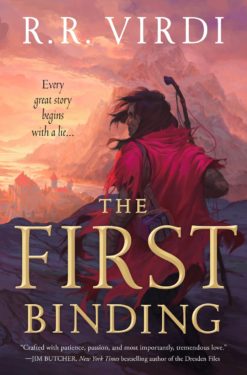
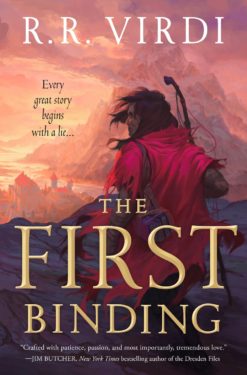
opens in a new windowCover for The First Binding by R. R. Virdi opens in a new windowThe First Binding by R.R. Virdi is the hugely epic opener to the Tales of Tremaine series, and now it’s available in paperback! A while back, Virdi wrote a thoughtful article on whether snakes are dragons as a feature for Dragon Week 4: Dragons 4Ever, and we’re bringing that back, because this is hard-hitting, important fantasy fiction analysis.

By R.R. Virdi

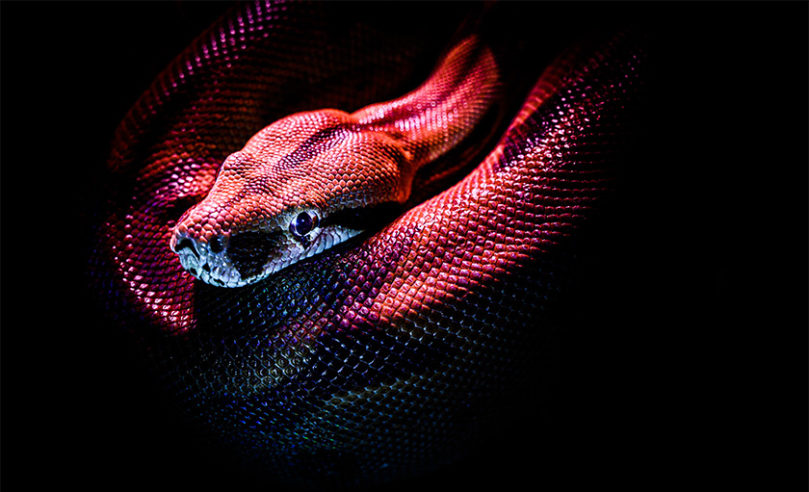
Are snakes dragons?

It sounds like an easy question. A rather straightforward yes or no. Snakes are snakes. Dragons are dragons.

Right?

Well…

About that.

Let’s look at what makes a dragon, well, a dragon? If you take a look at the most famous common kind, the European dragon, they’ve got pretty similar appearances throughout western mythos. And it makes sense. They’re a culmination of things humanity feared long ago all morphed into one creature.

They have the necks and facial appearances of giant serpents, armored scales, horizontally slit pupils with molten gold eyes the color of greed and avarice. Sharp teeth, and they breathe fire, something we’ve long been fascinated with, and is also terrifyingly destructive. The wings of a bat, and claws as sharp and curved as lions’. They’re the ultimate monster, most of the time. And maybe that’s where we should take our look of dragons.

What makes a monster? What are their roles in stories?

Historically speaking, they’re obstacles. They’re the big the hero has to face off and defeat to accomplish some goal, be it rescuing the princess, or in some myths, freeing a much needed river from a serpent blocking it.

Many serpents in mythology have been likened to dragons, and certainly so when we head eastwards to the Asiatic dragons. One such serpent, dragon, or obstacle, if you will, is Vritra—the headed dragon-serpent of Vedic mythology. This serpent demon held the waters of the world held hostage and blocked by its body and greed until Indra, the Vedic god of storms, sky, lightning, and rains, battled the three-headed serpent. In the end, Indra was victorious and killed the demon-snake with a club imbued with the properties of a thunderbolt. There’s another similar battle between a great worldly serpent in the waters being bested by another storm god using a weapon holding all the powers of thunder in its head.

But for this deed, Indra was gifted a new name. A name that meant two things: Slayer of Vritra, and slayer of First Born Dragons.

Vritra, the three-headed serpent, was accounted a dragon then and there. When you go back far enough in mythology, the oldest of dragons in many cultures were closer to serpents than the winged beasts we often think of. And many fictional story worlds follow this convention too. In the world of Middle Earth, Glaurung, was the father of dragons.

But this beast was closer to a worm or serpent with legs than what his later descendants would come to be. Creatures such as Ancalagon the Black, the greatest and largest of all dragons to ever be birthed in Middle Earth. A winged monster so great he dwarfed mountains.

Regardless of their shape, though, all dragons/snakes served similar purposes in mythology: obstacles.

So I guess the question of whether snakes/serpents are dragons really does come down to, do they act as dragons? Do they serve the same purpose in the story?

In the Epic of Beowulf, the “dragon” is often also described as a serpent, or a worm. And while some instances mention the fire breathing aspects, some also mention the venomous bite. All throughout stories, serpents have been often interchangeable with dragons, which might be evidence in and of itself that they are the same things. Or, at least, that dragons comes from serpents, if that weren’t already obvious in their appearance.

A dragon in a story historically is the antagonist. Is that always true, especially today? No. But for their history, they were something to be defeated. Not for the sake of doing so, but they were already in a place of opposition to the needs of innocent people. They were hoarding needed wealth, demanding human sacrifices, or keeping natural resources from the populace.

In the FromSoftware game, Sekiro, a dragon comes to their land from off far away and throws off the natural process of life and death, allowing for something close to immortality and rebirth for a select few…

All at the cost of perverting the balance of things and spreading a disease known as dragonrot. The world is festering with it and people suffer. This dragon resembles the Asiatic design of dragons, closer to serpents than the European counterparts. But before you ever get to fight this great beast, you must navigate a frozen valley guarded by a monstrous white serpent closer to a giant viper than a dragon. But it may as well be a dragon, because at this point in the story, it is most certainly an obstacle.

One you’re not equipped to defeat. Only to survive.

But until that point in the game, you are only to evade this monstrous serpent that blocks your path, and do your best to come back at a later time to claim its heart. But if you dig into the lore of this creature, you’ll realize it serves another similar role to dragons. This serpent claimed sacrifices. There is a little tent in where offerings of people were left for the beast to claim. There are hidden stories you can piece together letting you know people offered members of their clans or villages up to these giant white serpents.

Sounds very similar to dragons.

Maybe, like many things throughout history, dragons have just changed shape, and their names. Nothing more.

As time’s gone on, and more media continues to birth new stories, we’ve come to classify all kinds of dragons with new names: wyrms, wyverns, drakes, amphitheres, lindworms, and so on. But the truth remains: they were serpents first, and I suppose, they’re serpents still.

So long as they exist to be something standing in the way of your protagonists, they’re all dragons, and when we have existing series where dragon can even be a mantle, or a title, that any old vanilla mortal can claim, well, I guess dragons really as mutable as the fires they breathe.

Perhaps the real dragons are the snakes…we met along the way?

Is that giant three-hundred foot long serpent blocking your mountain pass? Well, that’s a dragon. That fire breathing wingless, legless, snake that’s burning your favorite kebab place down? That, my friends, is a dragon.

That jerkwad who cut you off in his dinged up 1990’s Toyota Previa (that should have long fallen apart due to the tolls of time, never mind his accidents) with his peeling Whitesnake decals all over his doors?

Yeah, I suppose that’s a dragon too.

I guess the takeaway is: all obstacles can be dragons, but not all snakes are dragons? But some snakes are dragons, so long as they’re obstacles. But not all obstacles are snakes.

See, it’s easy!

So, are snakes dragons? I guess…it depends.

But they can be, and that’s the pretty nifty thing about fantasy. Anything can be a dragon if you work hard enough to make it so.

Note for all the danger noodle owners in the world: yes, your sweet little reptiles can also be dragons – the bestest of dragons.


R.R. Virdi is a two-time Dragon Award finalist, Nebula Award finalist, and USA Today Bestselling author. He is the author of two urban fantasy series, The Grave Report and The Books of Winter, as well as the epic fantasy novel The First Binding. His love of classic cars drove him to work in the automotive industry for many years before he realized he’d do a better job of maintaining his passion if he stayed away from customers.

He was born and raised in Northern Virginia and is a first generation Indian-American with all the baggage that comes with. He’s offended a long list of incalculable ancestors by choosing to drop out of college and not pursue one of three pre-destined careers: a lawyer, doctor, engineer. Instead, he decided to chase his dream of being an author. His family is still coping with this decision a decade later. He expects them to come around in another fifteen to twenty years.

Order opens in a new windowThe First Binding in Paperback Here

opens in a new windowPlace holder  of amazon- 6 opens in a new windowPlace holder  of bn- 66 opens in a new windowImage Place holder  of booksamillion- 37 opens in a new windowibooks2 63 opens in a new windowImage Place holder  of bookshop- 68

post-featured-image

Tending the Fire, Together: Community & Loneliness in Spec Fic

opens in a new windowImage Placeholder of amazon- 46 opens in a new windowPoster Placeholder of bn- 98 opens in a new windowPlace holder  of booksamillion- 6 opens in a new windowibooks2 63 opens in a new windowPlaceholder of bookshop -72

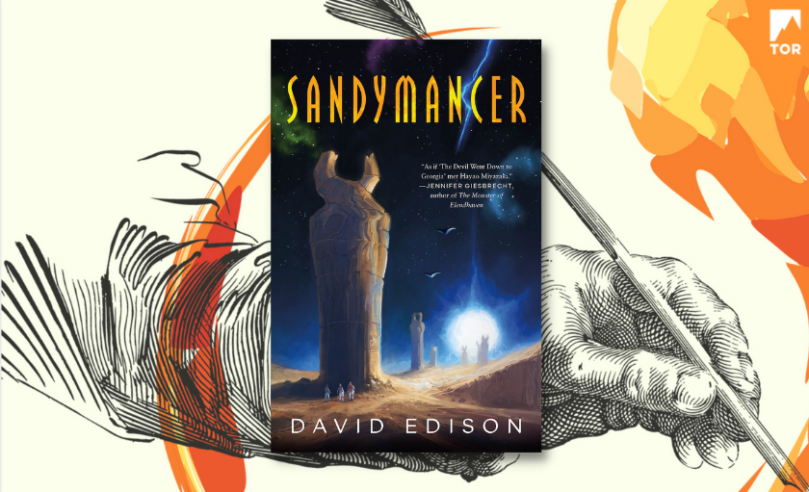
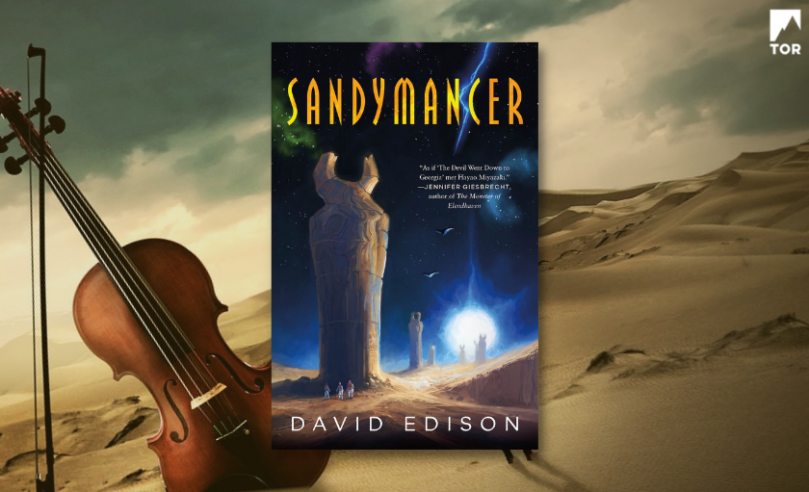
opens in a new windowsandymancer by david edison

Writers spend a lot of time alone in their own heads. David Edison is here to talk about the sometimes loneliness of writing, finding his community, and his new book,  opens in a new windowSandymancer.

Check it out!


There’s a true myth that writers are solitary animals, and that our work takes place in some holy half-light of focus and flow. That’s bupkis.

Pick a writer—any writer! Now imagine them working. Is the scene cozy, or is it a busy one? Is there a cat on a shoulder, a dog in a lap? Tea, coffee, Mommy’s perfume scotch? Is there smoke from cigarettes, incense, or a fireplace? Are they in a room of their own?  

Are they alone in that room?

Writing and dreaming can both be lonely work. But unlike writing, there’s no workshop I know of that teaches you how to curate your dreams, or warns of the hungry quicksand that may swallow you whole if, by chance against chance, your dream comes true and you find yourself without a new dream to chase. That’s a lesson I learned after the fact, almost backward.

But almost everything that’s happened to me has happened backward, starting with gastrulation, when I was a 21 day-old embryo, and the cells that would become my organs failed to properly rotate, leaving me with mirror-imaged, inverted organs.  The inversion is imperfect—when I was ten, they disemboweled me to find my appendix.

I felt very alone in that cold, yellow-white room with its one blue blanket. Was I?

When, by hook and by crook, I hustled my way into an informational interview with the legendary editor-cum-agent Loretta Barrett, I had no idea that my career would begin as backward as my zygote did. This woman had hired Jackie Onassis to work at Doubleday, and now she wanted to read “the longest thing I had.” That was the first three chapters of opens in a new windowThe Waking Engine, which I had shelved in 2003 because I thought it too baroque and unwieldy.

“Finish the book and I’ll sell it.” Loretta disagreed, and who was I to argue? So I did, and she sold it to my dream publisher, the one whose craggy mount I had looked for on book spines since I was eight.

Hoo doggies, did I feel alone. Electric! Alive! Alone.

I never expected I’d need a new dream. Finishing a book, finding an agent, and selling that book to Tor seemed like a reasonably unattainable dream—I don’t fault myself for failing to plan ahead. I learned abruptly that whether our dream comes true or if it crashes like one of those scary race cars, what follows is exactly the same: something new that’s up to you. 

My advice?  Don’t just dream big—dream thoroughly. Dream with multiplicity. They’re dreams, so there’s no sense in limiting them. If I had allowed myself to look farther down that dream-road, I might have saved myself many headaches and at least one existential crisis.

More backwardness: It was only after Waking Engine was in revisions that I began to find a community of writers. I feared mere contact with other writers would destroy my confidence. Backward! With community came mentorship, and at the sage advice of Delia Sherman, I applied for the Clarion West Writers’ Workshop. Delia aptly pointed out that in my backwardness, I had skipped some basic “boot camp” elements of my writer’s education. I’d been in workshops since I was 15, but never at a professional level. My concept of POV, for instance, was woefully underdeveloped, and it’s only because of Delia’s one-on-one instruction that Waking’s sprawling, multiple POV characters weave together with any sense at all.

For the first time in my writing life, I didn’t feel quite so alone.

Clarion West changed me on a mitochondrial level.I don’t mean that it changed what I write, or even how I write—it’s hard to convey how intense those six weeks can be. It scraped out much stagnant bullshit and poured in distilled, peer-reviewed craftsmanship. I needed a few years afterward, to let that ultra-concentrated experience percolate through my subconscious.

I came out knowing what I needed to learn next. I was proud of Waking‘s complexity, but if I needed to learn anything, it was simplicity. So I set out to write a more simply-plotted story with a single POV character and a single narrative arc. (There is a minor second POV character, because I am a recovering abuser of embedded texts.)

I was not alone. Loretta passed away too early, my editor left Tor, and time passed as I wrestled with the choice to reboot my career—but for the first time, I had found My People.

That first day at Clarion West revealed the true treasure I would find there: community. Here were 18 people who had been the rockstar of every workshop they’d ever taken, and we instantly realized that we were in the company of…ourselves. We were the same Cylon model, under the skin, each of us nervously and beautifully embodying the writer’s core programming, which Octavia E. Butler so perfectly summarized: “an oil-and-water combination of ambition, laziness, insecurity, certainty, and drive.”

Suddenly I could share in Usman T. Malik’s passion, which would win him well-earned awards. I could share in E. Lily Yu’s switchblade-sharp deconstructions, in Neon Yang’s joy and off-the-cuff, from-memory piano recitals. Jen Geisbrecht’s punchy snark and absurdly brilliant sentence structure. Malcom Devlin’s one-liners and haunting horror stories. Alix Solano’s laughter and siblingship. Helena Bell’s three-theme theory of storytelling, and her encyclopedic knowledge of where to submit your stories. Kelly Sandoval’s beautifully sweet soul that she reflects so perfectly in her writing. I’ll stop there, but you get the picture: it was a good time, and I’ve felt like a proud brother, watching my cohort earn and receive their accolades.

The lesson of community reverberates. During the final work on Sandymancer, I reveled in the collaboration between my editor, the cover and map artists, design, marketing: Claire Eddy; Sanaa Ali-Virani; Andreas Rocha, Rhys Davies; Julia Bergen; my local photographer, Blanca Parsiak, and more—all of these people and more were right there with me. They’ve told the story of Sandymancer with their insight, expertise, and artistry.

As for me? My crisis came and went. I wrote the novel that I needed to write, Sandymancer, and I learned the lessons that I set out to learn. Not one to repeat mistakes, I wrote the sequel with new lessons in mind. Will the risk be worth it? Will readers find it? 

I’ll find out. When I do, I may be isolated in a room of my own, but I will not be—and never was—alone.

by David Edison


David Edison was born in Saint Louis, Missouri. He currently divides his time between New York City and San Francisco. In other lives, he has worked in many flavors of journalism and is editor of the LGBTQ video game news site GayGamer.net.

…And he sleeps in unicorn corpses, tauntaun style.


Order  opens in a new windowSandymancer Here!

opens in a new windowPlaceholder of amazon -50 opens in a new windowImage Placeholder of bn- 91 opens in a new windowPlaceholder of booksamillion -96 opens in a new windowibooks2 87 opens in a new windowImage Place holder  of bookshop- 19

post-featured-image

Meow, Baby! Cats in Science Fiction and Fantasy

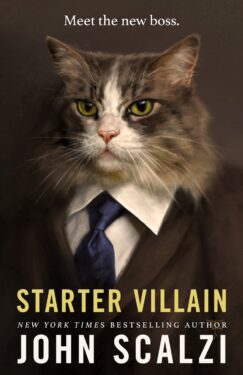
opens in a new windowstarter villain by john scalziWe love cats and SFF and John Scalzi, and are thrilled to introduce all three today!

Check it out!


by John Scalzi

Hello, Tor/Forge blog readers! I have a new novel coming that recently released called opens in a new windowStarter Villain, and if you’ve seen the cover—and what a cover!—then you may surmise that cats may play a significant role in the events of the story. That would be correct, and also, it would not be the first time that cats have been integral to the stories that science fiction and fantasy writers write and share with the world.

To make this point, below please find a curated selection of feline friends who pop up in science fiction and fantasy works across several media. Because, after all, cats are everywhere. This is by no means an exhaustive list, so once I offer up some of my favorites here, please add your own in the comments. Because you can never have too many cats!

JONESY THE CAT, from Alien (1979)

The more things change, the more things stay the same—cats were crew members on sailing ships in order to help control the vermin, and Jonesy had a similar role on the Nostromo, the massive cargo-hauling space ship in the film. Now, you might argue that Jonesy fell down on the job when he didn’t hunt down and snap the neck of the alien when it was still small and snake-like, but, look, a smart cat knows when to pick his battles. It’s not for nothing that Jonesy is only one of two survivors of that whole crew.

THE CAT, from Coraline (novella, 2002; film, 2009)

In science fiction and fantasy cats are often presumed to be able to walk between the real world and the wilder worlds of imagination, and that’s the case here, as the stray cat Coraline sees lurking about her house follows her through the secret door the leads to the seemingly-nice-but-then-not-at-all Other Mother and her intriguing, ultimately dangerous pocket universe. The cat and the Other Mother do not get along at all, a fact Coraline uses to her advantage at one point.

GOOSE THE FLERKEN, from Captain Marvel (2019)

Technically Goose is not a cat at all, but if an alien species looks like a cat, walks like a cat and meows like a cat, you can go ahead and call it a cat… at least until physics-defying tentacles fly out of its mouth and devour all those who threaten it. Which, you have to admit, is not something a cat can do—but absolutely IS something a cat would do, if it could. Go on, look at your cat. Tell me it wouldn’t. In an instant.

THE STRAY, from Stray (2022)

Would domesticated cats survive the human apocalypse? In the video game Stray, not only do cats survive, one of them actually manages to unravel the mystery of what happened to those disappeared humans, and why they left behind an entire subterranean city of helper robots. All while simply being a cat (and also, being helped by their very own robot, which is a nice boost if you can get it).

THE CAT, from Love Death + Robots (2019)

Speaking of apocalypses and robots, in the “Three Robots” episode of this animated anthology series, a trio of mechanized explorers visit the ruins of a city and see delights from the human era they’ve encountered before, like balls! And very old hamburgers! And rockets! And, of course, a cat, who decides to then accompany them on their adventures, because it’s cute and furry and harmless… or is it? In the third season of the series, the robots appear again, as does the cat, in the most unusual of places. Boy, whoever thought up this particular cat really must consider them evil geniuses or something.

There’s a starter list of cats in science fiction and fantasy. Add your own to the list in the comments! And check out Starter Villain, the novel, when it’s out on September 19. You won’t be disappointed in its cats, I promise you.

JS


JOHN SCALZI is one of the most popular SF authors of his generation. His debut Old Man’s War won him the Astounding Award for Best New Writer. His New York Times bestsellers include The Last Colony, Fuzzy Nation, and Redshirts (which won the 2013 Hugo Award for Best Novel), and 2020’s The Last Emperox. Material from his blog, Whatever, has also earned him two other Hugo Awards. He lives in Ohio with his wife and daughter. 

post-featured-image

God-King Troubles & Other Vibes: A Sandymancer Playlist

opens in a new windowPlaceholder of amazon -21 opens in a new windowImage Place holder  of bn- 70 opens in a new windowImage Placeholder of booksamillion- 10 opens in a new windowibooks2 66 opens in a new windowPlace holder  of bookshop- 54

opens in a new windowsandymancer by david edison

World-building is not easy work! A lot of perspiration and imagination goes into the craft of creating a world and communicating it in novel form.

David Edison is one such tune-inspired world-creator, and he’s sharing with us the playlist of songs he’s selected to represent his new fantasy epic opens in a new windowSandymancer!

Check it out!


video source


by David Edison

Writing is an act of magic, and songs are spells, so it’s natural that they weave themselves together; for some writers—for me—music is an essential component of creativity. I need song-magic to lift me out of the world and into that dreamy liminal state of bliss called flow. Music transforms me from a typist to a pianist.  

I do usually write with a one-size-fits all playlist, which is mostly for driving the energy levels, focus, and active joy I need to sit down and work. I also put effort into project-specific playlists, which is a crackerjack way to procrastinate.

I make weird association—I do write Weird Fiction, after all—so there’s always a bit of psychosis apparent in my playlists. Such is the fate of the neurospicy. As I write, I jump around from scene to scene as my attention shifts and splits, and very often it’s a song that sparks a connection between one scene and another. For that reason, I usually shuffle my playlists—and I’d recommend doing so with this one. Arranging the songs just so sounds like a fantastic way to lose lots of time and sanity, and one never wants more than just a bit of insanity. For flavor.

I’ve plucked out some songs to fit with the vibe beats in Sandymancer, and broken them down—somewhat airily—into loose vibe categories. I hope the songs cast their spells and tempt you toward Sandymancer, but if all fails, hit shuffle and enjoy some light psychosis courtesy of an author and his spiciness.

━━ ˖°˖ ☾☆☽ ˖°˖ ━━━━━━━

Vibe I: Sing the World into Being

This is the music that fleshes out the Land of the Vine—its lost hymns, naughty shanties, and somber dirges. Songs out of time. ‘Round these parts, some folk call it world-building.

  • “Hallelujah” by Jeff Buckley
  • “Babylon” by David Carbonara
  • “The Wasteland” by Elton John
  • “Fox Confessor Brings the Flood” by Neko Case

Vibe II: Hayseed Longing

A village so decrepit that it has no name, where dreams and boredom wallow together. These are songs of survival, of hardtack dreaming, and of rough beginnings.

  • “Beg Steal or Borrow” by Ray LaMontagne & the Pariah Dogs
  • “Daddy Lessons” by Beyonce
  • “Little Earthquakes” by Tori Amos
  • “Let’s Burn Down the Cornfield” by Lou Rawls

Vibe III: God-King Troubles

Heal the world, break the world—you can’t please everyone. This music swells to tell the history of the Son of the Vine, the hidden sorrows and frustrations he so rarely shares.

  • “The Melting of the Sun” by St. Vincent
  • “Fire on Babylon” by Sinead O’Connor
  • “The Man Who Sold the World” by Nirvana
  • “Congregation” by Low

Vibe IV: Grit and Teeth

Before a teenager stares down a (wicked?) long-dead god-king, she listens to these songs for courage. Truth is, Caralee could teach music a thing or two about courage herself.

  • “I Don’t Believe You” by Magnetic Fields
  • “Battle for the Sun” by Placebo
  • “No” by Emma Dean
  • “Teenage Hustling” by Tori Amos

Vibe V: Sass Regina

On the other hand, Caralee is a queen of self-possession.  These are the tunes rocking in her heart, the spunk that fuels her as-yet-unearned confidence.

  • “I’m A Lady (feat. Trouble Andrew)” by – Santigold
  • “Giddy Up” by Dragonette
  • “Strange Little Girl” by Tori Amos
  • “I Feel Lucky” by Mary Chapin Carpenter

Vibe VI: Heads Will Roll

Mistakes were made.  Lessons were learned.  When two unstoppable objects collide – and also cooperate – there are bound to be consequences both grave and grand.  Such is the case for both Caralee and the Son of the Vine.  These are songs of the phoenix in the fire, and also its rebirth.

  • “Heads Will Roll” by Yeah Yeah Yeahs
  • “The Girl You Lost to Cocaine” by Sia
  • “A Favor House Atlantic” by Coheed and Cambria
  • “Take Me to Church” by Sinead O’Connor

Vibe VII: Magic is Magick is Science

These songs summon Power.  They fill the space with mystery, which is sacred.  They are the full-throated incantations that connect will to intention: the essence of all Magick.

  • “Hy-Brasil” by Allison Russel
  • “Bell, Book and Candle” by Eddi Reader
  • “Dark Horse” by Katy Perry
  • “Cantara” by Dead Can Dance
  • “Don’t Sweat the Technique” by Eric B. & Rakim

Vibe VIII: It’s the End of the World as We Know it (and I Feel Fine)

Some theories hold that writers are actually human beings, and what’s more – some seem to enjoy being happy. These are sillier songs that are just as infused with meaning as their more sober counterparts above (Please refrain from drinking and driving until you get to heaven).

  •            “Everybody Drinks and Drives in Heaven” by Leslie Stevens
  •             “Still Alive” by Aperture Science Psychoacoustic Laboratories
  •             “No Rain” by Blind Melon
  •             “Missionary Man” by Eurythmics

David Edison was born in Saint Louis, Missouri. He currently divides his time between New York City and San Francisco. In other lives, he has worked in many flavors of journalism and is editor of the LGBTQ video game news site GayGamer.net.

…And he sleeps in unicorn corpses, tauntaun style.


Order  opens in a new windowSandymancer Here!

opens in a new windowImage Placeholder of amazon- 31 opens in a new windowPlace holder  of bn- 21 opens in a new windowPlaceholder of booksamillion -18 opens in a new windowibooks2 36 opens in a new windowPoster Placeholder of bookshop- 69

post-featured-image

Disco Space Opera Playlist!

opens in a new windowImage Placeholder of amazon- 29 opens in a new windowPlaceholder of bn -25 opens in a new windowPlace holder  of booksamillion- 90 opens in a new windowibooks2 67 opens in a new windowImage Place holder  of bookshop- 78

opens in a new windowdevil's gun by cat rambo

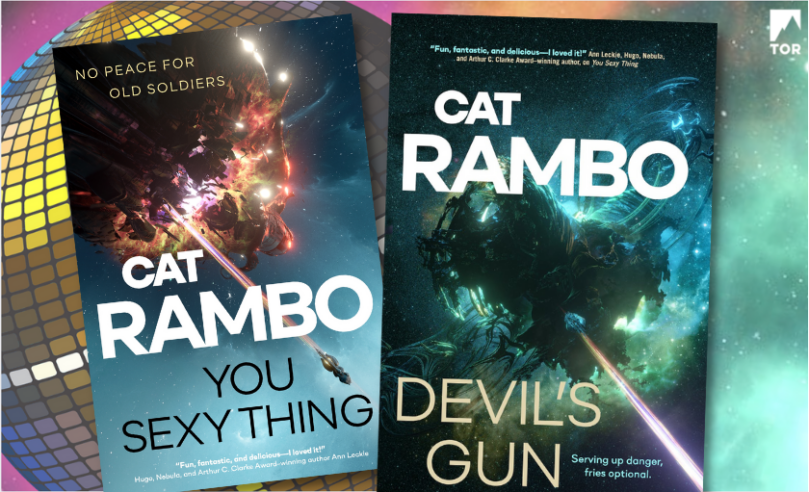
Cat Rambo’s Disco Space Opera series kicked off with 2021’s  opens in a new windowYou Sexy Thing, a novel we’d pitch as Farscape meets The Great British Bake Off. It’s got grizzled old soldiers and other vagrants who have grown tired of the campaigns and tumult of central space opera life, and have elected to open a restaurant at the edge of the known universe where they can eke out a more fulfilling existence. This distance from chaos is, of course, an illusion—albeit a comforting one. There’s no accounting for the propensity of sentient spaceships and sadistic pirate kings to just show up!

Anywho, that was the first book, and now we’re talking opens in a new windowDevil’s Gun, the continuation of their adventure. We’re also talking the far future, and disco jams. Cat Rambo has shared with us their grand Disco Space Opera playlist.

Check it out!


video soruce


by Cat Rambo

opens in a new window“You Sexy Thing” by Hot Chocolate

Why did I decide to name the ship what I did? I’m not sure, but early on in the writing the password exchange between Arpat Takraven and Niko appeared, and it led to the ship’s name. Like a lot of the songs on this list, it’s a big earworm and I’ve always loved it. Written by Errol Brown and Tony Wilson, this song was released in 1975 and became the group’s most popular single, and was the only song to achieve Top Ten status in the United Kingdom in the 1970s, 80s, and 90s.

opens in a new window“Devil’s Gun” by C.J. and Company

In naming the second book, I wanted something that conveyed the nature of the dangerous artifact the crew is seeking in the book. When I listened to the song, it was the perfect mood. The song, written by Barry Green, Ron Roker, and Gerry Shury, was the first song played at Broadway’s Studio 54.

opens in a new window“Rumor Has It” by Donna Summer

In the third book, which has been handed over to the publisher, the power of gossip and rumor becomes important as several aspects of Niko’s past come to confront her. You can’t invoke disco without invoking Donna Summer, in my opinion, and this was my choice to represent her. The song was written by Summer with co-writers Pete Bellotte and Giorgbio Moroder and released in 1978.

I have more adventures of Niko and her crew planned out – seven volumes worth, in fact. The main thread is a particular romantic plotline and by book ten, I’m hoping readers will be on the edge of their seats waiting to find out how it’s resolved. Without saying much more than that and not presenting any spoilers, I hope, here’s the names of the other seven books.

opens in a new window“We Are Family” by Sister Sledge

Dabry’s family history is revealed as the crew is forced to rescue his daughter – against her will. This song has always been one of my favorites, and for a book dealing with family issues, this seemed like a perfect pick. The song came out in 1979 and was written by Bernard Edwards and Nile Rodgers.

opens in a new window“Heart of Glass” by Blondie

What happens when You Sexy Thing turns its attention to the most mystifying emotion of all: love? Another favorite song, this matches what I want to explore in this particular volume. Written by Deborah Harry and Chris Stein, the song appeared on the band’s third album in 1978 and was released as a single the following year.

opens in a new window“Shadow Dancing” by Andy Gibb

Skidoo must return to her home planet. But will both she and her planet survive the visit? I felt this song reflected the complicated personal dynamics of her homecoming. Written by Andy, Barry, Maurice, and Robin Gibb, the song appeared in 1978 and was that year’s Billboard Magazine top single.

opens in a new window“Take Me Home” by Cher

Petalia may have found a way to revive the almost-extinct Florian bloodline – but is Niko willing to pay the price that’s asked of them all? This song, written by Michele Aller and Bob Esty, appeared in 1979.

opens in a new window“You Can’t Lose What You Never Had” by Fantasy

Rebbe strikes off on his own, but You Sexy Thing and its crew must find him before he destroys a world. This song appeared in 1981 and was written by Tony Valor.

opens in a new window“Ain’t No Stopping Us Now” by McFadden and Whitehead

The crew thinks they’ve finally caught a break, until finally the mystery of Atlanta’s past resurfaces and is on a direct collision course with her current role. The song was written by McFadden and Whitehead along with Jerry Cohen and appeared in 1979.

opens in a new window“Never Can Say Goodbye” by Gloria Gaynor

All good things come to an end, but I hope to end the series in a way that will keep the crew in people’s hearts. When the crew finds out what Arpat Takraven truly wants of them, they’ve got a very hard choice to make. Written by Clifton Davs, the song appeared in 1979.


Cat Rambo (they/them) is an American fantasy and science fiction writer whose work has appeared in, among others, Asimov’s, Weird Tales, Chiaroscuro, Talebones, and Strange Horizons. A graduate of the Johns Hopkins Writing Seminars, where they studied with John Barth and Steve Dixon, they also attended the Clarion West Writers’ Workshop. They are currently the managing editor of Fantasy Magazine. They published a collection of stories, Eyes Like Sky And Coal And Moonlight, and their collaboration with Jeff VanderMeer, The Surgeon’s Tale and Other Stories, appeared in 2007. They live and write in Washington State, and “Cat Rambo” is their real name. 


Order  opens in a new windowDevil’s Gun Here!

opens in a new windowPlaceholder of amazon -20 opens in a new windowImage Place holder  of bn- 31 opens in a new windowImage Place holder  of booksamillion- 63 opens in a new windowibooks2 80 opens in a new windowImage Placeholder of bookshop- 7

post-featured-image

Programmable Reality and Our Mediated Future

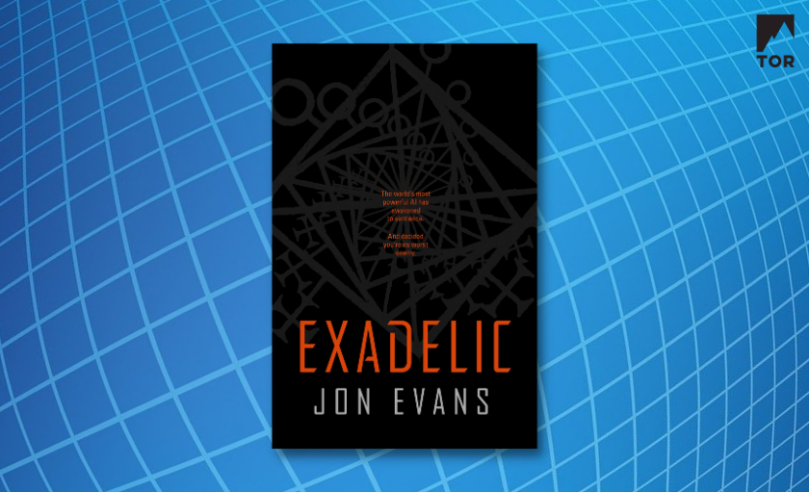
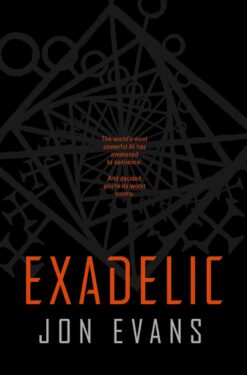
opens in a new windowExadelic by Jon EvansJon Evans thinks a lot about the future and has oodles of experience writing exciting novels full of action and suspense. In his new techno-thriller,  opens in a new windowExadelic, Evans blends these two facets into a thoroughly exhilarating portrait of a future where artificial intelligence discovers occult magic and reality is revealed as something frighteningly malleable. Today, Jon is here to talk us through aspects of his ideation for Exadelic.

Check it out!


In 2021 I finished my novel Exadelic, then set it aside to cool for a few months, as is my way. Upon rereading it, I did not think: ‘Aha, fame and fortune, mine at last!‘ Instead I thought: My God, what have I done?’ It’s an unusual book. Reviewers and early readers call it “really weird” and ”mind-bending” and “absolutely wild” — and those are the raves. But here’s the thing. While the book has not changed … it’s suddenly a lot less weird than it was two years ago.

Exadelic begins in the present day, with a massive AI breakthrough with potentially drastic consequences. Back then, the notion that something vaguely similar might actually happen in our semi-foreseeable future was a laughable idea relegated to Twitter’s wackier fringes. Today the discourse is very different. I give you four recent headlines:

The Financial TimesThe EconomistThe New York Times, and The Wall Street Journal, respectively. Not exactly a list of publications known for starry-eyed science-fiction extrapolation, and/or wild-eyed prophecies of doom! …But here we are.

Exadelic supposes our knee-jerk fears of AI doom are quickly superseded — because the breakthrough AI, when trained on ancient texts of occult magic, discovers that fundamental substrate of our universe is actually an interlocking swarm of cellular automata, more like software than hardware. (A notion not original to me; Stephen Wolfram has long suggested our universe is fundamentally “a vast array of interacting computational elements.”) As such, apparent violations of the laws of physics, sometimes a.k.a. ‘magic,’ are merely side effects of bugs in that substrate. But if the universe is more like software than hardware, it may have some sort of programmer … which, we soon learn, apparently looks with extreme prejudice on any discovery of its secrets.

Is the notion that our entire universe is ultimately made of software, which is full of bugs, which can be hacked and wielded as magic—and therefore a universe in which reality itself is programmable—kinda bonkers? Well, yes. But does a bonkers universe-as-software story work surprisingly well as a metaphor for our uncertain-but-guaranteed-super-weird future in which our perceived realities will be constantly mediated by multiple tiers of software? Reader, I believe it does.

My original elevator pitch for Exadelic was “Imagine Olaf Stapledon wrote a hell-for-leather action thriller.” (Most of my previous books were thrillers.) That’s a deep cut; few people now read Stapledon, who wrote not so much ‘novels’ as ‘philosophical histories of humanity and the universe.’ But SF has always been the home for big ideas, and such ideas—maybe even especially when crazy—can light up our collective space of possibilities in unexpected ways. My hope is that Exadelic may in some small way add to our ongoing conversation about big crazy ideas.

Jon Evans is an author, journalist, travel writer, and software engineer. His journalism has appeared in The Guardian, Wired, Quartz, The Globe & Mail, The Walrus, and (weekly, for a decade) TechCrunch. He has traveled to more than 100 countries and reported from Iraq, Haiti, Colombia, and the Congo. He the CTO of HappyFunCorp, was the initial technical architect of Bookshop.org, and is the founding director of the GitHub Archive Program, preserving the world’s open-source software in a permafrost vault beneath an Arctic mountain for 1,000 years. Exadelic is his first novel in over a decade.

post-featured-image

Map-i-matical Considerations from R.R. Virdi

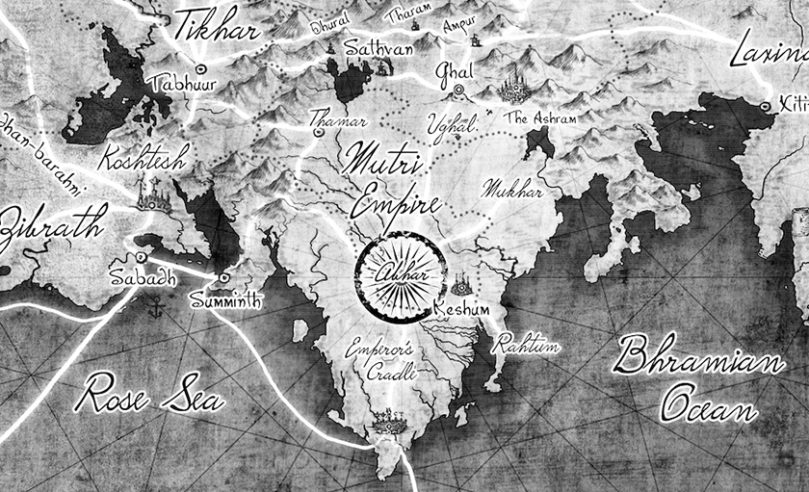
Is it really a Big Epic Fantasy Book if there’s no map to be seen? R.R. Virdi, author of  opens in a new windowThe First Binding—Now available in paperback!—says NO WAY! Check out his thoughts on maps in fantasy books, PLUS an exclusive first look at the map you’ll find inside of The First Binding, right here.


Poster Placeholder of - 62

By R.R. Virdi

Fantasy reader, or writer, you’ve probably formed an opinion on maps in novels at one point or another. You expect them as normal, especially if you’re a reader from the 90’s. You’ve opened up the Wheel of Time books and have the image of Two Rivers burned into your mind. Maybe you’ve memorized all of Randland. Maybe you’re a collector who has a book full of folding maps of Westeros and all the other lands in A Song of Fire and Ice.

I know I do.

You can’t have an epic traveling fantasy (especially a Silk Road inspired one) without a map that lives up to all of that. The lands, the fantastical, and of course, the epic part. We lovers of fantasy want to see mountain ranges and vasty plains inhabited by strange and wonderful things. We want the sense of wonder that comes with seeing rolling seas in storms and maybe monsters in their depths. I always have, and growing up as a child of two worlds (South Asian heritage, and American birth), I’ve been fascinated by travel and the layout of the world.

Of worlds. Real or otherwise.

So of course I leapt at the chance to have my own map represented and brought to life by the amazing Priscilla Spencer (who’s done work for the talented line up: Seanan Mcguire, Jim Butcher, and more). It’s a childhood dream, and more than that, this is a traveling fantasy series. One full of secrets, including some hidden in places you might not think to look. Or, maybe you would.

Like a map.

Priscilla and I got to talking over the crudely shaped map I’d first made to roughly place the lands I needed where they would be. We dove into the geography, cultures, and trade routes I’d established for my Golden Road, and then slowly, it all began to come to life. Her attention to detail and understanding just how many layers and secrets exist in this series and world shone through in the development.

People who’ve already read the ARCs might find pleasant little secrets hidden within this map, if they have the eye and patience to give it that look. But some of the things I can share?

Priscilla dove into the history of existing maps/records from travelers along the Silk Road of old. Design styles, and storytelling techniques used in maps (and yes, maps are stories of a sort as well. The stories of where we’ve been, would like to go, and what we imagine a place to be).  They all bled into the final creation. Every detail in this map speaks to something – nothing is fruitless or wasteful design.

This is a map that shows the roads all manner of people travel, and along those roads, heroes, monsters, and the ones between. Stories, legends, lies, and truths. And sometimes they are all one and the same.

Her creation lives up to all the depth this world and story offers, and all the size and scope of the plot, and Ari’s travels, as well as his legends.

Or lies.

She gave the Mutri Empire the nod to India I wanted, and made it the heart of my world, as well as the map. There are images and nods to things all hidden throughout the first book, and all the ones to come. Something that will make this map rewarding to look at as you continue to read and hopefully, if you so choose, decide to reference this throughout your travels along the Golden Road.

Remember.

A map isn’t just a map. It’s a key, a guide, and a story.

And all of those are secrets, show the way to secrets, and in fact, open secrets.

R.R. Virdi is a two-time Dragon Award finalist and a Nebula Award finalist. He is the author of two urban fantasy series, The Grave Report, and The Books of Winter. He was born and raised in Northern Virginia and is a first generation Indian-American with all the baggage that comes with. Should the writing gig not work out, he aims to follow his backup plan and become a dancing shark for a Katy Perry music video. 

Order opens in a new windowThe First Binding in Paperback Here:

opens in a new windowThe First Binding by R. R. Virdi

opens in a new windowPoster Placeholder of amazon- 13 opens in a new windowImage Placeholder of bn- 9 opens in a new windowPlaceholder of booksamillion -76 opens in a new windowibooks2 88 opens in a new windowPoster Placeholder of bookshop- 36

post-featured-image

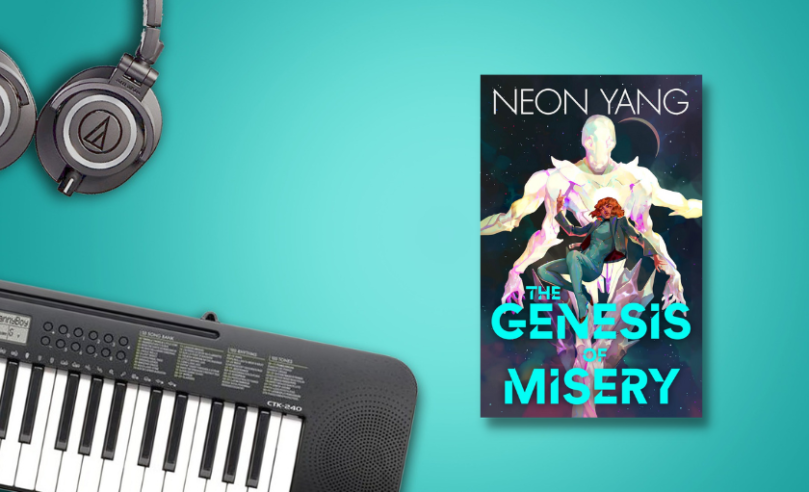
Immerse Yourself in an Electric Space-Fantasy with The Genesis of Misery Playlist!

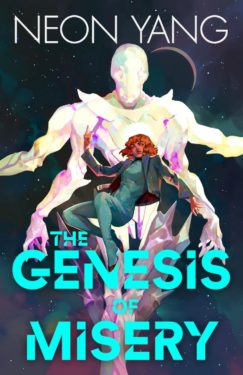
opens in a new windowThe Genesis of Misery by Neon YangAre you ready to dive into the electrifying space-fantasy that’s now available in paperback, opens in a new windowThe Genesis of Misery? Author Neon Yang is ready to help you find the vibe with their exhilarating playlist, featuring bops from Arcade Fire, Billie Eilish, and more!


It’s an old, familiar story: a young person hears the voice of an angel saying they have been chosen as a warrior to lead their people to victory in a holy war.

But Misery Nomaki (she/they) knows they are a fraud.

Raised on a remote moon colony, they don’t believe in any kind of god. Their angel is a delusion, brought on by hereditary space exposure. Yet their survival banks on mastering the holy mech they are supposedly destined for, and convincing the Emperor of the Faithful that they are the real deal.

The deeper they get into their charade, however, the more they start to doubt their convictions. What if this, all of it, is real?

A reimagining of Joan of Arc’s story given a space opera, giant robot twist, the Nullvoid Chronicles is a story about the nature of truth, the power of belief, and the interplay of both in the stories we tell ourselves.

video player

Buy opens in a new windowThe Genesis of Misery in Paperback Here:

opens in a new windowImage Place holder  of amazon- 72 opens in a new windowPoster Placeholder of bn- 28 opens in a new windowPoster Placeholder of booksamillion- 68 opens in a new windowibooks2 5 opens in a new windowPlaceholder of bookshop -54

post-featured-image

Big Magic and The Argument I had with my Main Character by Carol Dunbar

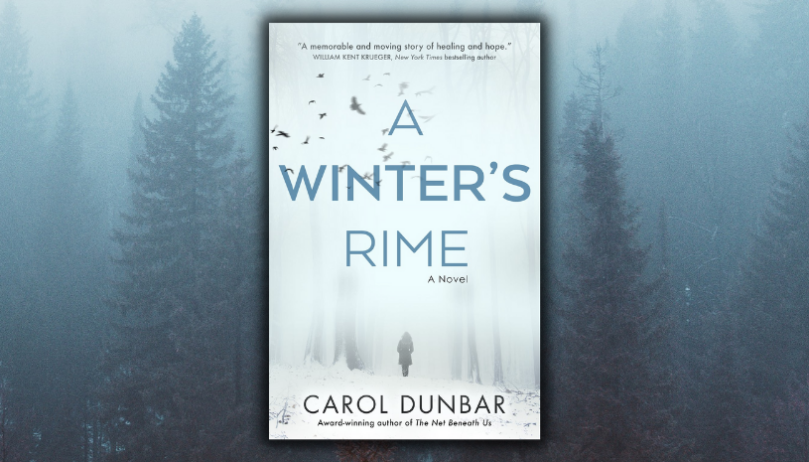
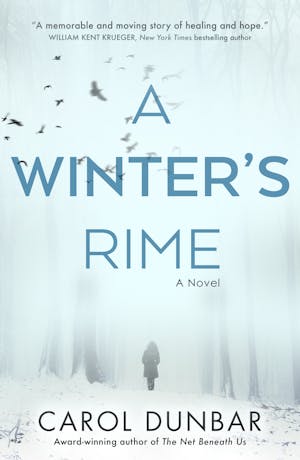
A Winter's RimeA harrowing and emotional novel set in rural Wisconsin—A Winter’s Rime explores the impact of generational trauma, and one woman’s journey to find peace and healing from the violence of her past.

Mallory Moe is a twenty-five-year-old veteran Army mechanic, living with her girlfriend, Andrea, and working overnights at a gas station store while figuring out what’s next. Andrea’s off-grid cabin provides a perfect sanctuary for Mallory, a synesthete with a hypersensitivity to sound that can trigger flashbacks from her childhood.

The getaway that’s largely abandoned during the off season starts out idyllic, until Andrea’s once-loving behavior turns controlling and abusive, and Mallory once again finds herself not wanting to go home. After a particularly disturbing altercation, Mallory escapes into the subzero night and stumbles into Shay, a teenage girl, injured and asking for help. But it isn’t long before she realizes that Shay isn’t the only one who needs saving.

A story about sisterhood and second chances, A Winter’s Rime looks to nature to find what it can teach us about bearing hardship and expanding our capacity to forgive—not just others, but ourselves.

Carol Dunbar is the author of the critically acclaimed novels, The Net Beneath Us—winner of the Wisconsin Writers: Edna Ferber Fiction Book Award, and A Winter’s Rime. Read below to see the inspiration behind her upcoming book, finding the voice of her main character, and how she discovered the best way to tell her story!


By Carol Dunbar:

The idea for my second novel dropped into my head whole and perfect like an egg; at its center glowed the yolk of my personal experience with trauma and what I was still trying to understand.

Most of that first draft I wrote by hand in journals: the process felt intimate, confessional, and propulsive. My main character Mallory came through very strong for me. She was ready to tell her story; as a writer, I felt ready to receive it. It was a magical partnership.

Then, we got into an argument about the right way to tell her story.

In her book about the creative process, Big Magic, author Elizabeth Gilbert writes about how ideas swirl around us begging for attention until we agree to take them on and make them manifest. I totally truck with that. I was 30,000 words into an entirely different novel when this story took hold. I knew I had to write it, and I knew I had to write it now.

The plot centers around Mallory Moe, an army veteran returning home after serving overseas, who is going through a quarter-life crisis. She can’t sleep, she’s in a bad relationship, and she hasn’t talked to anyone in her family in four years. To avoid being home she goes on long walks after working overnight shifts at a gas station store. One night, she runs into Shay, a teenage girl who is injured and asking for help. Shay is in even worse shape than Mallory, and in trying to help her, Mallory is finally motivated to confront the violence of her past.

For guidance on how to tell this story, I looked to Elizabeth Strout’s My Name is Lucy Barton. I thought her fiction-as-memoir style would work well for Mallory’s story of healing, and I studied the opening chapters of Lucy Barton, breaking them down beat by beat. I typed out the entire first draft of A Winter’s Rime in first person, using Mallory’s voice. I printed out that draft and put it away for six weeks.

When I went back and read, it didn’t work.

First person was the wrong voice for the story because it was Mallory who was undergoing the transformation. She didn’t yet have the self-awareness for those moments of self-discovery. I needed third person for its distance and ability to navigate and weave the past and present narratives.

My next draft I wrote in third person, and everyone in my writing group was like, “Woah, what did you do? This is so much better.” It worked, but I kept getting these strong nudges from Mallory. Sometimes when writing I would slip into first person, and this was very confusing to me. I thought I had the voice wrong, so I hit the pause button and started experimenting again.

I tested out second-person, using the epistolary style that Ocean Vuong so artfully employed in On Earth We’re Briefly Gorgeous. It has this propulsive quality to it—he’s absolutely driven to understand what happened to him and his mother; Mallory is absolutely trying to understand what happened to her. For several weeks I played around with writing the book as a letter from Mallory to Shay, but that also resulted in another failure.

I went to a three-day workshop taught by Diane Wilson, author of The Seed Keeper. I told her about my struggle with how to tell this story, and she suggested I try using a rotating first-person voice. I had used a rotating third-person voice in my first novel, The Net Beneath Us, and I loved being able to view the same event through the eyes of multiple characters. The next morning, I eagerly dove into the exercise that Wilson had taught us.

Using the full name of another main character in my novel, I closed my eyes and said the words, “Noah Quakenbush, tell me your story.” Then I listened, ready to write. And it was really funny because he would not talk to me. I heard nothing but birds chirping from outside. Everybody clammed up, none of my characters would talk, and I got the sense that they were afraid to talk. This was Mallory’s story, and they knew it.

Okay, fine, I thought. I can get on board with that, but as the writer, I needed to find a voice structure that worked for the book.

In No Country for Old Men, Cormac McCarthy used both first and third-person voices. I studied that, then did an entirely new treatment of the novel, using the third-person voice for the main driving action of the story, with italicized first-person passages where the healed Mallory got to talk, sharing her insights. When my agent read it, she didn’t like those italicized passages. None of my readers did—they got in the way of the plot’s momentum, and messy Mallory was way more interesting.

It felt to me like I was in a wrestling match with my main character and I didn’t know how to make both of us happy.

At an author event with Elizabeth Strout, I asked her how she knew that first-person was the right voice for her Lucy Barton novels. She told me, “Voice is the golden thread that I follow when writing. I trust it implicitly.” Those words gave me the balls to press on and trust my crazy process.

What I found was the monologue. Instead of recounting what happened to Mallory as a backstory scene, I used first-person monologues in present-action scenes, where Mallory is finally able to tell her story for the first time. She can only do this once she meets Shay, and that makes their scenes so much more powerful. It was very moving to me, to hear a survivor talk after years of not being able to talk.

Finally, Mallory and I were in agreement.

I’m really glad I trusted my instincts and kept searching for the right way to tell this story. I do believe there is something to Elizabeth Gilbert’s Big Magic, that as writers we are “neither slave to inspiration nor its masters, but something far more interesting—its partner.”


Click below to pre-order A Winter’s Rimeavailable 9.12.23!

opens in a new windowImage Place holder  of amazon- 2

opens in a new windowPlaceholder of bn -25

opens in a new windowImage Place holder  of booksamillion- 46

opens in a new windowibooks2 69

opens in a new windowImage Place holder  of bookshop- 6

post-featured-image

Is a Bat a Dragon? We Asked James Rollins

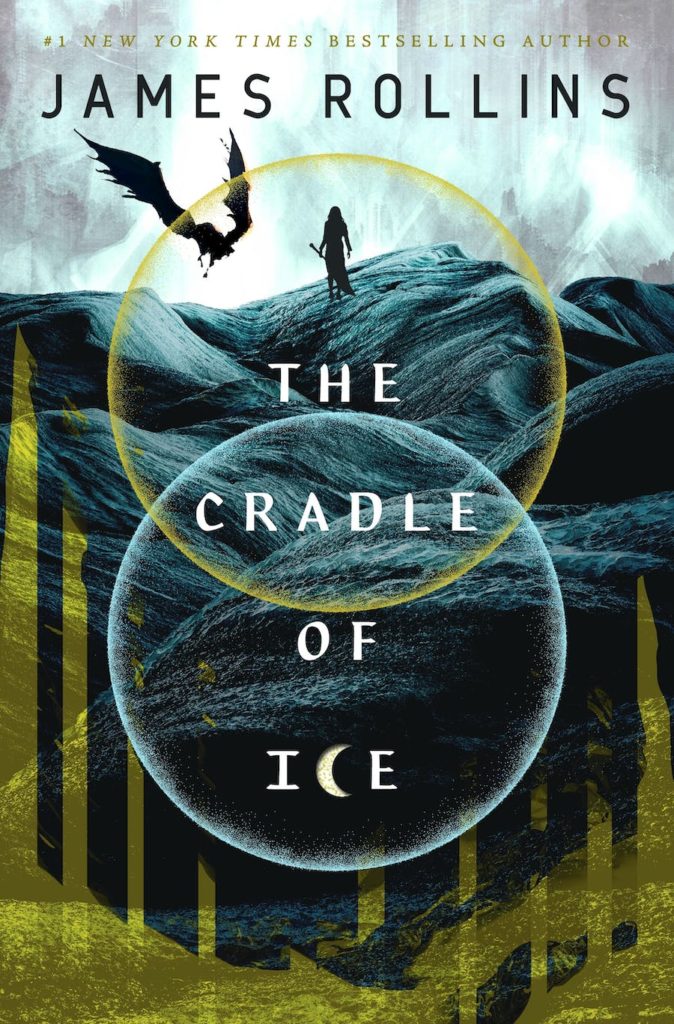
opens in a new windowThe Cradle of Ice by James RollinsBy now, Tor is at the forefront of research into what exactly constitutes “dragon.” We’ve entertained many queries throughout the years, determining if the umbrella of dragon extends to opens in a new windowhippos, opens in a new windowsnakes, and opens in a new windowGodzilla. Now, we turn to the expertise of James Rollins to advise on the dragonic status of bats. If you’ve read opens in a new windowThe Starless Crown and its sequel  opens in a new windowThe Cradle of Ice, you probably know the answer.

Check it out!


by James Rollins      

My love for the natural world and all its myriad creatures was one of my main drives for pursuing a career in veterinary medicine. Even today as a full-time writer, I’ve not fully stepped away from that profession. As I’ve stated many times during book talks—yes, I can still neuter a cat in under thirty seconds.

Still, my greatest fascination about Nature is how it adheres to a dictate stated so succinctly in Jurassic Park:  Life will find a way.  I’ve always been captivated by the manner in which animals and plants discover innovative survival strategies to fill different environmental niches and how that fight has resulted in all the marvels (and horrors) found in the natural world.

While growing up, I found a new way of exploring this subject matter:  in science fiction and fantasy novels set on different worlds. I found myself especially drawn to material that explored life’s resilience across fantastic worlds. Whether it was the sandworms of Herbert’s Dune, the engineered landscape of Niven’s Ringworld, the many species of Card’s Ender’s Game, or a universe of other writers tackling how life finds a way.

Even when it came to those novels that featured dragons, I found myself most interested in the biology and the circumstance of their origins. How did the telepathy and bonding in Anne McCaffrey’s Pern books come about? What steps were taken to harness the physicality of dragons to become warriors in Novik’s Temeraire series? In Martin’s books, could dragon eggs truly be encysted for ages and require fire to bring them back to life? If so, how and why?

When it came to crafting my own fantastic world in the Moonfall Saga, I took a similar scientific eye to its construction. The series takes place on a tidally locked planet, a world that circles its sun with one side forever facing the sun, the other locked in eternal darkness. The only truly livable clime is the band between those extremes of ice and fire. Across such a harsh and unforgiving landscape, I wanted to build a biosphere of flora and fauna that made evolutionary sense. How would species survive the extreme cold and lack of sunlight? Could life find a way in the sunblasted hemisphere?

And what about dragons?

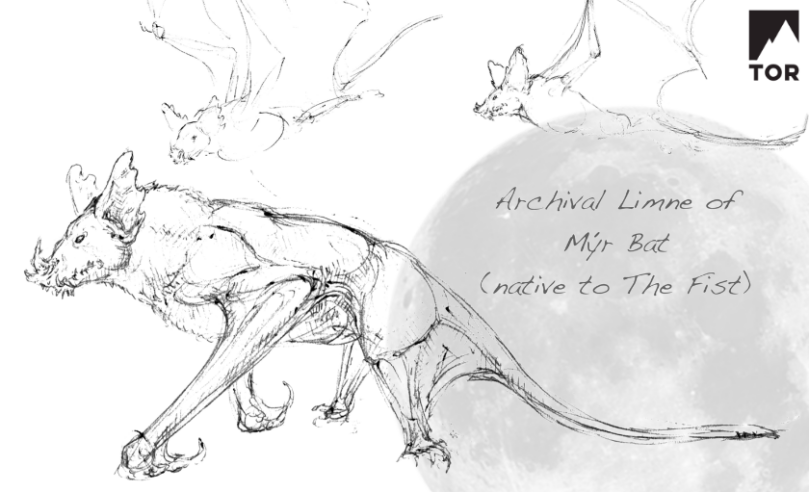
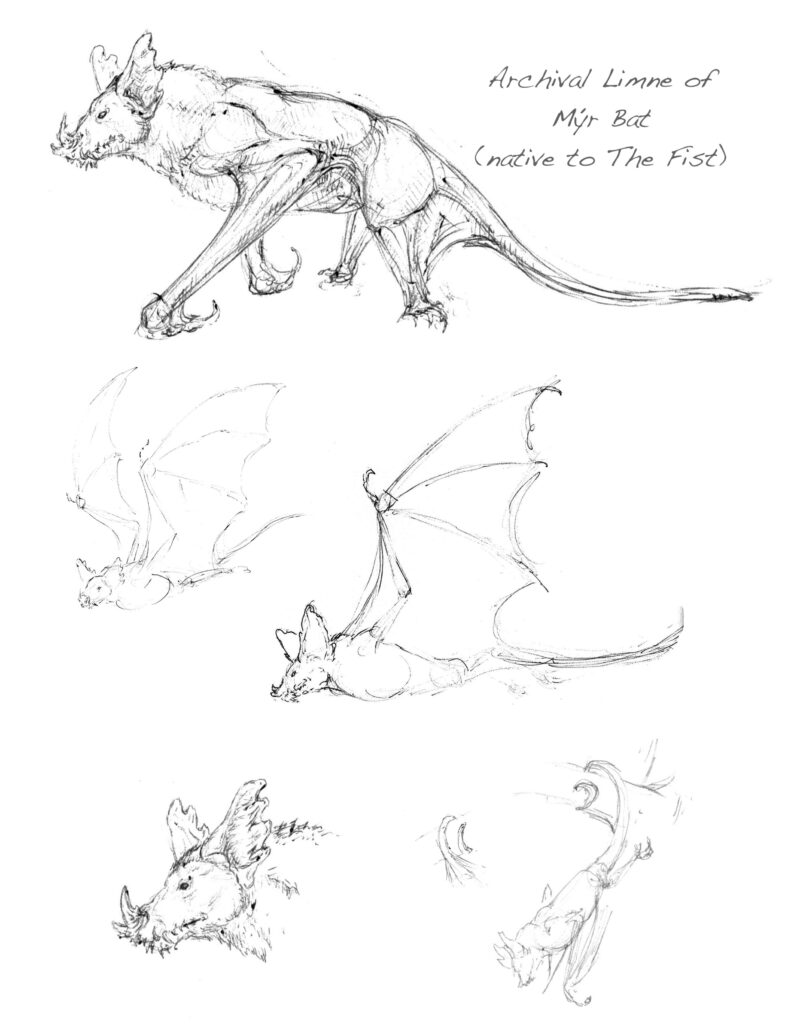
In the novel, one of the apex predators is a species of massive bat, with a wingspan of ten meters or more. We first see them in Book One (The Starless Crown). They inhabit the vast swamplands of Mýr—found in that more temperate climate of the world. They are nocturnal, haunting a drowned forest and roosting in a volcanic mountain. I wanted those bats to make biological sense, to have them fit that environmental niche in a natural way. Being arboreal, they would likely have evolved prehensile tails. As nocturnal creatures, they would need bell-shaped ears and still use ultrasonics to navigate. And without giving away any of the surprises in the books, there is a significant aspect to their biology that will allow them to bond to certain people.

In the books, I also wanted to add a level of verisimilitude to the bestiary by adding naturalistic sketches, drawings that you might find in a turn-of-the-century research journal.

Here is the Mýr bat:

sketch of a winged giant bats

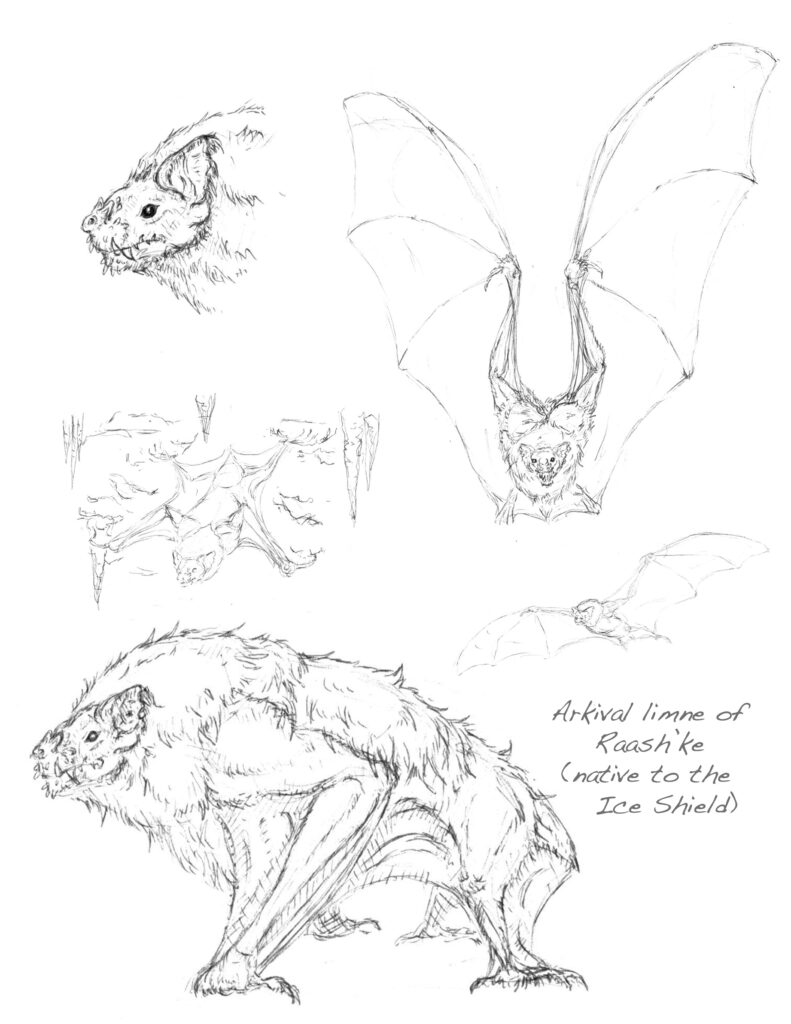
Keep in mind, life will find a way, so this species is not limited to those swamplands. A subspecies evolved in the dark, frozen half of the world. It adapted to fit that harsh niche, becoming smaller and stockier, with shaggy fur, and nasal flaps that could seal to conserve body heat. Likewise, in this treeless landscape, that prehensile tail would no longer be needed. They make an appearance in the second book in the series, The Cradle of Ice.

Here is their sketch:

sketch of a winged giant batt

But what about the title of this blog post: Is a bat a dragon?

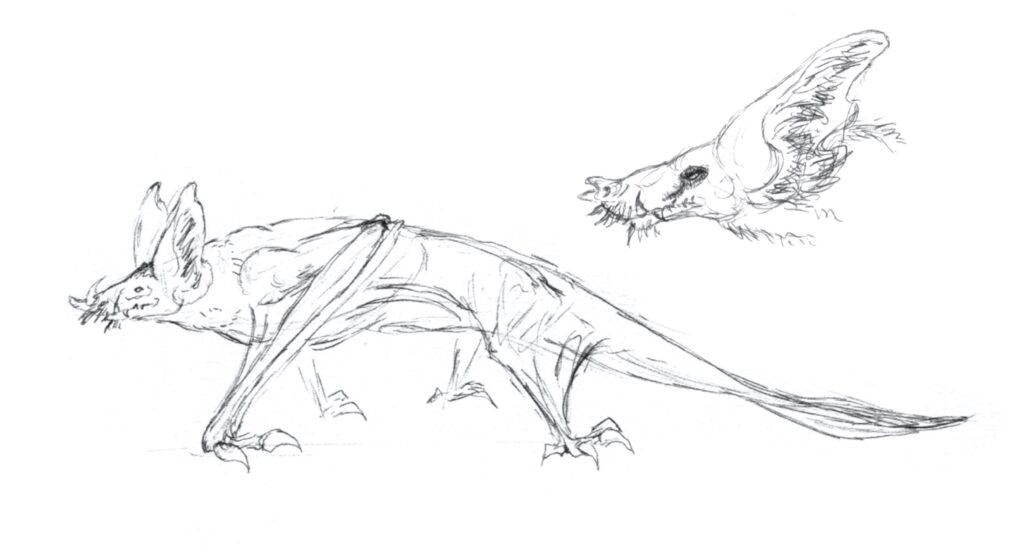
In the third volume in the series (A Dragon of Black Glass), which will be coming out in 2024, this species has also adapted to the sunblasted half of the world. To survive, they would need to burrow to survive, growing larger claws for digging, and bodies that would be hairless and elongated, with fanned tails for aerial maneuvering when out of their burrows. They would become known as “sanddragons.”

Here is a sneak peek at their preliminary incarnation (with the final version still to come):

preliminary sketch  massive crawling bat

I must note that all of these drawings were beautifully executed by graphic artist, opens in a new windowDanea Fidler—as were all the other creature sketches featured in the books. I look forward to sharing the final versions of these “dragons” in 2024 when A Dragon of Black Glass hits bookshelves.

Order The Cradle of Ice Here:

opens in a new windowImage Placeholder of amazon- 5 opens in a new windowImage Placeholder of bn- 69 opens in a new windowPlaceholder of booksamillion -40 opens in a new windowibooks2 84 opens in a new windowindiebound


The owner of this website has made a commitment to accessibility and inclusion, please report any problems that you encounter using the contact form on this website. This site uses the WP ADA Compliance Check plugin to enhance accessibility.