Close
post-featured-image

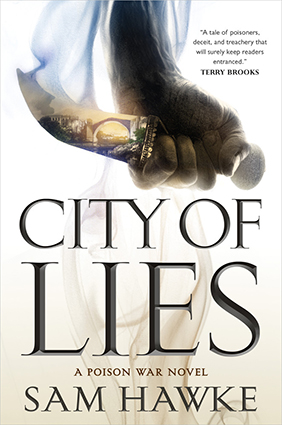
Meet the #FearlessWomen: Kalina from City of Lies

opens in a new windowImage Placeholder of - 6 Duty takes precedence over all else, and I knew what it meant to fail at it far better than my brother ever could.

Kalina and her brother Jovan are descended from a long line of proofers: poison-tasters that are tasked with the protection of the Chancellor and his family. As the eldest sibling, protecting the heir should have been Kalina’s job, but her disability causes her to be sickly, and the mantle was passed from her to Jovan.

Prevented from following her destiny by the harsh physical requirements of being a proofer, Kalina turns her focus to learning. When the unthinkable poisoning of the Chancellor occurs, Kalina quickly finds herself in the position of investigator. Her extensive knowledge of other cultures, poisons, and history prove on multiple occasions to be superior to that of the heir and Jovan.

I couldn’t attend a Council meeting, fight in a battle, or protect Tain from poison, but I had my own skills, and perhaps they were more suited to finding an enemy than even my brother’s.

It’s clear that Kalina’s greatest weakness is in fact, by far, her strongest attribute. People continually undermine Kalina in City of Lies by writing her off as inferior and weak (even her own brother). And while sometimes she is confined to bed rest, she never wastes a moment to expand her knowledge and connect the clues. Certainly, flying under the radar of the powerful never hurt anyone attempting to act as a spy. Whatever Kalina lacks in physical prowess, she makes up for tenfold in cunning intelligence and a relentless drive of determination.

In fact, because of her disability, Kalina serves to undermine the typical sword-and-crown epic fantasy tropes. Rather than focusing on an entire country, City of Lies stays almost entirely within the city limits of Silasta, with only briefs trips outside. Political intrigue and mystery are the driving forces of the plot—much of it subtly nudged forward by Kalina’s guiding hand. She is fearless in her search for answers, even at her own risk, and repeatedly goes above anyone’s expectations in order to bring her home, and her people, closer to a solution.

All of this and more serves to make Kalina one of the strongest characters in City of Lies. She’s a courteous leader, a viciously intelligent student, and possesses an intense willpower that brings her to the darkest parts of the city—and beyond. The challenges she faces are daunting, but if there’s one person who could ever outwit them, it’s Kalina.

Kalina serves as a smart reminder for readers and writers everywhere: never underestimate your opponent.

Order Your Copy of City of Lies

opens in a new windowPoster Placeholder of amazon- 12 opens in a new windowPoster Placeholder of bn- 78 opens in a new windowPoster Placeholder of booksamillion- 29 opens in a new windowibooks2 2 opens in a new windowindiebound

Follow Sam Hawke on Twitter ( opens in a new window@samhawkewrites), on opens in a new windowFacebook, and on her opens in a new windowwebsite.

opens in a new windowImage Place holder  of - 92

post-featured-image

#FearlessWomen Feminist Film Mashup with The Mary Sue

Poster Placeholder of - 35 Place holder  of - 86


On Thursday, July 19th, Tor is sponsoring a playful and engaging feminist clip show/film analysis presented by Princess Weekes, Assistant Editor of The Mary Sue! We will be giving away free tote bags with a select #FearlessWoman book at the event.

Let’s break the mold of the oh-so-tired female narrative and challenge the ways we have come to accept female roles in film! Enjoy clips from a curated selection of films and see them through a new, feminist, pop cultural lens. This show is guaranteed to bring a fresh perspective while promoting a healthy camaraderie among event attendees.

Film clips slated to be shown and discussed are from a broad range of comedy, drama, and science fiction and fantasy—everything from Breakfast at Tiffany’s to Mad Max: Fury Road. Laugh and chat alongside The Mary Sue while sipping on the evening’s specialty cocktail and celebrating #FearlessWomen in film.

Get your tickets here!

opens in a new windowImage Place holder  of - 65

post-featured-image

Using SF/F to Break the Rules

opens in a new windowImage Place holder  of - 31 Welcome to #FearlessWomen! Today, debut author Sam Hawke tackles a big question: how does science fiction and fantasy uniquely explore gender, and specifically, how does she explore gender in City of Lies?

Cultures have a lot of inbuilt norms and expectations and assumptions. Some of the deepest and most pervasive relate to gender: what it is, what it means, what roles we assign to it. Of course, cultures aren’t monolithic and generalisations are just that. No matter how rigidly a society purports to enforce gender structures, people being people, you can be sure there’ll be beautiful variations bursting out of the cracks every time you turn your back. But there’s no escaping the reality that if someone acts outside expected roles in an established culture, the culture pushes back. So in writing about an established, real world culture, you have a choice between engaging with and challenging cultural assumptions, or accepting and working your story within them.

In SF/F, you get a third option: you can just fuck all the ‘rules’ right up.

You can tell a lot of important stories that examine gender by having characters be outsiders or insiders who push against the status quo; you can help readers think through their own cultural assumptions or see themselves and their experiences reflected in a different world. Of course there is a long tradition of stories featuring female protagonists who long to escape the shackles of the role society has assigned them: the Eowyns, Alannas, and Arya Starks of SF/F are a well-established feature in the genre (less common, though, are their male counterparts who rarely strive the freedom to engage in what Western societies tend to think of as ‘feminine’ pursuits—Vanyel from Mercedes Lackey’s Last Herald-Mage novels is the earliest example I remember reading).

Modern SF/F offers more nuanced takes and a chance to explore the effects of fixed gender expectations on people who don’t fit within the cishet mould those structures are built around. Gene/Micah Grey in Laura Lam’s Pantomime is an intersex character raised female in a strict Victorian-esque world who runs away from a family’s planned non-consensual surgery to perform in a circus as male-presenting. Breq in Ann Leckie’s lauded Ancillary Justice deals with linguistic and cross-species gender identification issues, coming from a culture that does not use gendered pronouns and attempting to deal with a (human) society which does. And confronting and understanding the Fool’s gender fluidity in a traditionally patriarchal-styled society in Robin Hobb’s Realm of the Elderlings series presents ongoing and significant emotional challenges and growth for Fitz. SF/F is full of wonderful examples that turn a mirror on our own understanding of gender and ask us to look closer.

Sometimes, though, you don’t want to write about the conflicts inherent in these scenarios, about the challenges and the macro and micro aggressions faced by people outside the cultural ‘norm’. Instead, you want to upend them and explore a world without them. SF/F gives us the power and permission to start from the beginning and ask: wait, but why? Or, on the flipside: why not? What if men had been wiped out and women were able to reproduce asexually (Nicola Griffith’s Ammonite)? What if you could take on male or female appearance at will (Imajica by Clive Barker)? What if the gender of your protagonist was so unimportant to the story that you didn’t even need to disclose it (John Scalzi’s Lock In)? There’s no limit to the questions you can ask when your genre is (literally) defined by speculation. What if no-one cared to assign gender to children, leaving people were free to self-determine at their own pace? Why would a society limit its access to half the population if it was in need of certain skill sets or talents? (Most jobs don’t require genitals, after all). Playing with these assumptions can lead you to some great fun worldbuilding adventures into linguistics, history, the influence of environmental factors, religion… SF/F can explore these questions in a way that a story set in the real world can’t.

In City of Lies I wanted to play with our assumptions about family structures, and particularly how they intersect with romantic relationships. History is full of examples of conflicts built around patriarchy—women being blamed for fertility issues (hey dudes, around half the time it’s you, not her!), a child’s social value being determined by reference to the social rank and importance of the father, value judgments about the acceptability and respectability of certain relationships (heterosexual marriage) over others, and, critically, inherent uncertainty about the identify of fathers which creates risks for women. These factors underpin a lot of the cultural baggage Western societies carry about gender and acceptable behaviours. I didn’t want a bar of it. There’s enough toxic masculinity in Real World 2018™ and I didn’t want to create a fictional mirror of that.

Instead I envisioned a society which prioritised and valued blood family relationships over romantic and sexual ones. If we were socialised to treat our blood relatives as the natural ‘village’ to parent our children, the identity of the father of a child inherently diminishes, and therefore the value that society places on establishing long term couple relationships likewise diminishes. What would a society without marriage, without expectation that children leave their family home as adults, look like? How might it have developed? What would this change about how we treat each other, particularly in relation to gender and sexuality? Importantly, while I had a lot of fun with this as a worldbuilding exercise, and it gave me the society as a backdrop that I wanted for my brother/sister protagonists, it’s not the point of the story. It’s just there. SF/F gives us the freedom to write a book about poison and treachery and old magic in which it also just happens that women are regarded as equal humans whose contribution to their society is judged by their skills and talents, not their value to a man, and that’s such an obvious baseline that it doesn’t need to be a plot point. Imagine that.

Order Your Copy of City of Lies

opens in a new windowImage Place holder  of amazon- 99 opens in a new windowImage Place holder  of bn- 20 opens in a new windowImage Place holder  of booksamillion- 88 opens in a new windowibooks2 59 opens in a new windowindiebound

Follow Sam Hawke on Twitter ( opens in a new window@samhawkewrites), on opens in a new windowFacebook, and on her opens in a new windowwebsite.

opens in a new windowPoster Placeholder of - 51

post-featured-image

The Responsibility of Narratives

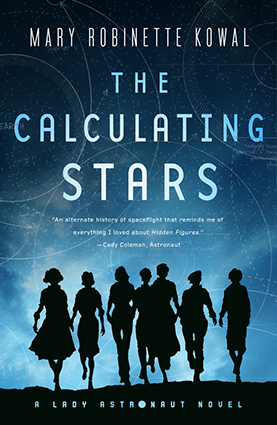
opens in a new windowPlaceholder of  -53 By opens in a new windowMary Robinette Kowal

As mainstream culture becomes increasingly vocal about the politics of gender, it makes me aware of all of the damaging narrative that I’ve internalized and which has created internal biases in myself. Those show up in my fiction. So when I sit down to write, I now assume that I have a bias.

Why is this a problem?

Because we are made of narrative. As humans, we respond to narrative in ways that we don’t respond to facts. Cory Doctorow talks about storytelling as a survival trait, and suggests that being able to empathize with a character is a survival trait. It makes sense, because if you don’t have this trait and someone tells you, ‘I went over there on that cliff and the ground gave way and I almost died!’—if you don’t internalize that in some way, you’re going to go over to the cliff, step on the unstable ground…and DIE. Being able to internalize narrative is part of what makes us human and keeps us moving forward and growing.

But we can also internalize narrative that is damaging.

So one of the responsibilities I have is knowing that people are going to internalize what I write. I have a responsibility to be aware of and cautious about passing my own biases on. That’s something I thought about very consciously for the Lady Astronaut books.

This is an alt-history starting in 1952, in which an asteroid strikes Washington, DC. I wanted to highlight the women who worked in the early space program. Let me explain how deeply these biases are woven in from narrative and how narrative can counter them.

I wrote this before Hidden Figures came out. This is an important detail. In The Calculating Stars, I have a character Helen Liu, modeled on a real life woman working at Jet Propulsion Laboratory in 1940. My beta-readers had difficulty believing that a Chinese woman would be there. They had difficulty with the black women that I had working in the computer department, even though I was basing them on real women.

After Hidden Figures came out, that reaction went away. Nothing about my writing had changed, but the narrative that people had internalized had shifted.

I had internalized it as well, honestly, but because of the larger conversation, I knew that bias was there. I assumed that women were involved in the program and had been left out. My other assumption is that people of color had been involved in the space program and been erased from the narrative.

Because the thing about gender is that you can’t look at it without the intersection of race. And when you start realizing how thoroughly and heavily women were involved in the space program, and how active people of color were involved, and how they’re just…left out. Erased. My view of the space program was flat wrong because of the media I had consumed.

If I don’t examine and look for my biases, then I’m likely to compound the problem with the stories I tell. I’d rather not, thanks. I’d rather read and internalize stories that center the people who have so often been erased.

Order Your Copy of The Calculating Stars

opens in a new windowPoster Placeholder of amazon- 99 opens in a new windowImage Place holder  of bn- 29 opens in a new windowImage Place holder  of booksamillion- 70 opens in a new windowibooks2 35 opens in a new windowindiebound

Follow Mary Robinette Kowal on Twitter ( opens in a new window@maryrobinette), on opens in a new windowFacebook, and on her opens in a new windowwebsite.

opens in a new windowImage Placeholder of - 77

post-featured-image

#FearlessWomen Making Waves

Image Place holder  of - 60 by opens in a new windowJacqueline Carey

If you ask me, Fearless Women are having a moment in popular culture. As the creator of Phèdre nó Delaunay from the opens in a new windowKushiel’s Legacy series, named by io9 as opens in a new windowthe greatest courtesan-spy in epic fantasy, I’m thoroughly delighted by the fact that one of the fearless women making waves these days is adult film star and director Stormy Daniels. Not only does she refuse to be intimidated by the legal team of the man holding the highest office in the land, she celebrates her career with unabashed pride and skewers haters on social media with unexpected humor and wit.

I do believe Phèdre would approve; as would all of the fearless women I’ve brought to life over the years. My various heroines have saved realms, inspired armies, struggled with demanding destinies, rebelled against authority, and brought the world to the brink of Armageddon…and done it all while unapologetically falling in love and lust, refusing to be slut-shamed for having healthy human (well, mostly; Daisy from the Agent of Hel series is a demon’s daughter) sexual appetites.

I grew up reading and loving fantasy. But as I entered my teens, I began to realize that female characters in the genre I loved almost always played a supporting role…if they were lucky enough to have a role in the first place.

One of the exceptions that stands out for me as a formative influence is Patricia McKillip, an author whose writing taught me that fantasy could be literary and lyrical. I was in a boarding school in a small town in northern Michigan when her opens in a new windowRiddle-Master of Hed trilogy was first released. Every other weekend, there was a bus trip to the “big city;” Traverse City, the Cherry Capital of the World. I always made a beeline for the bookstore.

I remember the frisson of joy at discovering a new book in the trilogy on the shelves, and I remember the delight at discovering that the protagonist—the protagonist—of the middle book in that series was a heroine. Not only that, all the major characters were female! And they were proud and stubborn and determined in different ways, and they went on a quest to rescue the nominal hero of the series, because he’d gone missing at the end of the first book and no one else was doing a damn thing about it.

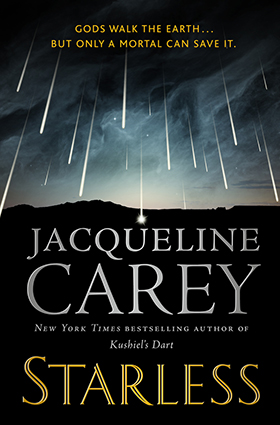
Fearless Women. Women with agency, women as protagonists, as heroines of their own stories. There are more of them in science fiction and fantasy than there used to be, especially in YA, and that makes me happy. But in epic fantasy, to which I’m returning with Starless, there’s still an overall dearth. I’m excited to introduce some new fearless women (and other folk) to the world. And I hope they continue to surprise and inspire, and help foster an understanding that courtesans and warriors and pampered princesses—not to mention adult film stars—are equally deserving of our respect and admiration.

Order Your Copy of Starless

opens in a new windowImage Placeholder of amazon- 37 opens in a new windowImage Place holder  of bn- 15 opens in a new windowImage Place holder  of booksamillion- 17 opens in a new windowibooks2 69 opens in a new windowindiebound

Follow Jacqueline Carey on opens in a new windowTwitter, on opens in a new windowFacebook, and on her opens in a new windowJacqueline Carey.

opens in a new windowPlace holder  of - 5

post-featured-image

Sherrilyn Kenyon Q&A

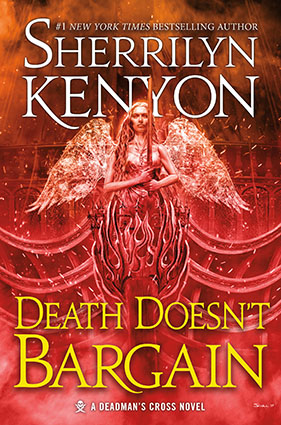
Placeholder of  -42 Welcome to #FearlessWomen! Today, we have Sherrilyn Kenyon, the bestselling author of the opens in a new windowDeadman’s Cross series, stopping by to answer some questions we asked her about being a woman in genre fiction, writing female characters, and more.

How do the women in your life affect or support your storytelling?

I think my mother’s strength of character, integrity, and her raw grit comes through in every heroine and character I write. She was a woman of rare fortitude and courage the likes of which I have yet to meet again in another individual. I miss her every day of my life.

How do you think science fiction and fantasy can uniquely explore gender? How do you explore gender in your own works and/or worldbuilding?

I think they allow us to bend the rules of our own society to show the other side of things in a unique way, such as in opens in a new windowBorn of Silence where I was able to show a straight character forced to pretend to live as a gay man because of the rules of his own culture. Or in opens in a new windowBorn of Shadows where we have a world where men are scarce and it’s completely run by women. You can explore all the possibilities of how a world or culture might evolve without gender politics or with total equality such as on Andaria where men and women really have evolved to a rare equal partnership. It’s really fun to run the gamut of possibilities and see what happens when societies swing from one extreme to the other.

What woman in science fiction and fantasy inspired you, past or present? How?

Mary Shelley. The moment my brother told me that she was a teen when she wrote Frankenstein, I felt challenged and empowered. Though I would never have the hubris to compare myself to her greatness! The mere fact that she achieved something so incredible at such a young age just goes to show that no one should ever doubt themselves or their calling. If you see a mountain, climb it. Let nothing stop you. Whatever dream you have, go after it. She saw a monster and created an entire genre at an age and time when women had little power. What a world this would be if people ceased doubting and started trying. Let nothing ever hem you in. Be fearless in all things.

Do you approach storytelling differently as mainstream culture becomes increasingly vocal about the politics of gender?

No. I write my stories the way my characters tell me to. While I love and adore my readers, my goal as a writer is to listen to the characters and to do the best job I can to bring them to life the way they want me to. It’s their book. Their story. I want their voice to resonate on the page, not mine. I’m irrelevant to the tale. My voice and opinions should be invisible. The only thing that matters is the voice of the character and the truth as they know it. I want the the reader to be lost and in love with the character and nothing else. Above all, I want the reader to be entertained and to walk away with their heart aching for my book people and wanting more of them.

Order Your Copy of Death Doesn’t Bargain

opens in a new windowPlaceholder of amazon -99 opens in a new windowImage Placeholder of bn- 16 opens in a new windowImage Place holder  of booksamillion- 81 opens in a new windowibooks2 97 opens in a new windowindiebound

opens in a new windowPoster Placeholder of - 84

post-featured-image

#FearlessWomen at Left Bank Books

Placeholder of  -2 Poster Placeholder of - 32 Image Place holder  of - 77

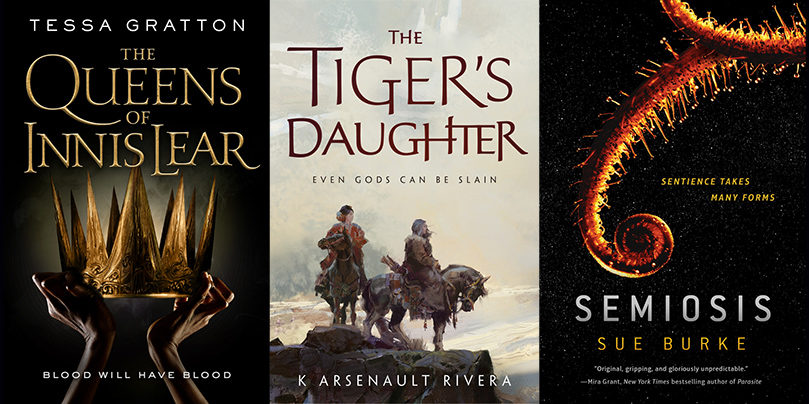
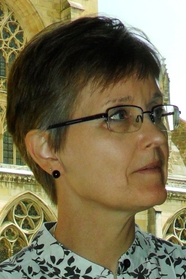
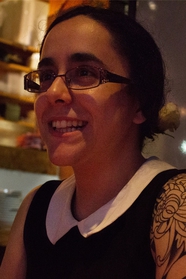
Left Bank Books and Archon present an SF STL and Tor #FearlessWomen event on Thursday, May 10th at 7 PM, with authors Tessa Gratton, Sue Burke, and K. Arsenault Rivera, who will sign and discuss their new books The Queens of Innis Lear, Semiosis, and The Tiger’s DaughterFind more information about the event here.

Inspired by Shakespeare’s King Lear, dynasties battle for the crown in Tessa Gratton’s debut epic adult fantasy, a story of deposed kings and betrayed queens for fans of Red Rising and Queen of the Tearling. The Queens of Innis Lear brings to life a world that hums with ancient magic, and characters as ruthless as the tides.

Sue Burke’s Semiosis is a sweeping SF epic of first contact that spans generations of humans struggling to survive on an alien world. Colonists from Earth wanted the perfect home, but they’ll have to survive on the one they found. They don’t realize another life form watches . . . and waits.

K. Arsenault Rivera’s lush new epic historical fantasy series evokes the ambition and widespread appeal of Patrick Rothfuss and the vivid storytelling of Naomi Novik. The Tiger’s Daughter is the story of an infamous Qorin warrior, Barsalayaa Shefali, a spoiled divine warrior empress, O-Shizuka, and a power that can reach through time and space to save a land from a truly insidious evil.

post-featured-image

Excerpt: Starless: Chapters 1-2 by Jacqueline Carey

opens in a new windowImage Place holder  of amazon- 63 opens in a new windowPoster Placeholder of bn- 53 opens in a new windowImage Placeholder of booksamillion- 94 opens in a new windowibooks2 71 opens in a new windowindiebound

Place holder  of - 21 Welcome to #FearlessWomen! Today we’re featuring an excerpt from Starlessa new epic fantasy by Jacqueline Carey where gods live among us, but only a mortal can save the world.

Let your mind be like the eye of the hawk…

Destined from birth to serve as protector of the princess Zariya, Khai is trained in the arts of killing and stealth by a warrior sect in the deep desert; yet there is one profound truth that has been withheld from him.

In the court of the Sun-Blessed, Khai must learn to navigate deadly intrigue and his own conflicted identity…but in the far reaches of the western seas, the dark god Miasmus is rising, intent on nothing less than wholesale destruction.

If Khai is to keep his soul’s twin Zariya alive, their only hope lies with an unlikely crew of prophecy-seekers on a journey that will take them farther beneath the starless skies than anyone can imagine.

Starless will be available on June 12th. Please enjoy this excerpt.

ONE

I was nine years old the first time I tried to kill a man, and although in the end I was glad my attempt failed, I had been looking forward to the opportunity for quite some months. That is only natural, I think, when one is raised as I was; although as I grow older, I am less and less sure what that means. All things proceed from nature—if one thing alters the course of another’s growth, is that not yet within the accordance of nature? A vine trained to climb a trellis remains a vine.

And I am Khai, and remain myself, whatever that means.

It is a good name; strong and bold, a name like the sound of a desert hawk’s cry. A fitting name for a child of the desert; a fitting name for a child whose destiny was determined by a single feather.

But that is not the whole truth, and Brother Saan, who is our Seer and the wisest among us, says truth must be laid bare, as clean as a corpse flensed to the bone by Pahrkun the Scouring Wind.

So.

This was the truth as I knew it: Nine years ago in the realm of Zarkhoum, such an event transpired as had not taken place for a hundred and fifty years. At the precise moment that Nim the Bright Moon obscured Shahal the Dark Moon, a child was born to the House of the Ageless, whose members are also known as the Sun-Blessed.

The priestesses of Anamuht the Purging Fire are great keepers of records, and the lore of the realm holds that when a child of the royal house is born during a lunar eclipse, so too is his or her shadow.

I was not the only such child born at that precise moment. According to Brother Saan, the priestesses of Anamuht spent almost a year consulting midwives across the length and breadth of Zarkhoum. In the end, they discovered thirteen of us.

Hence, the feather.

I remember it.

I do not remember the mother or father to whom I was born. I do not know if I was high-born or low, or if I was born to the fierce desert nomads who acknowledge no rank save that which personal honor won in their own vendettas accords them. Brother Saan does not know either, but he tells me that the priestesses of Anamuht will have that information recorded in their scrolls, and I may seek it for myself when I come of age, if the Sun-Blessed princess who is the light to my shadow allows it.

Perhaps I shall; perhaps not. After all, does it matter? In the end, I was the one who was chosen.

A feather.

It took place in the portion of the Fortress of the Winds that we call the Dancing Bowl; although that I do not remember, I know only because I have been told. It is a hard, stony basin which the men use for sparring practice. There are three tunnels that open onto its sloping sides, and many more riddling the cliffs that rise to tower over it. High above the basin, there is a thin stone bridge that arches across it—nothing built by human hands, but a structure etched into being by Pahrkun the Scouring Wind some thousands of years gone by.

I know it well, for I have crossed it many times. I have felt its faint tremor beneath my bare feet; I have felt the wind tug at my garments, threatening to unbalance me. Ah, but the wind . . . I must learn to embrace it.

And so I shall, for I am pledged to Pahrkun the Scouring Wind, and it is all because of the feather.

I remember.

I do.

There were thirteen of us, all babes. Thirteen carpets were laid on the floor of the Dancing Bowl; thirteen babes were set upon the carpets. I do not remember that part, but Brother Saan has told me many times. It was midmorning in high spring, and the heat would have been rising like an oven, only a slight breeze swirling in the basin. I can imagine it well. Atop the arched bridge, Brother Saan opened his hand and let fall a single hawk feather.

When I close my eyes, I can see it still: blue sky and a lone feather, a pale brown with darker brown stripes. I see it fall, drifting on the breeze, turning in circles as it falls. I see the breeze carry it west, then north; east, then south. I see the edge of the vanes catch the light like the honed edge of a blade, I see the hollow shaft glow with a milky translucence.

Brother Saan watched from atop the bridge. The figures of the other brothers and a cluster of veiled priestesses in their bright red robes dotted the tunnel mouths above the Dancing Bowl, waiting, waiting, to see where the feather would fall, which babe would be marked by Pahrkun’s favor, chosen to be the shadow to the bright Sun-Blessed princess in the faraway city of Merabaht.

Along the walls of the Dancing Bowl, the families watched and waited to see who among them would return to their far-flung homes less one babe, bragging of the honor bestowed upon them.

The feather drifted and drifted, circling down above me. I waved my hands in the air and caught it in one chubby fist.

A great cheer went up; that, too, I do not remember.

But I remember the feather. I have it still.

And so it came to pass that I was raised in the Fortress of the Winds by the Brotherhood of Pahrkun, raised to be a warrior.

Of course, at nine years of age, I was not yet fully versed in the traditional weapons of the brotherhood. I lacked the strength to effectively wield the curved sword known as yakhan, or wind-cutter, as well as the three-pronged kopar that served as a weapon of both offense and defense, but that, I was promised, would come in time. I was quick and wiry, hardened to the elements by going shirtless and barefoot in summer and winter alike, and I could take down a mountain goat with a single, swift blow to the jugular with the slender dagger that had been given me on my seventh birthday.

And so, when a caravan escorting a supplicant to attempt the Trial of Pahrkun appeared on the horizon, I begged to be allowed to take part. Understand that there was no malice in it. This was simply our way in Zarkhoum; and indeed, I believed that there was both purpose and mercy in it. It was a harsh mercy, but then the desert is a harsh place.

The nature of the Trial of Pahrkun was this: Any man convicted of an offense deserving of execution could choose instead to undertake the trial, upon whence he would be escorted by the Royal Guard across the deep desert to the Fortress of the Winds. At the entrance to the fortress—which, like the bridge above the Dancing Bowl, is no man-made edifice, but a vast series of caverns and tunnels—the supplicant would strike the sounding-bowl and announce his intention.

To pass the trial, the supplicant had to do but one thing: make his way past three brothers in the Hall of Proving. If he succeeded in emerging alive into open air, he was reckoned scoured of his sins by Pahrkun, accepted into the brotherhood, given a new name and a new life.

Very few men attempted this.

Even fewer succeeded, for the fighting skills of the brothers who were born into this warrior caste and pledged to its service as young men—though none so young as I—were not only honed by decades of practice and centuries of tradition, but augmented by the skills of those few who did succeed.

There was much debate around the supper table the evening before the supplicant’s arrival.

“Khai is young,” Brother Drajan said in his slow, implacable manner. He served as cook to the brotherhood, and although I was often grateful for his considered ways, on that occasion it made me impatient. He glanced at me out of the corner of his eye, one corner of his mouth tugging downward in an apologetic grimace. “Let him be a boy while he may. It is too soon for him to wrestle with mortality.”

Brother Jawal made a lightning-quick gesture as though flicking away a fly. “Are we raising a warrior or not? Death is no respecter of age.”

“Therein lies my concern.” Elderly Brother Ehudan, who taught me my characters and numbers, knit his brow. “What would come to pass if the shadow of the Sun-Blessed met an untimely demise?”

Everyone looked to Brother Saan, including me.

Brother Saan’s face was tranquil. He was old, too; older than Brother Ehudan, although it seemed to me that age had visited him in a different way. There was nothing crabbed or querulous about him, only a deep stillness none of us could yet emulate. “Khai might die in a dozen ways in our care before the princess comes of age,” he said mildly. “One wrong step in the heights, and he would plunge to his death. We cannot allow that fear to hobble us.”

I stifled an indignant protest at the notion that I might perish due to a careless misstep.

Brother Saan’s gaze rested on me. “You are eager to undertake this challenge?”

I placed my palms together and touched my thumbs to my brow in a gesture of respect. “I am, Elder Brother.”

“Then it shall be so,” he said. “On the morrow, Khai will take the third and final post in the Hall of Proving.”

My heart quickened. “Thank you, Elder Brother!”

“It is no gift I give you, but a grave charge,” Brother Saan said to me. “Tomorrow, a man’s life hangs in the balance. It is Pahrkun who decides his fate; know that you are but an instrument.”

I touched my brow again. “Yes, Elder Brother.”

Brother Saan’s eyelids crinkled. “What is a warrior’s first and greatest weapon, young Khai?”

“It is his mind, Elder Brother,” I said.

“Very good.” Rising from the table, Brother Saan laid a hand on my shoulder. “Conduct yourself with honor.”

I inclined my head. “Always, Elder Brother.”

My sleep that night was restless. I rose at dawn to offer my prayers in the privacy of the small cavern that was my bedchamber; four genuflections for Zar the Sun, Nim the Bright Moon, Shahal the Dark Moon, and Eshen the Wandering Moon; two genuflections for Anamuht the Purging Fire and Pahrkun the Scouring Wind; and at last four genuflections for the four great currents, east, west, north, and south.

Brother Jawal poked his head in the opening of my cavern. “Are you done?” he inquired. “Come, let’s get a look at this supplicant.”

I scrambled to my feet. “Yes, brother.”

Atop the western lookout, the wind was brisk and buffeting. I stood beside Brother Jawal, knees flexed to maintain my balance.

Let your mind be like the eye of the hawk.

So Brother Saan had taught me. I gazed at the party making its way toward the Fortress of the Winds. Six men in the crimson and gold silks of the Royal Guard riding hardy, sure-footed steeds. One man in the center of them; a portly fellow clad in rich brocade robes, several purses and a long sword with a gem-encrusted pommel dangling from his waist-sash. Their shadows stretched westward behind them.

Brother Jawal made a disparaging sound. “A merchant,” he said in a dismissive tone. “Soft and rich. Like as not, he’ll try to bribe us.”

I was shocked. “Is that permitted?”

“No.” Brother Jawal shook his head. “But that’s the way city folk are.”

I supposed it must be true, and I shook my head too at the folly of city folk. To think that one could bribe us!

It made me wonder, though, what the princess would be like. I thought of her often; the light to my shadow. It was the first time in recorded history that a daughter of the Sun-Blessed had been born with a shadow. Zariya was her name; all of the Sun-Blessed bear the name of the Sun in their own names. Zariya of the House of the Ageless, the seventeenth child born to His Majesty King Azarkal, who had reigned for three hundred years; the third child born to his fifth wife. Sun-Blessed, because Zarkhoum lies the farthest east of any nation beneath the starless sky; the House of the Ageless, because the sacred rhamanthus seeds that are quickened by Anamuht the Purging Fire bestow great longevity upon its members.

These things I knew because Brother Ehudan taught them to me, but I could not imagine what such a person would be like. I knew the desert and hawks and wind; I did not know cities.

I imagine there must be color, a great deal of color, like the silks the Royal Guards wore; or like the robes the fat merchant wore, all blue and green with gold stitching, robes that were wholly unsuited for the desert.

As they drew near, I saw that he was sweating in the heat, the poor foolish fellow. “Why would he wear such garments?” I asked Brother Jawal.

He shrugged; he was desert-born, a son of one of the nomadic tribes, and pledged to Pahrkun’s service by birthright, not trial. “Among the city folk, such garments indicate wealth and status.”

I squatted on my haunches, leaning over the ledge of the lookout. “I wonder what his crime was.”

Brother Jawal shrugged again. “Whatever it was, he’ll meet his final judgment today.”

“Or not,” I reminded him.

He laughed and caressed the hilt of his yakhan. “Oh, I think a mighty wind is coming for this fat man, little brother. I’ve been given the first post.”

I glanced over my shoulder toward the east. Beyond the peaks and valleys of the Fortress of the Winds lay the deepest desert. It was the domain of the Sacred Twins, for there Pahrkun stalked the sands, raising them into a killing gyre as tall as mountains, blotting out the sky. There Anamuht strode veiled in sheets of flame from head to toe, lightning bolts in her hands.

From time to time, we caught glimpses of them in the deep distance, but not today.

My weight shifted as I looked back, and my left foot dislodged a pebble. It rattled down the cliff.

Far below, the fat merchant and his escort were arriving. The merchant glanced up. Rivulets of sweat ran down his plump cheeks, but his gaze was unexpectedly sharp. He glanced away and twitched the long sleeves of his robes to better cover his hands on the reins. His mount tossed its head in a fretful response and something tickled at my thoughts, making me frown.

Let your mind be like the eye of the hawk . . .

But then Brother Jawal’s hand was on my elbow, urging me backward. “Come,” he said. “It’s almost time to take up our posts.”

The sounding-bowl rang as we withdrew, a single chiming note that seemed to hang forever in the bright air.

As was the custom, the supplicant was given leave to rest and refresh himself before attempting the trial. The fat man, I thought, would be grateful for such a respite even if they had made camp within an hour’s ride of the fortress. I wondered if it were true that he would attempt a bribe.

His hands, though . . . why did he seek to conceal his hands?

I shook my head; whatever thought I’d had was gone. I had made my stance at the third post in the Hall of Proving. It was warm, the breath of the desert stirring faintly here. Behind me, the cavern opened onto daylight.

Daylight; for the supplicant, freedom and life.

For me, it meant I would be silhouetted in light, giving the fat man an advantage. Oh, but he wouldn’t get this far, would he?

No, it seemed impossible. Brother Jawal was fast and ruthless; the fat man stood no chance of defeating him in combat or evading him with speed. Even if by some miracle he passed the first post, Brother Merik stood at the second post. He was not as fast as Brother Jawal, but he was a seasoned warrior who fought with deadly efficiency, never a single move wasted.

Still, I had to be prepared. “Pahrkun, I am your instrument today,” I whispered, drawing my dagger. My hand was sweating and slippery on the hilt. “If it is your will, use me.”

Silence.

Hands, the fat man’s hands.

Maybe it was another odd custom of city folk. My mind drifted, drifted like the hawk’s feather.

Zariya.

I closed my eyes, letting my gaze adjust to the darkness before me. When I opened them, I could make out the crooked stalagmite at the bend that marked the threshold between the second and third posts.

The sounding-bowl rang again, its chiming note muted by the stone walls around me. I heard Brother Saan’s voice announcing that the Trial of Pahrkun had begun.

I heard Brother Jawal begin to utter his tribal war-cry, high and fierce—but then the cry was abruptly muffled. I listened for the sound of clashing blades and heard nothing. My palms began to itch and I had a taste like metal in my mouth. Brother Jawal . . . no. It was not possible.

I waited.

In the darkness ahead of me, there was a faint, familiar sound, followed by an unexpected flare of light that nearly made me cry out in alarm. Blinking ferociously against the dazzle behind my eyes, I heard a thump and a grunt of pain, then the sound of Brother Merik’s voice uttering low curses and the clatter of a blade against . . . what? Not metal, but stone, I thought.

The air around me eddied.

He was coming.

The fat man was coming, and now, at last I was afraid. My knees shook and every fiber of my being urged me to hide, hide and conceal myself in the shadows, and let the fat man pass.

No.

There was no honor in hiding. And yet here at the third and final post, how was I to prevail against a man with the skill and cunning to make it past Brother Jawal and Brother Merik? The dagger in my hand felt puny and inadequate; felt puny and inadequate.

I recalled Brother Saan’s words again: What is a warrior’s first and greatest weapon?

I shoved my dagger into my sash and unwound the heshkrat that was tied around my waist; three lengths of thin rope, the strands joined at one end, stones knotted at the other. It was a hunting weapon, not a combat weapon; one used by tribesmen to bring down antelope in the desert.

Brother Jawal had taught me to use it. I prayed to Pahrkun to guide my hand.

The flare of light around the bend in the cavern had died and something was moving in the shadows. A man; not a fat man in robes, but a slender one clad in close-fitting black attire, staying close to the walls and walking as soft-footed as a desert cat, with throwing daggers in both his hands.

I saw him see me and throw with one hand and then the other, flicking his daggers in my direction as quick as the blink of an eye, but the wind of his motion warned me and I was already moving, the ropes of my heshkrat whirling overhead; one turn before I loosed it, aiming low.

The man was moving too, but the heshkrat was designed to bring down prey on the run. It tangled his legs and he fell hard.

A gust of wind blew through the Hall of Proving and a hard, fierce joy suffused me. Drawing my dagger, I fell on the man, thinking to stab him in the jugular. Agile as a snake, he twisted beneath me and the point of my dagger struck the stone floor of the cavern, jarring my arm.

I swore.

Still, he was unarmed, and if I could only stab him before his greater strength prevailed . . . but no, as we grappled, somehow his hands were no longer empty, somehow there was a cord wrapped around my throat, and his hands were drawing the ends tight. His hands; his strong, slender hands. That was why he’d hidden them. They were not the hands of a fat man. It had been a disguise.

Interesting.

It was a pity that my throat was burning, my chest was heaving for lack of air, and my vision was blurring.

“Watery hell!” The not-fat man’s eyes widened. “You’re just a kid!” He let go the cord, kicked free of the ropes of the heshkrat, and backed away from me; backed away toward sunlight and salvation. “I’m not killing a fucking kid!” he called out.

I got to my hands and knees, wheezing.

Brother Saan entered the Hall of Proving, his features as calm and grave as ever. He regarded the not-fat man who now stood beyond the threshold of the cavern in broad daylight, wind ruffling his hair. “I am pleased to hear it,” he said in his mild voice. “Whatever sins you have committed, Pahrkun the Scouring Wind has cleansed you of them. Welcome to the brotherhood.”


TWO

Brother Merik was merely injured, having taken a throwing dagger to the forearm he raised against the unexpected brightness; a dagger expertly placed between the steel prongs of the kopar. After that, the supplicant had slipped past him while he blundered blindly in the darkness, his sword clattering against the stone walls.

Brother Jawal was dead, his neck broken. The supplicant had flung his robe over him and taken him by surprise.

The impossible had come to pass.

We laid his body, stripped bare save for a loincloth, on a bier atop a high plateau. Once the hawks and vultures and carrion beetles, all creatures of Pahrkun, had picked the flesh from his bones, they would be returned to his clan.

Although I had no right to be angry, I was; angry at the supplicant for his trickery, angry at Brother Jawal for letting himself get killed. I was angry at myself for seeing too late through the supplicant’s disguise, angry at myself for failing to kill him, angry that I owed him my life.

That night the king’s guardsmen dined with us. I saw them glance at me with open curiosity, but the mood was a mixture of somber mourning and quiet acceptance, and they did nothing to disturb it.

The supplicant—whatever his name had been, he was a man with no name now, and would remain thus until Brother Saan gave him a new one—kept his head low and ate quickly and deftly. Out of his disguise, he looked younger than I had first thought. Otherwise there was nothing remarkable to the eye about the nameless man, and it seemed wrong that such an ordinary-looking fellow should be responsible for killing Brother Jawal.

When our meal of stewed goat and calabash squash had been consumed, Brother Saan poured cups of mint tea. “By your skills at deception and subterfuge, I take it you are a member of the Shahalim Clan from the city of Merabaht,” he said, passing a cup to the nameless man. “It is said that they are thieves and spies without peer.”

“I was,” he said in a curt tone.

Brother Saan blew on his tea. “I thought the Shahalim never got caught.”

The nameless man grimaced. “Never spite a Shahalim woman, Elder Brother. I was betrayed.” He lifted his cup, then set it down. “That’s the princess’s shadow, isn’t it?” He pointed at me. “I can’t believe you damned near let me kill a Sun-Blessed’s shadow.”

There were a few murmurs of agreement, and I flushed with embarrassment and anger.

“Yet you did not,” Brother Saan said calmly. “It seems Pahrkun wishes you to teach Khai your ways.”

The nameless man stared at him. “Teach clan secrets to an outsider? Never. It is forbidden.”

Brother Saan took a sip of his tea. “Your former clan betrayed you. The Brotherhood of Pahrkun is your clan now.”

The nameless man got to his feet. “I won’t—”

The six guards and several of the brothers rose, hands reaching for sword hilts. The nameless man sat back down.

“I don’t want to learn his ways!” The words burst from me. “They’re nothing but trickery! It’s dishonorable!”

Brother Saan eyed me. “Khai, it is your grief that speaks. Go, retire for the night. We will speak more of this on the morrow.”

I hesitated.

“It is an order, young one,” he said.

I went reluctantly. Behind me, I could hear the tenor of the conversation change. There was a part of me that was tempted to creep back and listen, but that seemed the sort of unworthy thing the nameless man would do, and so I obeyed Brother Saan and retired to my chamber.

In the morning, Brother Jawal was still dead and my anger was still with me. Brother Ehudan dismissed me within mere minutes. “You’re not fit to study today,” he said irritably. “Take your foul temper elsewhere. Take it out on the spinning devil.”

Since it was as good a suggestion as any, I went.

The spinning devil was a contraption of the nomadic tribesfolk, designed to train young men in the art of weaponless combat they called “thunder and lightning.” It consisted of a tall, sturdy central shaft planted firmly in the earth—or in this instance, wedged firmly in a deep crevice in the floor of a cavern—and four leather-bound paddles of varying length that spun around it like wheels around the axle of a cart. It was a cunning device, and one that Brother Jawal said could be easily disassembled and transported. He was the one who taught me to use it, as he taught me to throw the heshkrat.

A grown man could set all four paddles in motion so that the device resembled the spinning dust devils from which it took its name. I could only strike the lower two with any force, but it was enough for now. Boom, I threw a punch with my fist that was thunder, and the paddle spun; flash, I struck an angled blow with the side of my hand that was lightning, and the paddle spun the other way. Boom, a direct forward kick to the lowest paddle, and flash, a side kick with the blade of my foot.

Boom, flash flash, boom boom flash, flash boom boom, flash flash. The spinning devil spun and spun and creaked, the paddles a blur. Brother Jawal had told me that the nomads invented thunder and lightning many, many years ago as a way for hot-blooded young men to fight without killing one another.

Once they got very, very good at it, that didn’t always hold true.

Brother Jawal said that there was a ritual to challenging a tribesman to fight with thunder and lightning, a ritual that involved clapping your hands and stamping your feet. Clap-clap-stamp on the right, clap-clap-stamp on the left. If you wanted to insult your opponent and imply that he was unworthy, you clap-clap-stamped twice on the left instead. He had laughed when he told me that, and although he did not say it, I knew that he had done it, and won his challenge.

And now Brother Jawal was dead at the hands of a nameless man who knew nothing of ritual or honor.

Flash flash flash boom boom.

I fought the spinning devil with grim determination, sweat stinging my eyes and dampening my hair. I was still battling it when Brother Saan entered the training chamber, a rolled wool carpet under one arm. When I paused, he gestured for me to continue and set about unrolling the carpet. I launched a final flurry of blows at the spinning devil, then stepped back, panting hard. The paddles continued to drift in circles, creaking slowly to a halt.

Brother Saan sat cross-legged on the carpet awaiting me, a leather-wrapped bundle before him. I folded my legs to sit opposite him, pressing my palms together and touching my brow. My breathing sounded loud in the quiet cavern. Brother Saan waited for me to find stillness. Except for the slight rise and fall of his chest, he might have been carved out of stone. Even though time had touched his flesh with the slackness of age, the muscles beneath were lean and ropy.

At last my breathing slowed, and I found stillness. A shaft of sunlight angled through the cavern from an aperture above us and dust motes sparkled within it. All was quiet.

“Once upon a time, there were stars in the night sky,” Brother Saan began, then paused when an involuntary sound escaped me. I was in no mood for tales of wonder from days of yore.

“Forgive me, Elder Brother,” I murmured. “I meant no disrespect.”

He waited another long moment. “Once upon a time, there were stars in the night sky,” he began again. “Thousands and thousands of them, shining as bright as diamonds. And those stars were the flashing eyes and teeth and the fierce beating hearts of the thousand children of Zar the Sun, Nim the Bright Moon, Shahal the Dark Moon, and fickle Eshen the Wandering Moon, and we revered them all. The stars in the night sky let us guide our steps on land, and allowed mariners at sea to find their way on the four great currents.” He lifted one finger. “But the children of heaven were not content to keep their places while the Sun and the Moons traveled freely, and so they rose up and sought to overthrow their parents. Chaos reigned in heaven; fiery stones fell to earth in the battle, and the great currents and tides ran wild in the seas.”

I nodded; all this I knew.

“Until Zar the Sun said enough.” Brother Saan made a sweeping gesture. “In anger, he cast down his thousand rebellious children and they fell from the heavens to earth. Here they are bound and here they remain, and the night sky is empty of stars.” He regarded me. “Do you suppose that all the fallen children of the heavens shall remain content that it should ever be thus?”

“I…” I blinked; I had not anticipated the question. “I beg your pardon, Elder Brother. What?”

Brother Saan rested his hands on his knees. “Here in Zarkhoum, we are fortunate. Even though they raised their hands against him, Anamuht the Purging Fire and Pahrkun the Scouring Wind are two of Zar’s best-beloved children; his brother and sister twins born to different mothers,” he said. “Zar the Sun saw to it that they fell to the land where they might be the first of his children he gazes upon when he begins his journey across the sky, and the Sacred Twins have pledged to protect the land to which they are bound, and never again defy their father.”

All this, too, I knew. “Do you say this is untrue elsewhere?” It was a difficult idea for my mind to encompass; although I had been taught that there were other realms and other gods beneath the starless skies, the desert and the Sacred Twins were all that I had ever known. I could not imagine other gods.

His gaze was troubled. “I fear it may be so. The priestesses of Anamuht claim that there is a prophecy that when darkness rises in the west, one of the Sun-Blessed will stand against it.”

My breath caught in my throat. “Zariya?”

“It is highly unlikely.” Brother Saan’s voice took on a rare acerbic note, and his gaze cleared. “The daughters of the House of the Ageless are cherished and sheltered. Still, when one of the Sun-Blessed is born with a shadow, we must avail ourselves of every form of training that presents itself.”

My sullen anger, forgotten in my battle with the spinning devil, stirred. “You speak of these Shahalim.”

“I do.” Brother Saan gave me a sharp look. “Do you know what happened the last time a shadow was born?”

I shook my head. “Only that it happened a hundred and fifty years before my birth, Elder Brother.”

“Yes, and some forty years ago, his Sun-Blessed charge died in his care,” he said simply.

I tallied the figures in my head and frowned. “But how could that be? He would have been a hundred and twenty.”

“The shadow of one of the Sun-Blessed is allowed to partake of the rhamanthus seeds,” Brother Saan said. “He did not begin to age until his charge died.”

My head was spinning like the spinning devil. “Forgive me, Elder Brother, but what has that to do with the Shahalim?”

He did not answer my question directly. “I myself was not yet born when that shadow’s training took place,” he said. “But I was newly appointed as Seer when his charge died, and it fell to me to question him about what happened. The shadow was a broken man, filled with bitterness and fury.”

“Why?” I whispered.

“Because he failed to prevent it.” Brother Saan gazed into the distance. “His charge was poisoned.”

I let out my breath in a hiss.

“Yes.” Brother Saan nodded. “A most dishonorable means of attack; and yet, it proved effective. Brother Vironesh—for that was the shadow’s name—had no means by which to anticipate it. He spoke passionately to me about the need for honor beyond honor.”

“Honor beyond honor,” I echoed.

He nodded again. “That is what it meant to him to keep his charge alive at any cost. Honor beyond honor. We failed to prepare him for it. And so I do not think it is any accident that Pahrkun has accepted one of the Shahalim into our brotherhood; one from whom you might learn a great many things we cannot teach you. They are sneaks and thieves, but they are highly skilled in their arts. These are things that you might reckon dishonorable; only know, they are in the service of honor beyond honor. As a shadow, nothing else must matter to you.”

I was silent.

“Do you understand?” Brother Saan asked me.

Bowing my head, I touched my brow with the thumbs of my folded hands. “Yes, Elder Brother. I do.”

“Good.” He unfolded the bundle before him to reveal Brother Jawal’s fighting weapons; his sharp-whetted yakhan with its worn leather-wrapped hilt and curved blade, and the three-pronged kopar. “You have stood a post in the Trial of Pahrkun. It is only fitting that these are yours now.”

I took them up with reverence, feeling the weight of them. I could not resist a few trial passes, weaving the yakhan in the complicated figure-eight pattern favored by the desert tribesfolk, spinning and reversing the kopar so its prongs lay flat along my forearm. It made my wrists ache.

Brother Saan smiled, his eyelids crinkling. “Here,” he said, plucking two more items from his bundle. They were fist-sized rocks.

I eyed him. “Elder Brother?”

“Squeeze them,” he said, fitting actions to words to demonstrate. Beneath his wrinkled skin, the muscles in his wrists and forearms stood out like cords. “Three thousand times a day.”

I inclined my head. “Yes, Elder Brother.”

He folded his empty bundle, rolled his carpet, and rose. “On the morrow, after your lesson with Brother Ehudan, you will begin training with Brother Yarit, and obey him in every particular whether it seems honorable or not.”

I glanced up at him. “Brother Yarit?”

“The Shahalim.” He smiled again, this time wryly. “We held a naming ceremony for him today. Whether he likes it or not, and at the moment, he likes it no more than you do, he is one of us now.”

A thought came to me as I rose. “Elder Brother … are there other shadows yet among the living?”

“No.” He shook his head. “The last born before Vironesh was some seven hundred years ago. His charge came into khementaran centuries ago.”

“Khementaran?” I did not know the word.

“The point of return.” Brother Saan rubbed his chin thoughtfully. “Members of the House of the Ageless live very long lives, if those lives are not cut short by violence or illness, but they do not live forever. Sooner or later, each comes to the point they call khementaran, when they desire to return to the natural rhythms of the mortal world, to allow themselves to age with the passing of the seasons.”

I eyed him, thinking it seemed unlikely to me.

He favored me with another wry look in return. “It may be that you will find out for yourself one day, young Khai.”

I tucked that thought away to ponder later, but I was not quite done yet. “Elder Brother … what became of Vironesh? The broken shadow?”

“Ah.” His expression changed. “Well you might inquire, for I have been endeavoring to learn that very thing. There are rumors. It may be that he yet lives, for his body was decades younger than my own when he began to age.” He shook his head. “But if it is so, thus far he does not wish to be found.” He raised his brows at me. “Have you other questions for me today, young Khai?”

I touched my forehead with one thumb, Brother Jawal’s weapons tucked under my other arm. “No, Elder Brother.”

“Very good.”

I returned to my chamber to stow my new possessions and began squeezing rocks, but it was later than I’d reckoned. The midday heat was oppressive, and my limbs were weary from my battle with the spinning devil. By the time I reached five hundred, my eyelids were growing heavy. Still, I kept going until I reached a thousand. I would do the rest after a midday nap, when the air would be cooler.

Thoughts drifted through my mind; drifted, drifted like a hawk’s feather on the wind. Falling stars, rhamanthus seeds. Khementaran, the point of return … who would seek to return to death and decay?

And yet death and decay were a part of nature and the purview of Pahrkun the Scouring Wind …

Poison; a broken and bitter shadow, his charge slain by dishonorable means. Who were the enemies of the Sun-Blessed? Who would seek their lives?

One day I would know.

Whatever might come, I resolved that I would strive to attain honor beyond honor. Brother Jawal, I thought, would understand.


Copyright © 2018 by Jacqueline Carey

Order Your Copy

opens in a new windowamazon bottom opens in a new windowbn bottom opens in a new windowbooksamillion bottom opens in a new windowibooks2 92 opens in a new windowindiebound bottom

post-featured-image

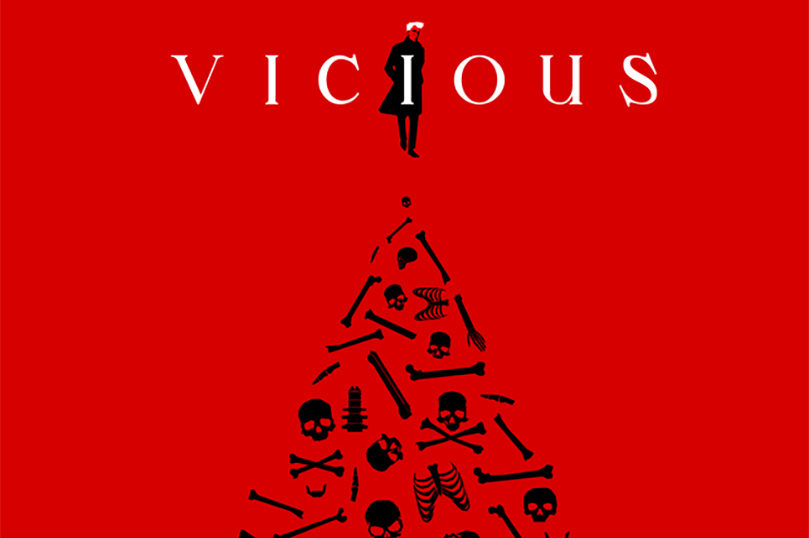
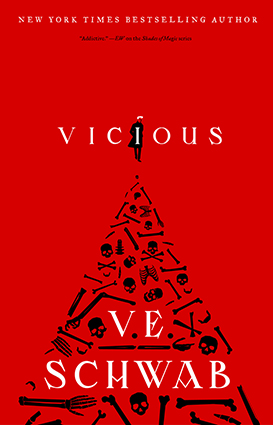
Excerpt: Vicious: Chapters 1-5 by V.E. Schwab

opens in a new windowamazons opens in a new windowbns opens in a new windowbooksamillions opens in a new windowibooks2 75 opens in a new windowindiebounds

opens in a new windowPoster Placeholder of - 49 Welcome to #FearlessWomen! Today we’re featuring an extended excerpt from  opens in a new windowVicious, a masterful tale of ambition, jealousy, superpowers, and revenge.

Victor and Eli started out as college roommates—brilliant, arrogant, lonely boys who recognized the same sharpness and ambition in each other. In their senior year, a shared research interest in adrenaline, near-death experiences, and seemingly supernatural events reveals an intriguing possibility: that under the right conditions, someone could develop extraordinary abilities. But when their thesis moves from the academic to the experimental, things go horribly wrong.

Ten years later, Victor breaks out of prison, determined to catch up to his old friend (now foe), aided by a young girl whose reserved nature obscures a stunning ability. Meanwhile, Eli is on a mission to eradicate every other super-powered person that he can find—aside from his sidekick, an enigmatic woman with an unbreakable will. Armed with terrible power on both sides, driven by the memory of betrayal and loss, the archnemeses have set a course for revenge—but who will be left alive at the end?

opens in a new windowVicious will be available on May 29th. 

I

LAST NIGHT

MERIT CEMETERY

Victor readjusted the shovels on his shoulder and stepped gingerly over an old, half-sunken grave. His trench billowed faintly, brushing the tops of tombstones as he made his way through Merit Cemetery, humming as he went. The sound carried like wind through the dark. It made Sydney shiver in her too big coat and her rainbow leggings and her winter boots as she trudged along behind him. The two looked like ghosts as they wove through the graveyard, both blond and fair enough to pass for siblings, or perhaps father and daughter. They were neither, but the resemblance certainly came in handy since Victor couldn’t very well tell people he’d picked up the girl on the side of a rain-soaked road a few days before. He’d just broken out of jail. She’d just been shot. A crossing of fates, or so it seemed. In fact, Sydney was the only reason Victor was beginning to believe in fate at all.

He stopped humming, rested his shoe lightly on a tombstone, and scanned the dark. Not with his eyes so much as with his skin, or rather with the thing that crept beneath it, tangled in his pulse. He might have stopped humming, but the sensation never did, keeping on with a faint electrical buzz that only he could hear and feel and read. A buzz that told him when someone was near.

Sydney watched him frown slightly.

“Are we alone?” she asked.

Victor blinked, and the frown was gone, replaced by the even calm he always wore. His shoe slid from the gravestone. “Just us and the dead.”

They made their way into the heart of the cemetery, the shovels tapping softly on Victor’s shoulder as they went. Sydney kicked a loose rock that had broken off from one of the older graves. She could see that there were letters, parts of words, etched into one side. She wanted to know what they said, but the rock had already tumbled into the weeds, and Victor was still moving briskly between the graves. She ran to catch up, nearly tripping several times over the frozen ground before she reached him. He’d come to a stop, and was staring down at a grave. It was fresh, the earth turned over and a temporary marker driven into the soil until a stone one could be cut.

Sydney made a noise, a small groan of discomfort that had nothing to do with the biting cold. Victor glanced back and offered her the edge of a smile.

“Buck up, Syd,” he said casually. “It’ll be fun.”

Truth be told, Victor didn’t care for graveyards, either. He didn’t like dead people, mostly because he had no effect on them. Sydney, conversely, didn’t like dead people because she had such a marked effect on them. She kept her arms crossed tightly over her chest, one gloved thumb rubbing the spot on her upper arm where she’d been shot. It was becoming a tic.

Victor turned and sunk one of the spades into the earth. He then tossed the other one to Sydney, who unfolded her arms just in time to catch it. The shovel was almost as tall as she was. A few days shy of her thirteenth birthday, and even for twelve and eleven twelfths, Sydney Clarke was small. She had always been on the short side, but it certainly didn’t help that she had barely grown an inch since the day she’d died.

Now she hefted the shovel, grimacing at the weight.

“You’ve got to be kidding me,” she said.

“The faster we dig, the faster we get to go home.”

Home wasn’t home so much as a hotel room stocked only with Sydney’s stolen clothes, Mitch’s chocolate milk, and Victor’s files, but that wasn’t the point. At this moment, home would have been any place that wasn’t Merit Cemetery. Sydney eyed the grave, tightening her fingers on the wooden grip. Victor had already begun to dig.

“What if…,” she said, swallowing, “… what if the other people accidentally wake up?”

“They won’t,” cooed Victor. “Just focus on this grave. Besides…” He looked up from his work. “Since when are you afraid of bodies?”

“I’m not,” she snapped back, too fast and with all the force of someone used to being the younger sibling. Which she was. Just not Victor’s.

“Look at it this way,” he teased, dumping a pile of dirt onto the grass. “If you do wake them up, they can’t go anywhere. Now dig.”

Sydney leaned forward, her short blond hair falling into her eyes, and began to dig. The two worked in the dark, only Victor’s occasional humming and the thud of the shovels filling the air.

Thud.

Thud.

Thud.


II

TEN YEARS AGO

LOCKLAND UNIVERSITY

Victor drew a steady, straight, black line through the word marvel.

The paper they’d printed the text on was thick enough to keep the ink from bleeding through, so long as he didn’t press down too hard. He stopped to reread the altered page, and winced as one of the metal flourishes on Lockland University’s wrought-iron fence dug into his back. The school prided itself on its country-club-meets-Gothic-manor ambience, but the ornate railing that encircled Lockland, though striving to evoke both the university’s exclusive nature and its old-world aesthetic, succeeded only in being pretentious and suffocating. It reminded Victor of an elegant cage.

He shifted his weight and repositioned the book on his knee, wondering at the sheer size of it as he twirled the Sharpie over his knuckles. It was a self-help book, the latest in a series of five, by the world-renowned Drs. Vale. The very same Vales who were currently on an international tour. The very same Vales who had budgeted just enough time in their busy schedules—even back before they were best-selling “empowerment gurus”—to produce Victor.

He thumbed back through the pages until he found the beginning of his most recent undertaking and began to read. For the first time he wasn’t effacing a Vale book simply for pleasure. No, this was for credit. Victor couldn’t help but smile. He took an immense pride in paring down his parents’ works, stripping the expansive chapters on empowerment down to simple, disturbingly effective messages. He’d been blacking them out for more than a decade now, since he was ten, a painstaking but satisfying affair, but until last week he’d never been able to count it for anything as useful as school credit. Last week, when he’d accidentally left his latest project in the art studios over lunch—Lockland University had a mandatory art credit, even for budding doctors and scientists—he’d come back to his teacher poring over it. He’d expected a reprimand, some lecture on the cultural cost of defacing literature, or maybe the material cost of paper. Instead, the teacher had taken the literary destruction as art. He’d practically supplied the explanation, filled in any blanks using terms such as expression, identity, found art, reshaping.

Victor had only nodded, and offered a perfect word to the end of the teacher’s list—rewriting—and just like that, his senior art thesis had been determined.

The marker hissed as he drew another line, blotting out several sentences in the middle of the page. His knee was going numb from the weight of the tome. If he were in need of self-help, he would search for a thin, simple book, one whose shape mimicked its promise. But maybe some people needed more. Maybe some people scanned the shelves for the heftiest one, assuming that more pages meant more emotional or psychological aid. He skimmed the words and smiled as he found another section to ink out.

By the time the first bell rang, signaling the end of Victor’s art elective, he’d turned his parents’ lectures on how to start the day into:

Be lost. Give up. give In. in the end It would be better to surrender before you begin. be lost. Be lost And then you will not care if you are ever found.

He’d had to strike through entire paragraphs to make the sentence perfect after he accidentally marked out ever and had to go on until he found another instance of the word. But it was worth it. The pages of black that stretched between if you are and ever and found gave the words just the right sense of abandonment.

Victor heard someone coming, but didn’t look up. He flipped through to the back of the book, where he’d been working on a separate exercise. The Sharpie cut through another paragraph, line by line, the sound as slow and even as breathing. He’d marveled, once, that his parents’ books were in fact self-help, simply not in the way they’d intended. He found their destruction incredibly soothing, a kind of meditation.

“Vandalizing school property again?”

Victor looked up to find Eli standing over him. The library-plastic cover crinkled beneath his fingertips as he tipped the book up to show Eli the spine, where VALE was printed in bold capital letters. He wasn’t about to pay $25.99 when Lockland’s library had such a suspiciously extensive collection of Vale-doctrine self-help. Eli took the book from him and skimmed.

“Perhaps … it is … in … our … best interest to … to surrender … to give up … rather than waste … words.”

Victor shrugged. He wasn’t done yet.

“You have an extra to, before surrender,” said Eli, tossing the book back.

Victor caught it and frowned, tracing his finger through the makeshift sentence until he found his mistake, and efficiently blotted out the word.

“You’ve got too much time, Vic.”

“You must make time for that which matters,” he recited, “for that which defines you: your passion, your progress, your pen. Take it up, and write your own story.”

Eli looked at him for a long moment, brow crinkling. “That’s awful.”

“It’s from the introduction,” said Victor. “Don’t worry, I blacked it out.” He flipped back through the pages, a web of thin letters and fat black lines, until he reached the front. “They totally murdered Emerson.”

Eli shrugged. “All I know is that book is a sniffer’s dream,” he said. He was right, the four Sharpies Victor had gone through in converting the book to art had given it an incredibly strong odor, one which Victor found at once entrancing and revolting. He got enough of a high from the destruction itself, but he supposed the smell was an unexpected addition to the project’s complexity, or so the art teacher would spin it. Eli leaned back against the rail. His rich brown hair caught the too bright sun, bringing out reds and even threads of gold. Victor’s hair was a pale blond. When the sunlight hit him, it didn’t bring out any colors, but only accentuated the lack of color, making him look more like an old-fashioned photo than a flesh-and-blood student.

Eli was still staring down at the book in Victor’s hands.

“Doesn’t the Sharpie ruin whatever’s on the other side?”

“You’d think,” said Victor. “But they use this freakishly heavy paper. Like they want the weight of what they’re saying to sink in.”

Eli’s laugh was drowned by the second bell, ringing out across the emptying quad. The bells weren’t buzzers, of course—Lockland was too civilized—but they were loud, and almost ominous, a single deep church bell from the spiritual center that sat in the middle of campus. Eli cursed and helped Victor to his feet, already turning toward the huddle of science buildings, faced in rich red brick to make them seem less sterile. Victor took his time. They still had a minute before the final bell sounded, and even if they were late, the teachers would never mark them down. All Eli had to do was smile. All Victor had to do was lie. Both proved frighteningly effective.

Victor sat in the back of his Comprehensive Science Seminar—a course designed to reintegrate students of various scientific disciplines for their senior theses—learning about research methods. Or at least being told about research methods. Distressed by the fact that the class relied on laptops, and since striking through words on a screen hardly gave him the same satisfaction, Victor had taken to watching the other students sleep, doodle, stress out, listen, and pass digital notes. Unsurprisingly, they failed to hold his interest for long, and soon his gaze drifted past them, and past the windows, and past the lawn. Past everything.

His attention was finally dragged back to the lecture when Eli’s hand went up. Victor hadn’t caught the question, but he watched his roommate smile his perfect all-American-political-candidate smile before he answered. Eliot—Eli—Cardale had started out as a predicament. Victor had been none too happy to find the lanky, brown-haired boy standing in the doorway of his dorm a month into sophomore year. His first roommate had experienced a change of heart in the first week (through no fault of Victor’s, of course) and had promptly dropped out. Due either to a shortage of students or perhaps a filing error made possible by fellow sophomore Max Hall’s penchant for any Lockland-specific hacking challenge, the student hadn’t been replaced. Victor’s painfully small double was converted into a much more adequate single room. Until the start of October when Eliot Cardale—who, Victor had immediately decided, smiled too much—appeared with a suitcase in the hall outside.

Victor had initially wondered what it would take to recover his bedroom for a second time in a semester, but before he put any plans into motion, an odd thing happened. Eli began to … grow on him. He was precocious, and frighteningly charming, the kind of guy who got away with everything, thanks to good genes and quick wits. He was born for the sports teams and the clubs, but he surprised everyone, especially Victor, by showing no inclination whatsoever to join either. This small defiance of social norm earned him several notches in Victor’s estimation, and made him instantly more interesting.

But what fascinated Victor most was the fact that something about Eli was decidedly wrong. He was like one of those pictures full of small errors, the kind you could only pick out by searching the image from every angle, and even then, a few always slipped by. On the surface, Eli seemed perfectly normal, but now and then Victor would catch a crack, a sideways glance, a moment when his roommate’s face and his words, his look and his meaning, would not line up. Those fleeting slices fascinated Victor. It was like watching two people, one hiding in the other’s skin. And their skin was always too dry, on the verge of cracking and showing the color of the thing beneath.

“Very astute, Mr. Cardale.”

Victor had missed the question and the answer. He looked up as Professor Lyne turned his attention to the rest of his seniors, and clapped his hands once, with finality.

“All right. It’s time to declare your thesis.”

The class, composed mostly of pre-med students, a handful of aspiring physicists, and even an engineer—not Angie, though, she’d been assigned a different section—gave a collective groan, on principle.

“Now, now,” said the professor, cutting off the protest. “You knew what you were getting into when you signed up.”

“We didn’t,” observed Max. “It’s a mandatory course.” The remark earned him a ripple of encouragement from the class.

“My sincerest apologies then. But now that you’re here, and seeing as there’s no time like the present—”

“Next week would be better,” called out Toby Powell, a broad-shouldered surfer, pre-med, and the son of some governor. Max had only earned a murmur, but this time the other students laughed at a level proportionate to Toby’s popularity.

“Enough,” said Professor Lyne. The class quieted. “Now, Lockland encourages a certain level of … industriousness where theses are concerned, and offers a proportionate amount of freedom, but a word of warning from me. I’ve taught this thesis seminar for seven years. You will do yourselves no favors by making a safe selection and flying under the radar; however, an ambitious thesis will win no points on the grounds of ambitiousness alone. Your grade is contingent upon execution. Find a topic close enough to your area of interest to be productive without selecting one you already consider yourselves expert on.” He offered Toby a withering smile. “Start us off, Mr. Powell.”

Toby ran his fingers through his hair, stalling. The professor’s disclaimer had clearly shaken his confidence in whatever topic he’d been about to declare. He made a few noncommittal sounds while scrolling through his notes.

“Um … T helper 17 cells and immunology.” He was careful not to let his voice wander up at the end into a question. Professor Lyne let him hang for a moment, and everyone waited to see if he would give Toby “the look”—the slight lift of his chin and the tilt of his head that he had become famous for; a look that said, perhaps you’d like to try again—but finally he honored him with a small nod.

His gaze pivoted. “Mr. Hall?”

Max opened his mouth when Lyne cut in with, “No tech. Science yes, tech no. So choose wisely.” Max’s mouth snapped shut a moment as he considered.

“Electrical efficacy in sustainable energy,” he said after a pause.

“Hardware over software. Admirable choice, Mr. Hall.”

Professor Lyne continued around the room.

Inheritance patterns, equilibriums, and radiation were all approved, while effects of alcohol/cigarettes/illegal substances, the chemical properties of methamphetamines, and the body’s response to sex all earned “the look.” One by one the topics were accepted or retooled.

“Next,” ordered Professor Lyne, his sense of humor ebbing.

“Chemical pyrotechnics.”

A long pause. The topic had come from Janine Ellis, whose eyebrows hadn’t fully recovered from her last round of research. Professor Lyne gave a sigh, accompanied by “the look,” but Janine only smiled and there wasn’t much Lyne could say. Ellis was one of the youngest students in the room and had, in her freshman year, discovered a new and vibrant shade of blue that firework companies across the world now used. If she was willing to risk her eyebrows, that was her own business.

“And you, Mr. Vale?”

Victor looked at his professor, narrowing down his options. He’d never been strong in physics, and while chemistry was fun, his real passion lay in biology—anatomy and neuroscience. He’d like a topic with the potential for experimentation, but he’d also like to keep his eyebrows. And while he wanted to hold his rank in the department, offers from med schools, graduate programs, and research labs had been coming in the mail for weeks (and under the table for months). He and Eli had been decorating their entry hall with the letters. Not the offers, no, but the letters that preceded them, all praise and charm, batting lashes and handwritten postscripts. Neither one of them needed to move worlds with their papers. Victor glanced over at Eli, wondering what he would choose.

Professor Lyne cleared his throat.

“Adrenal inducers,” said Victor on a lark.

“Mr. Vale, I’ve already turned down a proposal involving intercourse—”

“No,” Victor said, shaking his head. “Adrenaline and its physical and emotional inducers and consequences. Biochemical thresholds. Fight or flight. That kind of thing.”

He watched Professor Lyne’s face, waiting for a sign, and Lyne eventually nodded.

“Don’t make me regret it,” he said.

And then he turned to Eli, the last person to answer. “Mr. Cardale.”

Eli smiled calmly. “EOs.”

The whole class, which had devolved more and more into muffled conversation as students declared their topics, now stopped. The background chatter and the sound of typing and the fidgeting in chairs went still as Professor Lyne considered Eli with a new look, one that hung between surprise and confusion, tempered only by the understanding that Eliot Cardale was consistently top of the class, top of the entire pre-medical department, even—well, alternating with Victor for first and second spot, anyway.

Fifteen pairs of eyes flicked between Eli and Professor Lyne as the moment of silence lasted and became uncomfortable. Eli wasn’t the kind of student to propose something as a joke, or a test. But he couldn’t possibly be serious.

“I’m afraid you’ll have to expand,” said Lyne slowly.

Eli’s smile didn’t falter. “An argument for the theoretical feasibility of the existence of ExtraOrdinary people, deriving from laws of biology, chemistry, and psychology.”

Professor Lyne’s head tilted and his chin tipped, but when he opened his mouth, all he said was, “Be careful, Mr. Cardale. As I warned, no points will be given for ambition alone. I’ll trust you not to make a mockery of my class.”

“Is that a yes, then?” asked Eli.

The first bell rang.

One person’s chair scraped back an inch, but no one stood up.

“Fine,” said Professor Lyne.

Eli’s smile widened.

Fine? thought Victor. And, reading the looks of every other student in the room, he could see everything from curiosity to surprise to envy echoed in their faces. It was a joke. It had to be. But Professor Lyne only straightened, and resumed his usual composure.

“Go forth, students,” he said. “Create change.”

The room erupted into movement. Chairs were dragged, tables knocked askew, bags hoisted, and the class emptied in a wave into the hall, taking Victor with it. He looked around the corridor for Eli and saw that he was still in the room, talking quietly, animatedly, with Professor Lyne. For a moment the steady calm was gone and his eyes were bright with energy, glinting with hunger. But by the time he broke away and joined Victor in the hall, it was gone, hidden behind a casual smile.

“What the hell was that?” Victor demanded. “I know the thesis doesn’t matter much at this point, but still—was that some kind of joke?”

Eli shrugged, and before the matter could be pressed, his phone broke out into electro-rock in his pocket. Victor sagged against the wall as Eli dug it out.

“Hey, Angie. Yeah, we’re on our way.” He hung up without even waiting for a response.

“We’ve been summoned.” Eli slung his arm around Victor’s shoulders. “My fair damsel is hungry. I dare not keep her waiting.”


III

LAST NIGHT

MERIT CEMETERY

Sydney’s arms were beginning to ache from lifting the shovel, but for the first time in a year, she wasn’t cold. Her cheeks burned, and she was sweating through her coat, and she felt alive.

As far as she was concerned, that was the only good thing about digging up a corpse.

“Couldn’t we do something else?” she asked, leaning on the shovel.

She knew Victor’s answer, could feel his patience thinning, but she still had to ask because asking was talking, and talking was the only thing distracting her from the fact that she was standing over a body, and digging her way toward it instead of away from it.

“The message has to be sent,” said Victor. He didn’t stop digging.

“Well then, maybe we could send a different message,” she said under her breath.

“It has to be done, Syd,” he said, finally looking up. “So try to think of something pleasant.”

She sighed, and started digging again. A few scoops of dirt later, she stopped. She was almost afraid to ask.

“What are you thinking of, Victor?”

He flashed a small, dangerous smile. “I’m thinking about what a lovely night it is.”

They both knew it was a lie, but Sydney decided she’d rather not know the truth.

Victor wasn’t thinking of the weather.

He hardly felt the cold through his coat. He was too busy trying to picture what Eli’s face would look like when he received their message. Trying to picture the shock, the anger, and threaded through it all, the fear. Fear because it could only mean one thing.

Victor was out. Victor was free.

And Victor was coming for Eli—just as he’d promised he would.

He sunk the shovel into the cold earth with a satisfying thud.


IV

TEN YEARS AGO

LOCKLAND UNIVERSITY

“You’re seriously not going to tell me what that was about?” asked Victor as he followed Eli through the massive double doors and into the Lockland International Dining Suite, more commonly known as LIDS.

Eli didn’t answer as he scanned the eating hall for Angie.

The whole place resembled a theme park, in Victor’s opinion, all the mundane trappings of a cafeteria hidden beneath plastic and plaster facades that were out of scale and out of place beside each other. Circling a quad-sized stretch of tables, eleven eatery options each boasted different menus in different fonts with different decor. By the doors was a bistro, complete with a low little gate erected for a waiting line. Next to it Italian music played, several pizza ovens gaping behind the counter. Across the way the Thai, Chinese, and sushi places sat in paper-lantern colors, bright and primary and inviting. Joining these were a burger joint, a carving station, a comfort food kitchen, a salad bar, a smoothie shop, and a basic café.

Angie Knight was sitting near the Italian eatery, twirling pasta on her fork, her coppery curls wandering into her eyes as she read a book pinned beneath her tray. A small prickle ran through Victor when he spotted her, the voyeuristic thrill of seeing someone before they see you, of being able to simply watch. But the moment ended when Eli saw her, too, and caught her gaze without a word. They were like magnets, thought Victor, each with their own pull. They showed it every day in class, and around campus, people always drifting toward them. Even Victor felt the draw. And then when they got close enough to each other … well. Angie’s arms were around Eli’s neck in an instant, her perfect lips against his.

Victor looked away, giving them a moment of privacy, which was absurd considering their public display of affection was very … public. A female professor looked up from a folded paper several tables over, one eyebrow quirking before she turned the page with a loud crack. Eventually, Eli and Angie managed to pry themselves apart and she acknowledged Victor with a hug, a gesture that was simple but genuine, all the warmth, but none of the heat.

And that was okay. He was not in love with Angie Knight. She didn’t belong to him. Even though he met her first, even though he’d been a magnet for her once, and she’d wandered toward him in LIDS that first week of school freshman year, and they’d had smoothies because it was still ungodly hot out even in September, and her face was red from track and his was red from her. Even though she hadn’t even met Eli until sophomore year when Victor brought his new roommate to sit with him at dinner because it seemed like good karma.

Fucking karma, he thought as Angie pulled away and floated back to her seat.

Eli grabbed soup and Victor bought Chinese, and the three sat in the growing noise of the eating hall and ate and made mindless conversation, even though Victor desperately wanted to find out what the hell Eli was thinking picking EOs as a thesis. But Victor knew better than to interrogate him in front of Angie. Angie Knight was a force. A force with long legs and the most severe case of curiosity that Victor had ever encountered. She was only twenty, had been coveted by the top schools since she could drive, had been given a dozen business cards followed by a dozen offers and just as many follow-ups, both subtle and not-so-subtle bribes, and here she was at Lockland. She’d recently accepted an offer from an engineering firm, and upon graduation would be the youngest—and, Victor wagered, the brightest—employee of their company. She wouldn’t even be able to drink yet.

Besides, judging by the looks the other students had given Eli when he made his thesis selection, word would reach her soon enough.

Finally, after a lunch dotted with pauses and occasional warning glances from Eli, the bell rang and Angie left for her next class. She wasn’t even supposed to have a next class, but she’d taken on an extra elective. Eli and Victor sat and watched her cloud of red hair bob away with all the glee of someone off to eat cake, not explore forensic chemistry or mechanical efficacy or whatever she’d picked up as a pet project this time.

Or rather, Eli watched her go, and Victor watched Eli watch her, something twisting in his stomach. It wasn’t just that Eli stole Angie from Victor—that was bad enough—but somehow Angie had stolen Eli from him, too. The more interesting Eli, anyway. Not the one with perfect teeth and an easy laugh, but the one beneath that was glittering and sharp, like broken glass. It was in those jagged pieces that Victor saw something he recognized. Something dangerous, and hungry. But when Eli was with Angie, it never showed. He was a model boyfriend, caring, attentive, and dull, and Victor found himself studying his friend in Angie’s wake, searching for signs of life.

Several quiet minutes passed as the eating halls thinned and emptied, and then Victor lost patience and kicked Eli under the wood table. His eyes drifted lazily up from his food.

“Yes?”

“Why EOs?”

Eli’s face slowly, slowly, began to open, and Victor felt his chest loosen with relief as Eli’s darker self peeked through.

“Do you believe in them?” asked Eli, drawing patterns in what was left of his soup.

Victor hesitated, chewing on a piece of lemon chicken. EO. ExtraOrdinary. He had heard of them, the way people hear about any phenomena, from believer sites and the occasional late-night exposé where “experts” analyze grainy footage of a man lifting a car or a woman engulfed in fire without burning. Hearing about EOs and believing in EOs were very different things, and he couldn’t tell by Eli’s tone which camp he fell into. He couldn’t tell which camp Eli wanted him to fall into, either, which made answering infinitely harder.

“Well,” prompted Eli. “Do you believe?”

“I don’t know,” Victor said truthfully, “if it’s a matter of believing…”

“Everything starts with belief,” countered Eli. “With faith.”

Victor cringed. It was a kink in his understanding of Eli, the latter’s reliance on religion. Victor did his best to overlook it, but it was a constant snag in their dialogues. Eli must have sensed he was losing him.

“With wonder, then,” he amended. “Do you ever wonder?

Victor wondered about lots of things. He wondered about himself (whether he was broken, or special, or better, or worse) and about other people (whether they were all really as stupid as they seemed). He wondered about Angie—what would happen if he told her how he felt, what it would be like if she chose him. He wondered about life, and people, and science, and magic, and God, and whether he believed in any of them.

“I do,” he said slowly.

“Well, when you wonder something,” said Eli, “doesn’t that mean part of you wants to believe in it? I think we want to prove things, in life, more than we want to disprove them. We want to believe.”

“And you want to believe in superheroes.” Victor’s voice was carefully devoid of judgment, but he couldn’t smother the smile that crept across his mouth. He hoped Eli wouldn’t take offense, would only see it as good humor—levity, not mockery—but he didn’t. His face snapped shut.

“Fine, yeah, it’s stupid, right? You caught me. I didn’t give a shit about the thesis. I just wanted to see if Lyne would let me get away with it,” he said, flashing a rather hollow smile and pushing up from the table. “That’s all.”

“Wait,” said Victor. “It’s not all.”

“That’s all.

Eli turned, dumped his tray, and walked out before Victor could say more.

Victor always kept a Sharpie in his back pocket.

As he wandered the aisles of the library searching for books to kick-start his own thesis, his fingers itched to take it out. His failed conversation with Eli had set him on edge, and he longed to find his quiet, his peace, his personal Zen, in the slow obliteration of someone else’s words. He managed to make his way to the medical section without incident, adding a book on the human nervous system to one he’d already picked up on psychology. After finding a few smaller texts on adrenal glands and human impulse, he checked out, careful to keep his fingertips—permanently stained from his art projects—hidden in his pockets or under the lip of the counter while the librarian looked over the books. There had been a few complaints during his time at Lockland about books being “vandalized,” if not outright “ruined.” The librarian looked at him over the stack as if his crimes were written on his face instead of his fingers, before finally scanning in the books and handing them back.

Back in the university-issued apartment he shared with Eli, Victor unpacked his bag. He knelt in his bedroom and slid the marked-up self-help book onto a low shelf beside two others he’d checked out and altered, silently pleased that no return calls had been placed on any of them yet. The books on adrenaline he left on his desk. He heard the front door open and shut and wandered into the living room a few minutes later to find Eli flopping down onto the couch. He’d set a stack of books and stapled printouts on the university-issued wooden coffee table, but when he saw Victor come in, he reached instead for a magazine and began to flip through it, feigning boredom. The books on the table were on everything from brain function under stress to human will, anatomy, psychosomatic responses … but the printouts were different. Victor picked up one of them and sank into a chair to read it. Eli frowned faintly as he did it, but didn’t stop him. The printouts were captures from Web sites, message boards, forums. They would never been seen as admissible sources.

“Tell me the truth,” said Victor, tossing the pages back onto the table between them.

“About what?” asked Eli absently. Victor stared, blue eyes unblinking, until Eli finally set the magazine aside, sat up, and pivoted, setting his feet firmly on the ground so he could mirror Victor’s position. “Because I think they might be real,” he said. “Might,” he emphasized. “But I’m willing to consider the possibility.”

Victor was surprised at the sincerity in his friend’s voice.

“Go on,” he said, offering his best trust me face.

Eli ran his fingers over the stack of books. “Try to look at it like this. In comic books there are two ways a hero is made. Nature and nurture. You have Superman, who was born the way he was, and Spider-Man, who was made that way. You with me?”

“I am.”

“If you do even a basic Web search for EOs”—here he gestured at the printouts—“you find the same divide. Some people claiming that EOs are born ExtraOrdinary, and others suggesting everything from radioactive goo and poisonous insects to random chance. Let’s say you manage to find an EO, so you’ve got the proof they do exist, the question becomes how. Are they born? Or are they made?”

Victor watched the way that Eli’s eyes took on a sheen when he spoke of EOs, and the change in his tone—lower, more urgent—matched with the nervously shifting muscles in his face as he tried to hide his excitement. The zeal peeked through at the corners of his mouth, the fascination around his eyes, the energy in his jaw. Victor watched his friend, mesmerized by the transformation. He himself could mimic most emotions and pass them off as his, but mimicking only went so far, and he knew he could never match this … fervor. He didn’t even try. Instead he kept calm, listened, his eyes attentive and reverent so that Eli wouldn’t be discouraged, wouldn’t retreat.

The last thing Victor wanted him to do was retreat. It had taken nearly two years of friendship to crack through the charming, candy shell and find the thing Victor had always known lurked within. And now, slouching around a coffee table stacked with low-res screen shots of sites run by grown men in their parents’ basements, it was as if Eliot Cardale had found God. Even better, as if he had found God and wanted to keep it a secret but couldn’t. It shone through his skin like light.

“So,” said Victor slowly, “let’s assume EOs do exist. You’re going to figure out how.

Eli flashed him the kind of smile a cult leader would covet. “That’s the idea.”


V

LAST NIGHT

MERIT CEMETERY

Thud.

Thud.

Thud.

“How long were you in prison?” asked Sydney, trying to fill the quiet. The sound of digging, when combined with Victor’s absent humming, wasn’t helping her nerves.

“Too long,” answered Victor.

Thud.

Thud.

Her fingers hurt dully from gripping the shovel. “And that’s where you met Mitch?”

Mitch—Mitchell Turner—was the massive man waiting for them back in the hotel room. Not because he didn’t like graveyards, he told them emphatically. No, it was just that someone had to stay behind with Dol, and besides, there was work to do. Lots of work. It had nothing to do with the bodies.

Sydney smiled when she thought of him scrounging for excuses. It made her feel a fraction better to think of Mitch, who was roughly the size of the car—and could probably lift one with ease—being squeamish about death.

“We were cellmates,” he said. “There are a lot of very bad people in jail, Syd, and only a few decent ones. Mitch was one of them.”

Thud.

Thud.

“Are you one of the bad ones?” asked Sydney. Her watery blue eyes stared straight at him, unblinking. She wasn’t sure if the answer mattered, really, but she felt like she should know.

“Some would say so,” he said.

Thud.

She kept staring. “I don’t think you’re a bad person, Victor.”

Victor kept digging. “It’s all a matter of perspective.”

Thud.

“About the prison. Did they … did they let you out?” she asked quietly.

Thud.

Victor left the shovel planted in the ground, and looked up at her. And then he smiled, which she noticed he seemed to do a lot before he lied, and said, “Of course.”


Copyright © 2015 by V.E. Schwab

Order Your Copy

opens in a new windowPlaceholder of amazon -22 opens in a new windowImage Placeholder of bn- 72 opens in a new windowPlaceholder of booksamillion -29 opens in a new windowibooks2 34 opens in a new windowindiebound

post-featured-image

Download the #FearlessWomen Summer Sampler today!

opens in a new windowkindles opens in a new windownooks opens in a new windowebookss opens in a new windowgoogle plays

opens in a new window#FearlessWomen Summer Sampler Meet this summer’s #FearlessWomen! These are the authors who are shaping new blockbuster worlds—and re-shaping our own. Highlighting major titles from bestselling authors V. E. Schwab, Sherrilyn Kenyon, Jacqueline Carey as well as titles from acclaimed and debut authors such as Mary Robinette Kowal, Tessa Gratton, Sam Hawke, and Robyn Bennis, we think you’ll love the stories these #FearlessWomen have to tell.

This free #FearlessWomen Sampler features the first 20 to 30 pages from each of the following titles:

  • The Queens of Innis Lear by Tessa Gratton
  • Death Doesn’t Bargain by Sherrilyn Kenyon
  • By Fire Above by Robyn Bennis
  • Vicious by V. E. Schwab
  • Starless by Jacqueline Carey
  • City of Lies by Sam Hawke
  • The Calculating Stars by Mary Robinette Kowal

Plus, keep an eye out on the opens in a new window#FearlessWomen hashtag on Twitter, because we’ll be putting together a sampler of the Fall #FearlessWomen soon! Featuring excerpts from the following titles:

opens in a new windowPoster Placeholder of - 63 opens in a new windowImage Place holder  of - 60 opens in a new windowImage Placeholder of - 17 opens in a new windowPlaceholder of  -44 opens in a new windowPlace holder  of - 50

Download Your Free Copy

opens in a new windowkindle opens in a new windownook opens in a new windowebooks.com opens in a new windowImage Placeholder of google play- 25

opens in a new window

The owner of this website has made a commitment to accessibility and inclusion, please report any problems that you encounter using the contact form on this website. This site uses the WP ADA Compliance Check plugin to enhance accessibility.